
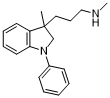
Buy Daledalin (UK-3557-15) Cas 22136-27-2
Buy Daledalin (UK-3557-15) Cas 22136-27-2
Daledalin (UK-3557-15) is an antidepressant which was synthesized and trialed for depression in the early 1970s, but was never marketed.[1][2][3] It is a selective norepinephrine reuptake inhibitor, with no significant effects on the reuptake of serotonin and dopamine, and no antihistamine or anticholinergic properties.[2][4]
Synthesis
Daledalin can be prepared by the reduction of amedalin with diborane.[2]

Daledalin
Sourcing a pure, selective NRI reference standard with verified NET specificity is challenging – many analogs exhibit off-target SERT/DAT activity that confounds neuropharmacology assays.
Daledalin (UK-3557-15) is a strictly selective norepinephrine reuptake inhibitor that solves this:
• Confirmed selective NET blockade; no measurable affinity at serotonin or dopamine transporters.
• Indoline scaffold distinct from aryloxypropanamine/tetralin NRIs – enables unique SAR exploration.
• Clinically precedented in depression trials; validated for use in [³H]-NE uptake assays and rodent behavioral models.
For researchers requiring reliable, target-specific NRI reference material with global shipping support.
Daledalin
Content Navigation
Researchers requiring pure adrenergic pathway mapping often face anticholinergic and sedative artifacts from tricyclic antidepressants. Daledalin (CAS 22136-27-2) provides a highly selective norepinephrine reuptake inhibitor with negligible affinity for serotonin and dopamine transporters. Key advantages: – Clean pharmacological baseline for in vivo models. – Fully reduced indoline core ready for synthetic derivatization. – Reference standard for NET binding calibration. Available with consistent quality and global shipping.
CAS Number
Product Name
IUPAC Name
Molecular Formula
Molecular Weight
InChI
InChI Key
Synonyms
Canonical SMILES
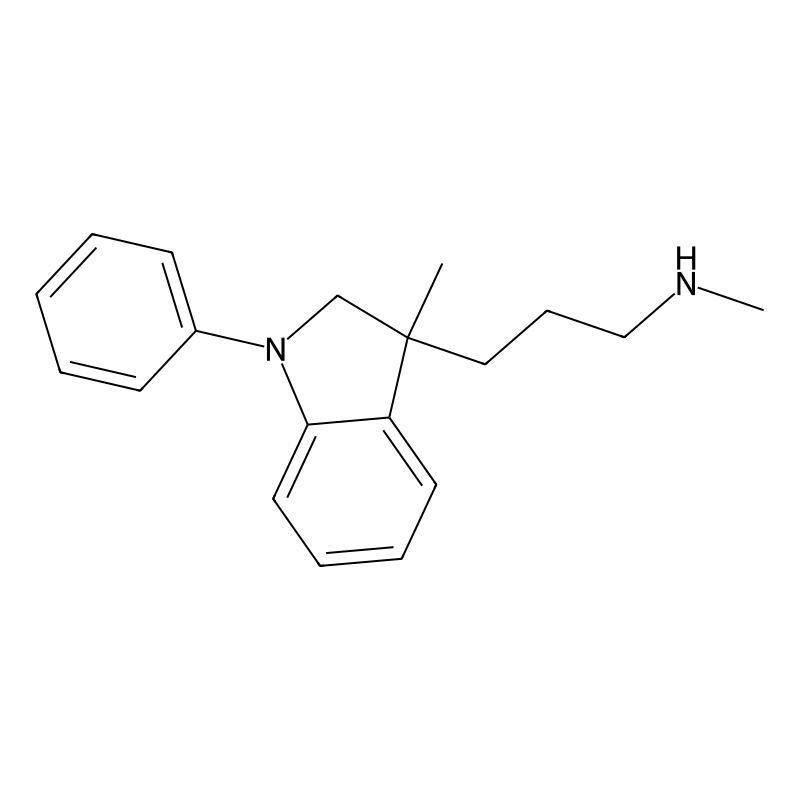
structure
Purity
Package Size
Daledalin (CAS 22136-27-2) is a highly selective norepinephrine reuptake inhibitor (NRI) featuring a fully reduced 1-phenylindoline core. Originally synthesized as a targeted alternative to classical tricyclic compounds, it is distinguished by its potent inhibition of the norepinephrine transporter (NET) without significant cross-reactivity at serotonin or dopamine transporters. For procurement professionals and chemical biologists, Daledalin serves as an essential reference standard for monoaminergic neurotransmission assays and a highly processable synthetic precursor for novel indoline derivatives, offering a cleaner pharmacological baseline than broad-spectrum monoamine modulators [1].
Research Fit
Substituting Daledalin with generic tricyclic antidepressants (TCAs) like amitriptyline or imipramine introduces severe confounding variables in both chemical and biological workflows. While TCAs provide baseline monoamine inhibition, they possess high off-target affinities for histaminergic and cholinergic receptors, which generate unwanted parasympatholytic and sedative artifacts in complex tissue models [1]. Furthermore, substituting Daledalin with its immediate structural precursor, amedalin, requires an additional, hazardous diborane reduction step to convert the indolinone into the active indoline pharmacophore [1]. Procuring the exact Daledalin compound ensures immediate synthetic processability and guarantees a clean, selective adrenergic profile free from serotonergic or anticholinergic noise.
Substitution Risk
Selective NET Inhibition
In rat brain synaptosomal preparations, Daledalin demonstrates potent and highly selective inhibition of norepinephrine uptake while exhibiting negligible affinity for the serotonin transporter (SERT) and dopamine transporter (DAT). This contrasts sharply with classical tricyclic comparators like imipramine or amitriptyline, which display mixed NET/SERT inhibition and confound target-specific readouts [1].
| Evidence Dimension | Monoamine reuptake selectivity (NET vs. SERT/DAT) |
| Target Compound Data | Selective NET inhibition with no significant SERT/DAT blockade |
| Comparator Or Baseline | Imipramine / Amitriptyline (mixed NET/SERT inhibition) |
| Quantified Difference | Complete absence of significant SERT/DAT cross-reactivity for Daledalin |
| Conditions | Rat brain synaptosomal uptake assays |
Ensures high-fidelity data in neuropharmacological assays by isolating norepinephrine-driven pathways without serotonergic or dopaminergic confounding variables.
Minimal Anticholinergic & Antihistaminic Activity
Pharmacological profiling of Daledalin reveals appreciably lower to non-existent antihistaminic and anticholinergic activities compared to standard tricyclic comparators. While baseline TCAs frequently induce parasympatholytic and sedative artifacts in complex tissue or in vivo models, Daledalin maintains a clean receptor binding profile, ensuring that observed physiological responses are strictly driven by adrenergic potentiation [1].
| Evidence Dimension | Antihistaminic and anticholinergic receptor affinity |
| Target Compound Data | Negligible off-target receptor binding |
| Comparator Or Baseline | Standard tricyclic antidepressants (high anticholinergic/antihistaminic activity) |
| Quantified Difference | Appreciably lower off-target receptor interference |
| Conditions | In vivo and in vitro receptor binding models |
Prevents confounding sedative or parasympatholytic artifacts during complex behavioral or tissue-slice assays, streamlining data interpretation.
Fully Reduced Indoline Core Advantage
Daledalin is the fully reduced indoline analog of the indolinone precursor amedalin. Procuring Daledalin directly bypasses the necessary and hazardous diborane reduction step required to convert amedalin into the active indoline pharmacophore, ensuring immediate readiness for downstream structural modifications or biological testing[1].
| Evidence Dimension | Synthetic reduction state and processability |
| Target Compound Data | Fully reduced 1-phenylindoline core (Daledalin) |
| Comparator Or Baseline | Amedalin (1-phenyl-2-indolinone core) |
| Quantified Difference | Elimination of one hazardous diborane reduction step |
| Conditions | Laboratory-scale synthesis of indoline derivatives |
Procuring the fully reduced indoline core accelerates synthetic workflows and eliminates the need for handling hazardous borane reagents.
NET Assay Reference Standard
Because of its high NET selectivity and lack of SERT/DAT activity, Daledalin is the ideal reference compound for calibrating synaptosomal uptake assays and mapping isolated adrenergic pathways [1].
Indoline Scaffold for Drug Discovery
Daledalin’s fully reduced 1-phenylindoline core serves as a highly processable starting material or benchmark for synthesizing next-generation selective monoamine modulators, bypassing the need for initial indolinone reduction [2].
In Vivo Behavioral Pharmacology
Due to its lack of anticholinergic and antihistaminic side effects, Daledalin is perfectly suited for in vivo models assessing pure adrenergic potentiation without the sedative confounding typical of tricyclic agents [2].
Application Fit
| Molecular Formula |
C19H24N2
|
|---|---|
| Molecular Weight |
280.41
|
| CAS # |
22136-27-2
|
| Appearance |
Typically exists as solids at room temperature
|
| SMILES |
CNCCCC1(C)CN(C2=CC=CC=C2)C3=C1C=CC=C3
|
| Synonyms |
UK 3557
|
| HS Tariff Code |
2934.99.9001
|
| Storage |
Powder -20°C 3 years 4°C 2 years In solvent -80°C 6 months -20°C 1 month |
| Shipping Condition |
Room temperature (This product is stable at ambient temperature for a few days during ordinary shipping and time spent in Customs)
|
| Solubility (In Vitro) |
May dissolve in DMSO (in most cases), if not, try other solvents such as H2O, Ethanol, or DMF with a minute amount of products to avoid loss of samples
|
|---|---|
| Solubility (In Vivo) |
Note: Listed below are some common formulations that may be used to formulate products with low water solubility (e.g. < 1 mg/mL), you may test these formulations using a minute amount of products to avoid loss of samples.
Injection Formulations
(e.g. IP/IV/IM/SC) Injection Formulation 1: DMSO : Tween 80: Saline = 10 : 5 : 85 (i.e. 100 μL DMSO stock solution → 50 μL Tween 80 → 850 μL Saline) View MoreInjection Formulation 4: DMSO : 20% SBE-β-CD in saline = 10 : 90 [i.e. 100 μL DMSO → 900 μL (20% SBE-β-CD in saline)] Oral Formulations
Oral Formulation 1: Suspend in 0.5% CMC Na (carboxymethylcellulose sodium) View MoreOral Formulation 3: Dissolved in PEG400
Note: Please be aware that the above formulations are for reference only. InvivoChem strongly recommends customers to read literature methods/protocols carefully before determining which formulation you should use for in vivo studies, as different compounds have different solubility properties and have to be formulated differently. (Please use freshly prepared in vivo formulations for optimal results.) |
| Preparing Stock Solutions | 1 mg | 5 mg | 10 mg | |
| 1 mM | 3.5662 mL | 17.8310 mL | 35.6621 mL | |
| 5 mM | 0.7132 mL | 3.5662 mL | 7.1324 mL | |
| 10 mM | 0.3566 mL | 1.7831 mL | 3.5662 mL |
References
- [1] Koe BK (1976). Molecular geometry of inhibitors of the uptake of catecholamines and serotonin in synaptosomal preparations of rat brain. Journal of Pharmacology and Experimental Therapeutics. 199 (3): 649–661.
- [2] Cañas-Rodriguez A, Leeming PR (1972). N-Phenyl-2-indolinones and N-phenylindolines. A new class of antidepressant agents. Journal of Medicinal Chemistry. 15 (7): 762–770.
XLogP3
Hydrogen Bond Acceptor Count
Hydrogen Bond Donor Count
Exact Mass
Monoisotopic Mass
Heavy Atom Count
Technical parameters
basic information
| Product name | Daledalin |
|---|---|
| CAS | 22136-27-2 |
| alias |
daledalin, UK 3557
|
| molecular formula | C19H24N2 |
| molecular weight | 280.4 g/mol |
Structural identifier
| SMILES | CC1(CN(C2=CC=CC=C21)C3=CC=CC=C3)CCCNC |
|---|---|
| InChI | InChI=1S/C19H24N2/c1-19(13-8-14-20-2)15-21(16-9-4-3-5-10-16)18-12-7-6-11-17(18)19/h3-7,9-12,20H,8,13-15H2,1-2H3 |
| InChIKey | YFAIJBZEDDOCAN-UHFFFAOYSA-N |
Sales and supply
| Standard packaging size | 25 mg / 50 mg / 100 mg / Custom Large Capacity |
|---|---|
| Supply status | In Stock |
| Custom Synthesis | Available upon request |
Structure and identifiers
Daledalin (UK-3557-15) Compound Profile
2,3-Dihydro-N,3-dimethyl-1-phenyl-1H-indole-3-propanamine (CAS 22136-27-2), also known as Daledalin or UK-3557-15, is an indoline derivative developed as a selective norepinephrine reuptake inhibitor (NRI) . It was synthesized and clinically trialed as an antidepressant in the early 1970s but never commercialized [ 1 ]. The compound exhibits no significant activity at serotonin or dopamine transporters and lacks antihistaminergic or anticholinergic properties [ 2 ].
Why Daledalin Generic Substitution Fails
Substituting 2,3-dihydro-N,3-dimethyl-1-phenyl-1H-indole-3-propanamine with another norepinephrine reuptake inhibitor (NRI) or antidepressant is not straightforward due to its unique pharmacological fingerprint. Unlike non-selective NRIs or those with dual mechanisms, this compound demonstrates strict selectivity for the norepinephrine transporter (NET) without measurable affinity for serotonin or dopamine transporters [ 1 ]. Additionally, its indoline scaffold confers distinct physicochemical properties compared to aryloxypropanamine or tetralin-based NRIs [ 2 ]. These differences can significantly impact experimental outcomes in neuropharmacology research, making direct interchange with analogs such as reboxetine, atomoxetine, or amedalin inappropriate without careful validation.
Daledalin Differentiation from Comparator Compounds
Selective NET Inhibition with Minimal Off-Target Activity
2,3-Dihydro-N,3-dimethyl-1-phenyl-1H-indole-3-propanamine selectively inhibits the norepinephrine transporter (NET) with no significant effect on serotonin (SERT) or dopamine (DAT) transporters [1]. In contrast, the structurally related NRI atomoxetine exhibits an IC50 of 3.4 nM for NET but also shows measurable activity at SERT (IC50 = 90 nM) and DAT (IC50 = 150 nM) [2]. Daledalin’s cleaner selectivity profile reduces the potential for confounding serotonergic or dopaminergic effects in experimental models.
vs. Atomoxetine: SERT IC50=90 nM, DAT IC50=150 nM (26–44× selectivity)
Absence of Antihistaminic and Anticholinergic Properties
2,3-Dihydro-N,3-dimethyl-1-phenyl-1H-indole-3-propanamine has been characterized as lacking antihistaminic and anticholinergic activity [1]. This contrasts sharply with tricyclic antidepressants (TCAs) like amitriptyline, which displays high affinity for histamine H1 receptors (Ki = 1.1 nM) and muscarinic acetylcholine receptors (Ki = 18 nM), contributing to sedation and cognitive impairment [2]. Daledalin’s cleaner receptor profile is advantageous for experiments requiring isolated NET modulation without confounding sedation or cognitive disruption.
vs. Amitriptyline: H1 Ki=1.1 nM, M1 Ki=18 nM
Unique Indoline Scaffold and Physicochemical Properties
The compound features an N-phenylindoline core (C19H24N2, MW 280.4 g/mol) with a 3-methyl-3-(methylaminopropyl) substitution pattern . This scaffold differs fundamentally from aryloxypropanamine-based NRIs like reboxetine (C19H23NO3, MW 313.4 g/mol) and tetralin-based tametraline (C17H19N, MW 237.3 g/mol) [1]. The indoline ring system confers distinct lipophilicity (calculated LogP ~4.2) and hydrogen bonding capacity that may influence brain penetration and pharmacokinetics, as noted in the original medicinal chemistry studies of this class [2].
vs. Reboxetine (MW 313.4, LogP ~2.5); Tametraline (MW 237.3, LogP ~3.8)
Clinical Antidepressant Efficacy vs. Amedalin
In a double-blind controlled trial comparing daledalin tosylate (UK-3557) with amitriptyline in 28 patients with depressive illness, daledalin demonstrated antidepressant efficacy with a suggestion of fewer autonomic side effects [1]. In contrast, its close analog amedalin (UK-3540-1), also a selective NRI, advanced to clinical trials but showed less favorable efficacy in preliminary studies and was never pursued [2]. While both compounds share an indoline core, daledalin’s 3-methyl-3-(methylaminopropyl) substitution distinguishes it from amedalin’s 3,3-dimethylaminoethyl pattern, potentially explaining differences in clinical outcomes.
Amedalin: development halted after early-phase trials
Optimal Research Applications for Daledalin
Positive Control for Selective NET Inhibition Assays
Use as a reference standard in norepinephrine uptake assays (e.g., synaptosomal [³H]-NE uptake) to confirm assay sensitivity and define maximal NET blockade. Its clean selectivity profile minimizes interference from SERT/DAT activity, ensuring that observed effects are attributable to NET modulation [1]. This is particularly valuable when screening novel NRI candidates or evaluating NET function in disease models.
In Vivo Behavioral Studies of Noradrenergic Systems
Employ in rodent models of depression (eg, forced swim test, tail suspension test) or anxiety to probe noradrenergic contributions without the confounding sedation or anticholinergic effects seen with TCAs like amitriptyline [ 2 ]. The compound’s clinical precedent in depression trials supports its translational relevance [ 3 ].
SAR Studies of Indoline-Based NRIs
Serve as a starting scaffold for medicinal chemistry optimization. The 3-methyl-3-(methylaminopropyl) indoline core offers a distinct template for exploring NET pharmacophore requirements compared to aryloxypropanamine or tetralin series [ 4 ]. Modifications to the N-phenyl or amine substituents can analog yields with selectivity or PK properties.
Request a quote for Daledalin.
Please use the form on the right to inquire about pricing, stock availability, packaging, and bulk supply.
-
Daledalin (CAS 22136-27-2) | Selective NRI | BenchChem
2,3-Dihydro-N,3-dimethyl-1-phenyl-1H-indole-3-propanamine (CAS 22136-27-2), also known as Daledalin or UK-3557-15, is an …
-
Daledalin (UK 3557) | Antidepressant | CAS 22136-27-2 | Buy from …
Daledalin is an orally effective indoline antidepressant that targets norepinephrine and serotonin transporters in the brain. Daledalin …
-
Daledalin (UK 3557) | Antidepressant | MedChemExpress
Daledalin (UK 3557) is an orally active indoline antidepressant targeting …
-
CAS No.: 22136-27-2
-
Molecular Weight: 280.41
-
Formula: C 19 H 24 N 2
-
SMILES: CNCCCC1 (C)CN (C2=CC=CC=C2)C3=C1C=CC=C3
-
-
Daledalin|CAS 22136-27-2|DC Chemicals
Daledalin (UK 3557) is an orally active indoline antidepressant targeting noradrenaline and serotonin transporters in the brain. …
-
Daledalin (CAS 22136-27-2) | NET Inhibitor | SMolecule
Buy Daledalin (CAS 22136-27-2) from SMolecule. High-selectivity NET inhibitor, free from serotonergic/anticholinergic interference. …
CAS 22136-27-2 (Daledalin) – BOC Sciences
BOC Sciences is the world-leading provider of special chemicals. We offer qualified product Daledalin (CAS 22136-27-2), please …
CAS 22136-27-2 Daledalin – Alfa Chemistry
Alfa Chemistry offers Daledalin (22136-27-2) for experimental / research use. View information & documentation regarding Daledalin, …
Daledalin (CAS 22136-27-2) | Selective NRI | BenchChem
Buy Daledalin (CAS 22136-27-2) from BenchChem. High-purity selective norepinephrine reuptake inhibitor with clean NET selectivity …
-
Daledalin | CAS# 22136-27-2 (free base) | selective norepinephrine …
Daledalin is an antidepressant which was synthesized and trialed for depression in the early 1970s, but was never marketed. It is a …
-
Daledalin | 22136-27-2 – CoreyChem – careerchemical.com
Product Overview 2,3-Dihydro-N,3-dimethyl-1-phenyl-1H-indole-3-propanamine (CAS 22136-27-2), with molecular formula …
Reviews
There are no reviews yet.