
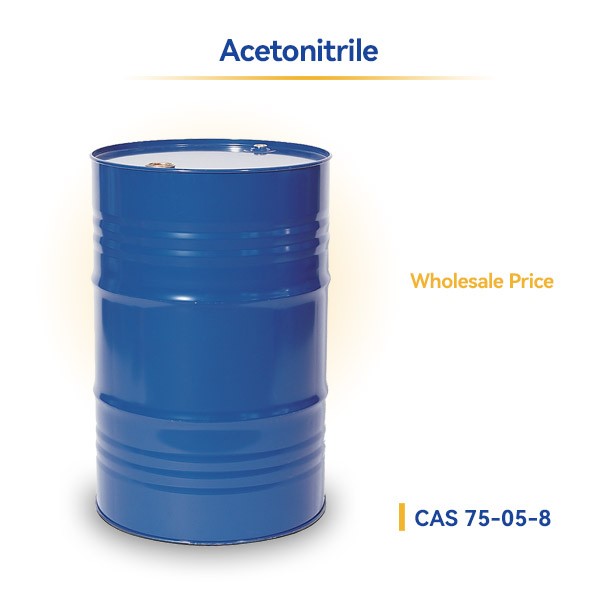
Buy Acetonitrile Cas 75-05-8 online
Buy Acetonitrile Cas 75-05-8 online
High-Purity Acetonitrile (CAS 75-05-8)
Aure Chemical is a leading global supplier of Acetonitrile (ACN), also known systematically as Ethanenitrile or Methyl cyanide. This versatile polar aprotic solvent is widely recognized for its unique properties, including moderate polarity, low viscosity, and UV transparency. Our high-purity Acetonitrile is an essential chemical in numerous applications, ranging from pharmaceutical manufacturing and high-performance liquid chromatography (HPLC) to DNA synthesis and various organic synthesis processes.
Basic Information of Acetonitrile
Acetonitrile (CAS No. 75-05-8) is meticulously produced and rigorously tested to meet stringent quality standards. We offer different grades of Acetonitrile to suit specific application requirements, ensuring exceptional purity and consistent performance:
| CAS No.: | 75-05-8 |
|---|---|
| EC No.: | 200-835-2 |
| Linear Formula: | CH₃CN |
| Molecular Weight: | 41.05 |
| Appearance: | Transparent Liquid |
| Odor: | Sweet, ether-like odor. |
| Melting point: | 45 °C (lit.) |
| Boiling point: | 81-82 °C (lit.) |
| Density: | 0.786 g/mL at 25 °C (lit.) |
| Solubility: | Miscible with water and many organic solvents (e.g., acetone, benzene, carbon tetrachloride, ethanol, ethyl ether). |
| Flash point: | 48 °F |
| Nature: | Flammable liquid and vapor, toxic. |
| RIDADR: | UN 1648 3/PG 2 |
| Chemical Structure: | 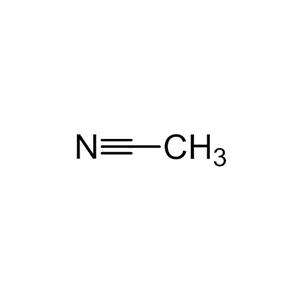 |
Our commitment to delivering high-purity Acetonitrile ensures a reliable and efficient component for your critical analytical and synthesis processes.
Primary Applications of Acetonitrile
Acetonitrile’s unique properties make it an indispensable solvent and reagent across a wide range of applications:
- High-Performance Liquid Chromatography (HPLC):
ACN is one of the most commonly used organic modifiers in HPLC mobile phases due to its low UV absorbance, low viscosity, and ability to elute a wide range of compounds. It provides excellent resolution and sensitivity in analytical separations.
- Pharmaceutical Manufacturing:
Acetonitrile is extensively used as a solvent in the synthesis, purification, and formulation of various pharmaceutical active ingredients (APIs) and intermediates. Its ability to dissolve both polar and nonpolar compounds makes it highly versatile.
- DNA and Peptide Synthesis:
ACN serves as a crucial solvent in oligonucleotide and peptide synthesis, facilitating coupling reactions and purification steps.
- Extraction Solvent:
It is employed as an extraction solvent for fats, oils, and other organic compounds from various matrices in the food, environmental, and pharmaceutical industries.
- Chemical Synthesis:
Acetonitrile is a versatile reaction medium for a wide variety of organic reactions, including nucleophilic substitutions, Diels-Alder reactions, and transition metal-catalyzed reactions. It can also act as a nitrile source in some transformations.
- Spectroscopy:
Due to its relatively simple structure and spectral properties, ACN is often used as a solvent in UV-Vis, IR, and NMR spectroscopy.
Why Choose Aure Chemical for Your Acetonitrile Supply?
Aure Chemical is dedicated to providing superior chemical solutions and unparalleled customer support. By partnering with us for your Acetonitrile requirements, you benefit from:
- Exceptional Purity & Consistency: Our Acetonitrile is manufactured to stringent purity specifications, ensuring optimal and predictable performance in your sensitive analytical and synthesis processes.
- Reliable Global Supply Chain: We maintain a robust and efficient supply network, guaranteeing timely and secure delivery of this essential solvent to your facilities worldwide, adhering to all safety and regulatory standards for hazardous materials.
- Expert Technical Support: Our team of experienced chemists and specialists is readily available to offer comprehensive guidance on product application, safe handling procedures, and optimal storage conditions for Acetonitrile.
- Commitment to Quality & Safety: We adhere to the highest industry standards for quality management, safety, and environmental responsibility across all our operations, ensuring peace of mind for our clients handling this highly flammable and toxic solvent.
Choose Aure Chemical for a trustworthy and dependable supply of high-quality Acetonitrile. We are ready to support your most demanding and innovative chemical applications.
Hazards Classification
- GHS Classification: Flammable Liquid (GHS02), Acute Toxicity, Oral (GHS06), Acute Toxicity, Inhalation (GHS06), Acute Toxicity, Dermal (GHS06), Serious Eye Damage (GHS05)
- Hazard Statements: Highly flammable liquid and vapor; harmful if swallowed, inhaled, or in contact with skin; causes serious eye damage.
- UN Number: UN 1648
- Hazard Class: 3 (Flammable Liquids)
- Packing Group: II



Packaging, Logistics & Compliance Capabilities
Aure Chemical provides flexible packaging solutions, compliant logistics arrangements, and controlled storage practices to support laboratory-scale, pilot-scale, and commercial-scale global supply.
Packaging Options
- 25 kg / 50 kg bags (fiber drum, aluminum bag, HDPE drum)
- 100 kg / 200 kg steel or HDPE drums
- 500 kg / 1000 kg IBC containers
- Bulk liquids in ISO tank containers
- Customized packaging upon request
Transportation Modes
- Sea freight (FCL / LCL)
- Air freight for selected products
- Road and rail transportation
- Dangerous & non-dangerous cargo handling
- Incoterms: EXW, FOB, CFR, CIF, DAP, DDP
Acetonitrile
CH3CN
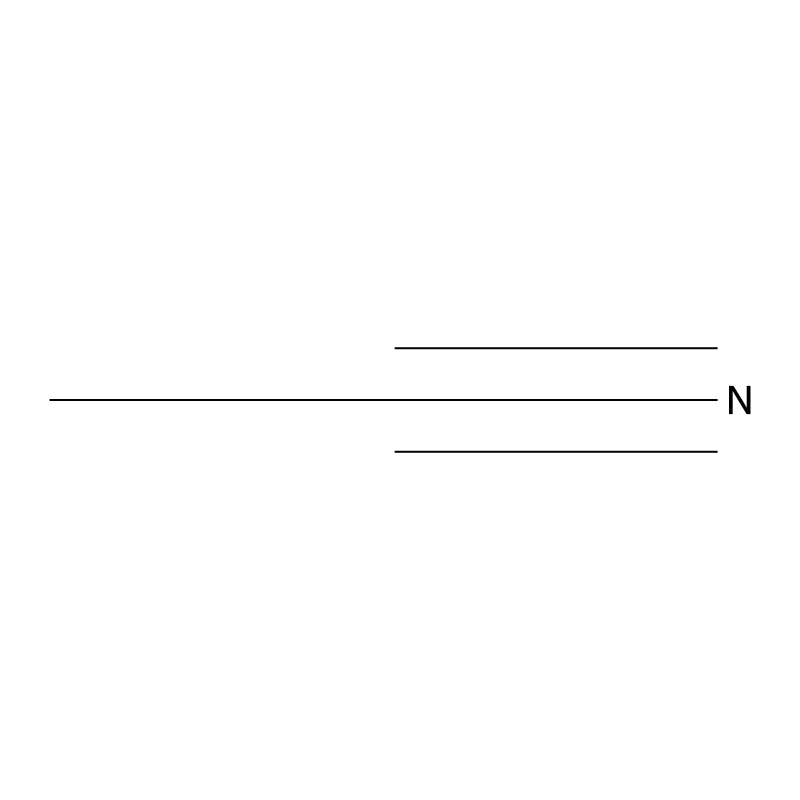
Content Navigation
Researchers requiring sensitive HPLC/UPLC analysis often face baseline noise and high backpressure from inferior solvents. Acetonitrile (CAS 75-05-8) provides the exact solution:
- UV cutoff ~190 nm ensures flat baselines for trace detection.
- Low viscosity (0.37 cP) reduces backpressure, enabling high-throughput UPLC.
- High-purity, gradient-grade quality for reproducible proteomics and peptide synthesis.
Rigorously QC-tested for lot-to-lot consistency, minimizing method revalidation.
CAS Number
Product Name
IUPAC Name
Molecular Formula
CH3CN
Molecular Weight
InChI
InChI Key
SMILES
solubility
24.36 M
In water, >800 g/L at 25 °C
In water, infinite solubility at 25 °C
Miscible with methanol, methyl acetate, ethyl acetate, ether, acetamide solutions, chloroform, carbon tetrachloride, ethylene chloride, and with many unsaturated hydrocarbons; immiscible with many saturated hydrocarbons (petroleum fractions).
Soluble in alcohol
Miscible with ethanol, diethyl ether, acetone, benzene
Equal wt of acetonitrile and the following materials are miscible at room temp: formic acid, acetic acid, levulinic acid, methanol, cellosolve solvent, formaldehyde, acetaldehyde, di-n-butyl amine, acetic anhydride, pyridine, nitrobenzene, aniline, xylene, phenol, acetyl chloride, dibutyl phthalate, diglycol stearate, n-butyl ether, dichloroethyl ether, methyl isobutyl ketone, nitromethane, nitroethane, nitropropane
Solubility in water, g/100ml at 20 °C: 1390 (very good)
Miscible
Synonyms
Canonical SMILES
Purity
Package Size
Acetonitrile (CAS 75-05-8) is a polar aprotic solvent widely recognized for a combination of physical and chemical properties that make it a standard in demanding analytical and synthetic applications. Key procurement-relevant attributes include its miscibility with water and a range of organic solvents, a low viscosity that facilitates handling and high-throughput processes, and a low UV cutoff wavelength.[1][2][3] It is frequently selected for its ability to dissolve a wide spectrum of both nonpolar and ionic compounds, which underpins its use as a mobile phase in high-performance liquid chromatography (HPLC) and as a solvent in electrochemistry and organic synthesis.[1][4][5]
References
- [1] Acetonitrile. Wikipedia. Accessed April 18, 2026.
- [8] Wang, L., & Li, W. (2008). Quality Evaluation of HPLC-Grade Acetonitrile. American Laboratory, 40(17), 24-27.
- [9] Comparison Guide for Methyl Sulfoxide and Other Polar Non-Protonic Solvents (DMF, NMP, Acetonitrile). Ecovia Chemical. Accessed April 18, 2026.
While other polar aprotic solvents like dimethylformamide (DMF), dimethyl sulfoxide (DMSO), and acetone are available, they are not direct substitutes for acetonitrile in many critical applications. Key performance parameters differ significantly; for example, acetonitrile’s UV cutoff of ~190 nm is substantially lower than that of DMF or DMSO (both ~268 nm) and acetone (~330 nm), making it essential for sensitive UV-based HPLC detection at low wavelengths.[6] Furthermore, its viscosity (0.37 cP at 25°C) is considerably lower than that of DMSO (~2.0 cP at 25°C), resulting in lower system backpressure in HPLC and enabling higher throughput.[1][7] In synthetic chemistry, substituting acetonitrile with DMF can lead to undesired side reactions or lower product purity and yield, particularly in peptide synthesis where acetonitrile has been shown to reduce racemization compared to DMF.[8] These quantitative differences in physical and chemical properties mean that substituting acetonitrile often requires complete re-validation of methods and can compromise analytical sensitivity, process efficiency, and synthetic outcomes.
References
Enhanced UV Transparency in HPLC
For analytical methods relying on UV detection, particularly at wavelengths below 270 nm, acetonitrile offers a significant advantage in signal-to-noise ratio over common substitutes. Its UV cutoff is among the lowest of all common HPLC solvents, ensuring minimal baseline interference.[2][7] This allows for lower detection limits and more accurate quantification of analytes that absorb in the low UV range.
| Evidence Dimension | UV Cutoff Wavelength (1 AU, 1 cm path) |
| Target Compound Data | Acetonitrile: 190 nm |
| Comparator Or Baseline | N,N-Dimethylformamide (DMF): 268 nm; Dimethyl Sulfoxide (DMSO): 268 nm; Acetone: 330 nm |
| Quantified Difference | 78-140 nm lower UV cutoff than common polar aprotic substitutes |
| Conditions | Standard measurement using water as a reference in a 1 cm path length cell. |
This enables the detection and quantification of compounds at low UV wavelengths without interference from the mobile phase, which is critical for many pharmaceutical and biological analyses.
Low Viscosity for Higher HPLC Throughput
Acetonitrile’s low viscosity is a key differentiator for process efficiency, especially in high-performance liquid chromatography (HPLC). Compared to other polar aprotic solvents like DMSO, its significantly lower viscosity results in reduced system backpressure.[1][7] This allows for the use of higher flow rates or smaller particle size columns without exceeding the pressure limits of the instrumentation, directly translating to faster analysis times and increased sample throughput.
| Evidence Dimension | Viscosity at 25°C |
| Target Compound Data | Acetonitrile: ~0.37 cP |
| Comparator Or Baseline | Dimethyl Sulfoxide (DMSO): ~2.0 cP |
| Quantified Difference | Approximately 5.4 times less viscous than DMSO |
| Conditions | Standard measurement at 25°C (298.15 K). |
Lower backpressure enables faster separations and higher throughput in analytical labs and reduces energy consumption and wear on industrial pumping equipment.
Baseline Stability in Gradient HPLC
In gradient elution HPLC, the use of high-purity, HPLC-grade acetonitrile is critical for achieving a stable, flat baseline. Lower-grade acetonitrile often contains trace UV-absorbing impurities that accumulate on the column under initial aqueous conditions and then elute as the acetonitrile concentration increases.[9][10] This phenomenon causes significant baseline drift and the appearance of ‘ghost peaks’, which can obscure the detection of low-concentration analytes and complicate quantification.[11][12] Procuring a high-purity grade specifically intended for gradient analysis eliminates this issue, ensuring reproducible and sensitive results.
| Evidence Dimension | Baseline Profile in Gradient Elution (UV Detection) |
| Target Compound Data | High-Purity/HPLC-Grade Acetonitrile: Stable, flat baseline with minimal drift or ghost peaks. |
| Comparator Or Baseline | Lower-Grade/Reagent-Grade Acetonitrile: Pronounced baseline drift and multiple ghost peaks as organic concentration increases. |
| Quantified Difference | Qualitative but significant difference in baseline stability, directly impacting analytical sensitivity and reproducibility. |
| Conditions | Reversed-phase HPLC with a gradient from high aqueous to high organic mobile phase, monitored with a UV detector at low wavelengths (e.g., 200-220 nm). |
For trace analysis, impurity profiling, and proteomics, a stable baseline is non-negotiable for accurate peak integration and achieving low limits of detection.
Electrochemical Stability for Energy Storage
In non-aqueous electrochemistry, acetonitrile-based electrolytes frequently exhibit a wider electrochemical stability window and higher ionic conductivity compared to carbonate-based alternatives like propylene carbonate (PC).[13] While traditionally limited by its reductive instability, recent research shows that in superconcentrated or localized high-concentration electrolyte (LHCE) formulations, acetonitrile’s stability against reduction is significantly enhanced, enabling reversible lithium intercalation into graphite anodes.[14][15] This combination of high conductivity and a wide operational window makes acetonitrile a strategic choice for developing high-performance, fast-charging lithium-ion batteries and supercapacitors.[13][16]
| Evidence Dimension | Electrochemical Stability Window & Ionic Conductivity |
| Target Compound Data | Acetonitrile-based LHCE: Stability window approaching 6 V (vs Li+/Li) with high ionic conductivity. |
| Comparator Or Baseline | Propylene Carbonate (PC)-based electrolytes: Generally narrower stability window and lower ionic conductivity. |
| Quantified Difference | Wider potential window and higher conductivity, enabling higher voltage and faster charging capabilities. |
| Conditions | Lithium-ion battery or supercapacitor cell using graphite or lithium metal anodes and various cathodes. |
This enables the formulation of electrolytes for next-generation energy storage devices that require higher operating voltages, faster charge/discharge rates, and better low-temperature performance.
High-Sensitivity Reversed-Phase HPLC
The combination of low UV cutoff and low viscosity makes high-purity acetonitrile the solvent of choice for demanding HPLC and UPLC applications. It allows for sensitive detection of analytes at low wavelengths (e.g., <220 nm) and enables faster flow rates for higher sample throughput without excessive backpressure.[2][7]
Trace Analysis and Proteomics by LC-MS
In applications where baseline stability is paramount, such as identifying trace-level impurities or in complex proteomics analyses, the use of high-purity, gradient-grade acetonitrile is essential. Its low residue on evaporation and minimal UV-absorbing impurities ensure a flat baseline during gradient elution, preventing ghost peaks from obscuring critical low-abundance analytes.[9][10]
High-Voltage & Fast-Charging Battery Electrolytes
For research and development of next-generation lithium-ion batteries, acetonitrile’s high dielectric constant, ability to dissolve electrolytes, and wide electrochemical window (particularly in concentrated formulations) make it a superior choice over traditional carbonate solvents.[4][14] It facilitates high ionic conductivity, leading to improved rate capability and performance.
Oligonucleotide and Peptide Synthesis
Acetonitrile is a preferred solvent for the synthesis of DNA oligonucleotides and peptides.[1] Its ability to dissolve the necessary monomers and reagents, coupled with evidence suggesting it can reduce side reactions like racemization compared to alternatives such as DMF, makes it a critical component for ensuring high yield and purity of the final biopolymer product.[8]
References
- [1] Acetonitrile. Wikipedia. Accessed April 18, 2026.
- [6] Best and Worst Organic Solvents to Use in LC. Phenomenex. Published July 14, 2016.
- [8] Wang, L., & Li, W. (2008). Quality Evaluation of HPLC-Grade Acetonitrile. American Laboratory, 40(17), 24-27.
- [13] USING ACETONITRILE AND TETRAHYDROFURAN INSTEAD OF N,N-DIMETHYLFORMAMIDE IN PEPTIDE BOND FORMATION. Luxembourg Bio Technologies. Accessed April 18, 2026.
- [22] 11. Organic Solvents Used in HPLC. GL Sciences. Accessed April 18, 2026.
- [29] Yamada, Y., et al. (2014). Unusual Stability of Acetonitrile-Based Superconcentrated Electrolytes for Fast-Charging Lithium-Ion Batteries. Journal of the American Chemical Society, 136(13), 5039-5046.
Physical Description
Liquid
COLOURLESS LIQUID WITH CHARACTERISTIC ODOUR.
Colorless liquid with an aromatic odor.
Color/Form
Boiling Point
81.6 °C
81.6 °C at 760 mm Hg
82 °C
179°F
Flash Point
42 °F (6 °C) (Open Cup)
2 °C c.c.
42°F (open cup)
(oc) 42°F
Vapor Density
1.42 (Air = 1)
Relative vapor density (air = 1): 1.4
1.42
Density
Specific gravity: 0.78745 at 15 °C/4 °C
Relative density (water = 1): 0.8
0.787
0.78
LogP
log Kow = -0.34
-0.3
Odor
Sweet, ethereal odor
Melting Point
-43.8 °C
-44 °C
-46 °C
-49°F
UNII
GHS Hazard Statements
H302: Harmful if swallowed [Warning Acute toxicity, oral];
H312: Harmful in contact with skin [Warning Acute toxicity, dermal];
H319: Causes serious eye irritation [Warning Serious eye damage/eye irritation];
H332: Harmful if inhaled [Warning Acute toxicity, inhalation]
Use and Manufacturing
Mechanism of Action
Vapor Pressure
88.80 mmHg
88.8 mm Hg at 25 °C
Vapor pressure, kPa at 25 °C: 9.9
73 mmHg
Pictograms


Flammable;Irritant
Impurities
Maximum limits of impurities: residue after evaporation 0.0005%, acidity (as acetic acid) 0.03%, alkalinity (as ammonia) 0.001%, water 0.05%. /’Photrex’ Reagent, for spectrophotometry/
Other CAS
26809-02-9
Wikipedia
Biological Half Life
Use Classification
Fire Hazards -> Flammable – 3rd degree
Methods of Manufacturing
Acetonitrile and hydrogen cyanide are the principal byproducts from the ammoxidation of propylene to acrylonitrile (Sohio process). Some acrylonitrile producers recover and purify acetonitrile, but most companies burn the byproducts as plant fuel.
By-product of propylene-ammonia process for acrylonitrile.
Obtained commercially as a byproduct in manufacture of acrylonitrile. … Preparation by dehydration of acetamide.
High Purity Acetonitrile – Acetonitrile from China
-
-
Acetonitrile, 99.8%, for HPLC 1 L | Buy Online | Thermo Scientific …
Buy two qualifying Fisher Chemical products and get a third of equal or lesser value at no additional cost.
-
Buy Acetonitrile – HPLC Grade Solvent Online | Advent
Advent offers high-purity Acetonitrile for HPLC, DNA synthesis & chemical use. Ideal for pharma, biotech & agro industries. Order …
-
High-Purity Acetonitrile CAS 75-05-8 | Industrial & Chemical | Aure …
Aure Chemical is a leading supplier of high-purity Acetonitrile (ACN, CAS 75-05-8), a versatile polar aprotic solvent widely used in …
-
Reviews: 1
-
-
Acetonitrile anhydrous, 99.8 75-05-8 – MilliporeSigma
Bulk and Prepack available | Sigma-Aldrich-271004; ACN | Methyl cyanide | Ethyl nitrile | Cyanomethane; CAS No. 75-05-8; Explore …
-
Acetonitrile 99.9% – HPLC & ACS Reagent Grade | Ecolink
Buy HPLC‑grade acetonitrile 99.9% purity. Low UV absorbance solvent for HPLC, LC‑MS, pharma, food & environmental testing. …
-
Acetonitrile CAS# 75-05-8 – GJ Chemical
GJ Chemical offers Acetonitrile, CAS# 75-05-8. Available in various grades, packaging and quantities from LTL to Bulk. Speak to one …
-
-
acetonitrile 75 05 8
-
acn ethyl nitrile price
-
acn ethyl nitrile
-
acetonitrile merck cas no
-
acetonitrile boiling point
-
acetonitrile molar mass
-
acetonitrile pubchem
-
anhydrous acetonitrile cas no
-
dry acetonitrile cas no
-
acetonitrile details
-
Acetonitrile CAS 75-05-8 PURITY: ≥99% Used as solvent
Acetonitrile, abbreviated as ACN, is the simplest organic nitrile, usually also called methane cyanide and methylnitrile. …
-
Acetonitrile (CAS 75-05-8) | Glentham Life Sciences
Buy GK1492 – Acetonitrile (75-05-8) online from Glentham Life Sciences, a manufacturer and supplier of fine chemicals. View …
-
Sigma Aldrich Fine Chemicals Biosciences Acetonitrile | 75-05-8 …
Shop Sigma Aldrich Fine Chemicals Biosciences Acetonitrile | 75-05-8 | MFCD00001878 | 100 mL at Fishersci.com. Available in null.
-
People also ask
-
Deep dive into Buy Acetonitrile Cas 75-05-8 online
-
acetonitrile 75 05 8
-
acn ethyl nitrile price
-
acn ethyl nitrile
-
acetonitrile merck cas no
-
acetonitrile boiling point
-
acetonitrile molar mass
-
acetonitrile pubchem
-
anhydrous acetonitrile cas no
-
dry acetonitrile cas no
-
acetonitrile details
-
Reviews
There are no reviews yet.