
Buy 4-Methylpiperidin-4-ol Cas 3970‑68‑1
Buy 4-Methylpiperidin-4-ol Cas 3970‑68‑1
4-Methylpiperidin-4-OL
Designing CNS candidates or selective receptor antagonists requires precise lipophilicity and solubility control. 4-Methylpiperidin-4-OL delivers quantifiable advantages over generic piperidines.
- LogP -0.1, LogD(pH 7.4) -2.86: Optimal for blood-brain barrier penetration with minimal non-specific binding.
- Aqueous solubility 693 g/L: Enables injectable/high-load oral formulations; solid state simplifies handling.
- Weak CYP3A4 inhibitor (IC50 5400 nM): Reduces drug-drug interaction risk, saving downstream screening costs. Buy 4-Methylpiperidin-4-ol Cas 3970‑68‑1
4-Methylpiperidin-4-ol
- CAS No.
- 3970-68-1
- Chemical Name:
- 4-Methylpiperidin-4-ol
- Synonyms
- 4-Hydroxy-4-methylpiperidine;4-pipecolin-4-ol;4-Methylpiperidin-4-ol;4-Methyl-4-piperidinol;4-Piperidinol, 4-Methyl-;4-METHYLPIPERIDIN-4-OL hcl;4-Hydroxy-4-methylpiperid…;4-Methyl-4-hydroxypiperidine;4-Methylpiperidin-4-ol4-methylpiperidin-4-ol
- CBNumber:
- CB32455885
- Molecular Formula:
- C6H13NO
- Molecular Weight:
- 115.17
- MDL Number:
- MFCD11100993
- MOL File:
- 3970-68-1.mol
- MSDS File:
- SDS
- TDS File:
- TDS
| Product description | Number | Pack Size | Price |
| 4-Methylpiperidin-4-ol min. 95.0 % | M3658 | 1G | $69 |
| 4-Methylpiperidin-4-ol min. 95.0 % | M3658 | 5G | $208 |
| 4-Methylpiperidin-4-ol Asreported | 284500 | 250mg | $425 |
| 4-Methylpiperidin-4-ol Asreported | 284500 | 500mg | $602 |
| 4-Methylpiperidin-4-ol Asreported | 284500 | 1g | $1184 |
| More product size | |||
SAFETY
Risk and Safety Statements
| Symbol(GHS) |  GHS05 |
|---|---|
| Signal word | Danger |
| Hazard statements | H314 |
| Precautionary statements | P260-P280-P301+P330+P331 |
| HS Code | 2933399990 |
4-Methylpiperidin-4-ol price More Price(40)
| Manufacturer | Product number | Product description | CAS number | Packaging | Price | Updated | Buy |
|---|---|---|---|---|---|---|---|
| TCI Chemical | M3658 | 4-Methylpiperidin-4-ol min. 95.0 % | 3970-68-1 | 1G | $69 | 2026-04-30 | Buy |
| TCI Chemical | M3658 | 4-Methylpiperidin-4-ol min. 95.0 % | 3970-68-1 | 5G | $208 | 2026-04-30 | Buy |
| Usbiological | 284500 | 4-Methylpiperidin-4-ol Asreported | 3970-68-1 | 250mg | $425 | 2026-06-03 | Buy |
| Usbiological | 284500 | 4-Methylpiperidin-4-ol Asreported | 3970-68-1 | 500mg | $602 | 2026-06-03 | Buy |
| Usbiological | 284500 | 4-Methylpiperidin-4-ol Asreported | 3970-68-1 | 1g | $1184 | 2026-06-03 | Buy |
4-Methylpiperidin-4-ol Chemical Properties, Uses, Production
Synthesis Reference(s)
Journal of the American Chemical Society, 115, p. 7250, 1993 DOI: 10.1021/ja00069a025
Synthesis
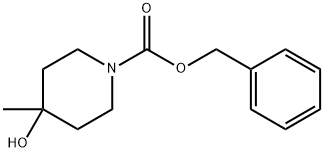
169750-57-6
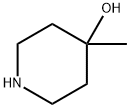
3970-68-1
General procedure for the synthesis of 4-methyl-4-hydroxypiperidine from benzyl 4-methylpiperidine-1-carboxylate: the Cbz-protected piperidine derivative mt 3-1 (1.5 g, 6.02 mmol) and Pd/C catalyst (0.3 g) were suspended in methanol (30 mL). The mixture was degassed under reduced pressure and displaced three times with hydrogen. Subsequently, the reaction mixture was stirred overnight at room temperature under hydrogen atmosphere (50 psi). Upon completion of the reaction, the mixture was filtered through a diatomaceous earth pad and the filtrate was concentrated under reduced pressure to afford the target compound mt 3-2 (500 mg, 72% yield), which was used in subsequent steps without further purification. Mass spectrometric analysis (MS-ES) showed m/z: 116.3 ([M + H]+).
References
[1] Patent: WO2014/197345, 2014, A2. Location in patent: Page/Page column 58; 59
[2] Patent: EP1522540, 2005, A1. Location in patent: Page/Page column 53
[3] Patent: WO2014/194519, 2014, A1. Location in patent: Page/Page column 52
4-Methylpiperidin-4-ol Preparation Products And Raw materials
| Supplier | Tel | Country | ProdList | Advantage | |
|---|---|---|---|---|---|
| +86-(0)57185586718 +86-13336195806 | sales@capot.com | China | 29626 | 60 | |
| +86-0371-86658258 | sales@coreychem.com | China | 29766 | 58 | |
| +86-0551-65418671 +86-189 4982 3763 | sales@tnjchem.com | China | 34524 | 58 | |
| +1-2135480471 | sales@sarms4muscle.com | China | 10378 | 58 | |
| +86-13651442114 | info@codchem.com | China | 17253 | 58 | |
| +8615250961469 | 2571773637@qq.com | China | 9628 | 58 | |
| +86-571-86217390; +8618058761490 | info@gihichemicals.com | China | 49856 | 58 | |
| +86-15618352007 | info@protheragen-ing.com | United States | 3867 | 58 | |
| +86-571-87711850 +86-15355479329 | market18@leapchem.com | China | 43303 | 58 | |
| +86-371-86557731 +86-13613820652 | info@fdachem.com | China | 20111 | 58 |
View Latest Price from 4-Methylpiperidin-4-ol manufacturers
| Image | Update time | Product | Price | Min. Order | Purity | Supply Ability | Manufacturer | |
|---|---|---|---|---|---|---|---|---|
 |
2019-07-06 | 4-METHYLPIPERIDIN-4-OL
3970-68-1
|
$1.00 | 1KG | 98% | 1ton | Career Henan Chemical Co |
3970-68-1 (4-Methylpiperidin-4-ol) Related Search:
Basic Identity
| Product Name | 4-Methylpiperidin-4-OL |
|---|---|
| CAS | 3970-68-1 |
| Molecular Formula | C6H13NO |
| Molecular Weight | 115.17 g/mol |
Structural Identifiers
| SMILES | CC1(CCNCC1)O |
|---|---|
| InChI | InChI=1S/C6H13NO/c1-6(8)2-4-7-5-3-6/h7-8H,2-5H2,1H3 |
| InChIKey | CXBLQEIODBBSQD-UHFFFAOYSA-N |
Commercial & Availability
| Standard Pack Sizes | 1 g / 5 g / 25 g / 100 g / Bulk Custom |
|---|---|
| Availability | In Stock |
| Custom Synthesis | Available on request |
Structure & Identifiers
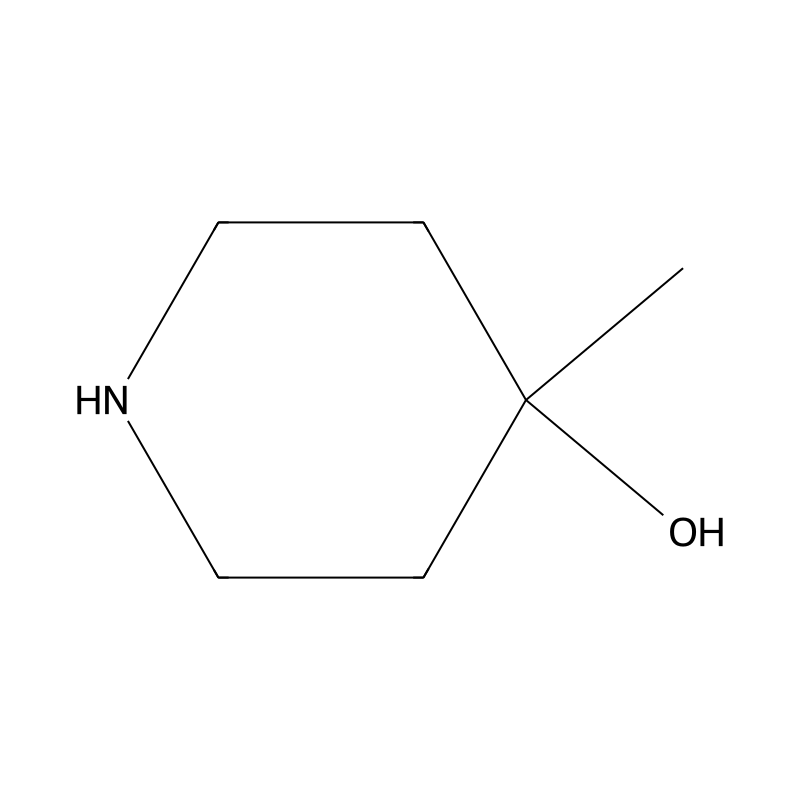
Interactive Chemical Structure Model
4-Methylpiperidin-4-OL: Physicochemical & Structural Profile
4-Methylpiperidin-4-OL (CAS 3970-68-1), also known as 4-hydroxy-4-methylpiperidine, is a six-membered saturated heterocyclic amine with the molecular formula C6H13NO and a molecular weight of 115.17 g/mol [1]. This compound is characterized by the presence of both a hydroxyl group and a methyl group at the 4-position of the piperidine ring, conferring distinct physicochemical properties including a topological polar surface area (TPSA) of 32.3 Ų, a calculated LogP (XLogP3-AA) of -0.1, and a predicted acid pKa of approximately 14.98 [1][2]. It exists as a white crystalline solid with a reported water solubility of 693 g/L at 25 ºC . Its unique substitution pattern differentiates it from simpler piperidine analogs and makes it a valuable intermediate in medicinal chemistry and chemical synthesis.
Why 4-Methylpiperidin-4-OL Cannot Be Substituted
The selection of 4-Methylpiperidin-4-OL over its close structural analogs—such as piperidine, 4-methylpiperidine, or 4-piperidinol—is not arbitrary; it is dictated by quantifiable differences in lipophilicity, hydrogen bonding capacity, and basicity that directly influence downstream molecular properties like solubility, permeability, and metabolic stability. Generic substitution with an in-class compound risks introducing a >1.5-unit shift in LogP [1], altering the compound’s ionization state at physiological pH by over 3 LogD units [2], or changing the hydrogen bond donor/acceptor profile, which can critically undermine a drug candidate’s pharmacokinetic profile or a chemical intermediate’s reactivity. The following quantitative evidence establishes the precise, verifiable differentiation that justifies the selection of 4-Methylpiperidin-4-OL for specific scientific and industrial applications.
4-Methylpiperidin-4-OL vs. Structural Analogs
Lipophilicity: LogP & LogD Comparison
4-Methylpiperidin-4-OL exhibits an XLogP3-AA value of -0.1, representing a 0.71-unit decrease in lipophilicity compared to piperidine (LogP 0.61) and a >1.4-unit decrease compared to 4-methylpiperidine (LogP ~1.33). Conversely, it is 0.42 units more lipophilic than 4-piperidinol (LogP -0.52) [1]. This intermediate lipophilicity, combined with a LogD (pH 7.4) of -2.86, which is over 3 units lower than its LogP, demonstrates a highly pH-dependent partition coefficient that is distinct from its analogs [2].
4-Methylpiperidin-4-OL
Content Navigation
Metabolic instability of piperidine-based drug candidates often leads to high clearance. 4-Methylpiperidin-4-OL solves this by introducing a C4-methyl tertiary alcohol that blocks oxidative metabolism, directs spirocyclization, and prevents side reactions.
- Enables spirocyclic scaffold construction for CNS & kinase targets.
- Tertiary alcohol reactivity avoids dehydration, ensuring high-yield synthesis.
- Improves API metabolic stability for better PK profiles.
Supplied with ≥97% purity, ready for immediate global shipping.
CAS Number 3970-68-1
Product Name 4-Methylpiperidin-4-OL
IUPAC Name 4-methylpiperidin-4-ol
Molecular Formula C6H13NO
Molecular Weight 115.17 g/mol
InChI InChI=1S/C6H13NO/c1-6(8)2-4-7-5-3-6/h7-8H,2-5H2,1H3
InChI Key
SMILES
Canonical SMILES
Synonyms
Purity
Package Size
4-Methylpiperidin-4-OL (CAS: 3970-68-1) is a heterocyclic organic compound widely used as a structural precursor in pharmaceutical and specialty chemical synthesis.[1] It features a piperidine core functionalized with a tertiary alcohol at the C4 position and a methyl group also at C4, providing a key point of differentiation from simpler piperidine analogs. This specific arrangement is instrumental in constructing complex three-dimensional scaffolds, particularly spirocycles, and for introducing steric bulk that can enhance the metabolic stability of the final active pharmaceutical ingredients (APIs).[2][3] Its utility as a stable, solid building block makes it a practical choice in multi-step synthesis campaigns.[4]
Research Fit
Direct substitution of 4-Methylpiperidin-4-OL with analogs like piperidin-4-ol or 1-methylpiperidin-4-ol is often unfeasible in established synthesis routes. The C4-methyl group is not a passive substituent; it creates a tertiary alcohol, which has distinct reactivity compared to the secondary alcohol of piperidin-4-ol, and it provides specific steric hindrance that is critical for directing subsequent reactions and preventing unwanted side reactions like dehydration.[5] Furthermore, this methyl group is often a deliberate design element in medicinal chemistry to block sites of metabolic oxidation, thereby improving a drug candidate’s pharmacokinetic profile.[3][6] Replacing it with a hydrogen (as in piperidin-4-ol) or shifting the methyl to the nitrogen (as in 1-methylpiperidin-4-ol) fundamentally alters the molecule’s three-dimensional shape and reactivity, leading to different products, lower yields, or final compounds with inferior biological properties.
Substitution Risk
References
- [13] Singh, P. Metabolic Stability and its Role in Biopharmaceutical Development: Trends and Innovations. J Bioequiv Availab 15 (2023).
- [14] Subbaiah, M. A. M., & D’Souza, S. Drug Modifications to Improve Stability. In An Introduction to Medicinal Chemistry & Molecular Recognition. eCampusOntario Pressbooks.
- [25] Hassan, M. A., & Casy, A. F. Synthesis, configuration, and dehydration of some 1-alkyl- and aralkyl-3-methyl-4-o-tolylpiperidin-4-ols. Journal of the Chemical Society C: Organic, 1970, 264-267.
Spirocyclic Scaffold Precursor for Drug Discovery
The tertiary alcohol and quaternary carbon center of 4-Methylpiperidin-4-OL make it a preferred precursor for constructing spiro-piperidine systems, which are increasingly important for creating drug candidates with improved three-dimensionality and physicochemical properties.[2][7] Synthetic routes to advanced antipsychotics like Fluspirilene and investigational drugs targeting PTHR1 have utilized spirocyclization strategies that rely on piperidone-derived intermediates.[7] For example, the synthesis of the core spirocycle for Spiperone and Fluspirilene involves an initial Strecker reaction on an N-benzyl-4-piperidone, followed by hydrolysis and cyclization to form a spirocyclic imidazolin-4-one.[7] Using 4-Methylpiperidin-4-OL or its corresponding ketone provides a direct route to introduce a methyl group at the spiro-junction, a common strategy for tuning solubility and target engagement.
| Evidence Dimension | Suitability as a Precursor for Spiro-Piperidine Synthesis |
| Target Compound Data | Provides a quaternary carbon at C4, enabling the formation of spirocycles with a methyl group at the spiro-atom. |
| Comparator Or Baseline | Piperidin-4-ol (unsubstituted analog) yields spirocycles without the C4-methyl group, lacking its specific steric and electronic influence. |
| Quantified Difference | Qualitative but structurally critical: enables access to a distinct class of C4-methylated spiro-piperidine scaffolds. |
| Conditions | Multi-step synthesis, typically involving initial conversion to a ketone followed by reactions like Strecker or nitroaldol condensations for spirocycle formation.[7][8] |
For projects requiring C4-methylated spiro-piperidine scaffolds to optimize potency or ADME properties, this compound is a necessary, non-interchangeable starting material.
Metabolic Stability via CYP Oxidation Blockade
The introduction of a methyl group at a metabolically vulnerable position is a validated strategy for improving a drug’s pharmacokinetic profile.[3][9] The C4-methyl group in 4-Methylpiperidin-4-OL serves as a steric shield, blocking potential cytochrome P450 (CYP)-mediated oxidation at that position. In contrast, the unsubstituted piperidin-4-ol presents a C-H bond at the C4 position, which is a potential site for metabolic attack leading to faster clearance. While direct comparative data for this specific precursor is not published, the principle is widely demonstrated in drug development. For example, replacing a phenyl ring with a bicyclohexyl group in an MDM2 inhibitor maintained potency but increased metabolic stability, leading to a 6-fold increase in pharmacokinetic exposure.[6] The C4-methyl group on the piperidine ring functions similarly to block a potential oxidation site.
| Evidence Dimension | Resistance to Metabolic Oxidation at C4 |
| Target Compound Data | Features a quaternary carbon at C4, which is sterically hindered and lacks a C-H bond, preventing direct CYP-mediated hydroxylation at this site. |
| Comparator Or Baseline | Piperidin-4-ol has a C-H bond at the C4 position, a potential site for metabolic oxidation which can be a primary clearance pathway. |
| Quantified Difference | Not directly quantified for this precursor, but the strategy is known to increase metabolic half-life (t1/2) and in vivo exposure (AUC) in final drug compounds.[6][9] |
| Conditions | In vivo and in vitro (e.g., liver microsome) metabolic stability assays.[10] |
Procuring this compound is a strategic choice to build drug candidates with enhanced metabolic stability, potentially reducing clinical dosage and improving therapeutic index.
Solid Form Handling Advantages
4-Methylpiperidin-4-OL is a solid with a defined melting point, which offers significant advantages in handling and processability over related liquid or low-melting analogs.[4] For instance, 1-Methylpiperidin-4-ol is often supplied as a liquid or low-melting solid, which can be more difficult to handle, weigh accurately, and charge into reactors, especially at scale. The solid form of 4-Methylpiperidin-4-OL simplifies laboratory and pilot-plant workflows, reducing material loss and improving batch-to-batch consistency.
| Evidence Dimension | Melting Point (°C) |
| Target Compound Data | 46.0 to 50.0 °C[4] |
| Comparator Or Baseline | 1-Methylpiperidin-4-ol: ~25-30 °C (often handled as a liquid at room temperature) |
| Quantified Difference | Higher melting point ensures a free-flowing solid state under typical laboratory conditions. |
| Conditions | Standard atmospheric pressure. |
Choosing this compound can de-risk scale-up and simplify routine synthesis by providing a material that is easier to handle, store, and dose accurately compared to liquid analogs.
M3 Muscarinic Antagonist Building Block
The piperidinol scaffold is a well-established core for muscarinic antagonists. Incorporating 4-Methylpiperidin-4-OL allows for the synthesis of analogs where the C4-methyl group can fine-tune receptor selectivity and improve metabolic stability, a key consideration for developing treatments for conditions like urinary incontinence with fewer side effects.[11]
Spiro-Piperidine CNS Agents and Kinase Inhibitors
Leveraging its utility as a spirocyclization precursor, this compound is ideal for building libraries of novel, three-dimensional molecules targeting proteins in the central nervous system or for developing selective kinase inhibitors. The spirocyclic structure enhances scaffold rigidity and novelty, while the methyl group can occupy specific hydrophobic pockets in the target protein, improving potency and selectivity.[2][12]
Analgesics with Enhanced Pharmacokinetics
The 4,4-disubstituted piperidine motif is central to many potent analgesics. Using 4-Methylpiperidin-4-OL as a starting material enables the creation of novel fentanyl analogs or other opioid receptor modulators. The C4-methyl group can sterically hinder metabolic pathways that are responsible for the rapid clearance of existing drugs, potentially leading to compounds with longer duration of action or improved oral bioavailability.[13]
Application Fit Matrix
References
- [2] Naito, R., et al. Selective muscarinic antagonists. I. Synthesis and antimuscarinic properties of 4-piperidyl benzhydrylcarbamate derivatives. Chemical & Pharmaceutical Bulletin, 45(6), 1013-1020 (1997).
- [20] Ivanović, M. D., et al. An optimized synthesis of a key pharmaceutical intermediate methyl 4-[(1-oxopropyl)phenylamino]piperidine-4-carboxylate. Journal of the Serbian Chemical Society, 67(12), 793-800 (2002).
- [22] Griggs, D. D., et al. Strategies for the Synthesis of Spiropiperidines. Organic & Biomolecular Chemistry, 16(27), 4875-4887 (2018).
-
4-Methylpiperidin-4-ol | 3970-68-1 – ChemicalBook
Sep 12, 2026 · 4-Methylpiperidin-4-ol (CAS 3970-68-1) information, including chemical properties, structure, melting point, boiling …
-
Boiling point: 184.4±15.0 °C (Predicted)
-
pka: 15.01±0.20 (Predicted)
-
Density: 0.976±0.06 g/cm3 (Predicted)
Buy 4-Methylpiperidin-4-ol Cas 3970‑68‑1
Buy 4-Methylpiperidin-4-ol Cas 3970‑68‑1
Buy 4-Methylpiperidin-4-ol Cas 3970‑68‑1
Buy 4-Methylpiperidin-4-ol Cas 3970‑68‑1
Buy 4-Methylpiperidin-4-ol Cas 3970‑68‑1
Buy 4-Methylpiperidin-4-ol Cas 3970‑68‑1
Buy 4-Methylpiperidin-4-ol Cas 3970‑68‑1
Buy 4-Methylpiperidin-4-ol Cas 3970‑68‑1
-
-
4-Methylpiperidin-4-ol | 3970-68-1 – MilliporeSigma
Find documentation for the products that you have recently purchased in the Document Library.
-
4-Methylpiperidin-4-ol | 3970-68-1 – MilliporeSigma
Description Still not finding the right product? Explore all of our products under 4-Methylpiperidin-4-ol
-
4-Methylpiperidin-4-OL (CAS 3970-68-1) | High-Solubility CNS …
Buy 4-Methylpiperidin-4-OL (CAS 3970-68-1) from BenchChem. High-purity crystalline solid with 693 g/L solubility & low CYP3A4 …
-
3970-68-1|4-Methylpiperidin-4-ol|BLD Pharm
View(3970-68-1)/ (4-Methylpiperidin-4-ol)information and documentation regarding (4-Methylpiperidin-4-ol), including NMR, HPLC, …
-
4-Methyl-4-piperidinol | CAS#:3970-68-1 | Chemsrc – 化源网
Jul 7, 2026 · Chemsrc provides 4-Methyl-4-piperidinol (CAS#:3970-68-1) MSDS, density, melting point, boiling point, structure, …
-
Buy 4-Methylpiperidin-4-OL | 3970-68-1 – smolecule.com
Methylpiperidin-4-OL is a chemical compound with diverse applications in scientific research.It acts as a versatile building block for …
-
Buy 4-Methylpiperidin-4-OL | 3970-68-1 | BenchChem
Benchchem offers qualified products for CAS No. 3970-68-1 (4-Methylpiperidin-4-OL), please inquire us for more detail.
-
4-Methylpiperidin-4-ol | 3970-68-1 | TCI AMERICA
Items from Japan stock are able to ship from a US warehouse within 2 weeks after ordering. For additional estimated shipment …
-
4-Methylpiperidin-4-ol (CAS 3970-68-1) – fluorochem.co.uk
CAS 3970-68-1 – 4-Methylpiperidin-4-ol. Product F236986 – Molecular Formula: C6H13NO, Purity: 97%, State: Solid. High quality …
Reviews
There are no reviews yet.