
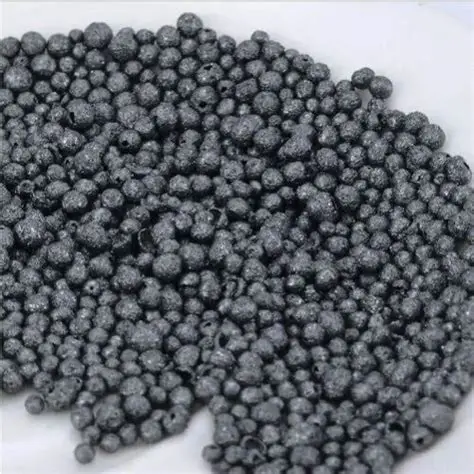
Buy Iodine crystals Cas 7553-56-2
-
- DL-Serine Hydrazide Hydrochloride Multiple-site Synergy Induced Effective and Stable Formamidine-Rich Perovskite Solar Cells.: This research explores the use of iodine in enhancing the stability and efficiency of perovskite solar cells, a promising development for renewable energy technologies (Gong et al., 2024).
-
- Dynamic Cleavage-Remodeling of Covalent Organic Networks into Multidimensional Superstructures.: Investigates the role of iodine in the dynamic remodeling of covalent organic frameworks, offering insights into the creation of advanced materials with tunable properties (Jiang et al., 2024).
-
- Machine Learning for Characterizing Biofuels Based on Femtosecond Laser Ionization Mass Spectrometry.: Details the application of iodine as a dopant in mass spectrometry for enhancing the detection and characterization of biofuels, illustrating the integration of advanced analytical techniques and machine learning (Imasaka et al., 2024).
-
- Indoor concentrations of radioactive aerosols from nuclear accidents.: Discusses the critical role of iodine in monitoring and mitigating the effects of radioactive aerosols in nuclear accident scenarios, emphasizing its importance in environmental safety and public health (Orabi, 2024).
- Preoperative prediction of lymphovascular invasion and T-staging of rectal cancer via a dual-energy computed tomography iodine map: a feasibility study.: Highlights the use of iodine-based imaging for preoperative assessments in rectal cancer, providing a non-invasive method to improve diagnostic accuracy and patient management (Zhang et al., 2024).
Iodine
Elemental iodine eliminates over-oxidation risks of chlorine/bromine reagents, delivering controlled redox selectivity as the weakest stable halogen oxidant. Sourced in multiple grades to match application-critical purity requirements:
• ACS Reagent (≥99.8%, ≤0.01% nonvolatiles): for iodometric titrations, thiosulfate standardization, and USP/NF monograph testing.
• Ultra-high purity metals-basis (99.9985%): for ICP-MS standards, semiconductor precursor analysis, and trace-metal-free polymer synthesis.
• DEA List I regulated; end-use documentation support provided for compliant procurement.
Technical Parameters
Basic Identity
| Product Name | Iodine |
|---|---|
| CAS | 7553-56-2 |
| Synonyms |
Actomar, DentaPure DP 90, Diatomic iodine, Diiodine, Eranol, Iodel FD, Iodine (127I2), Iodine Colloidal, Iodine Crystals, Iodine Molecule (I2), Iodine Sublimed, Iosan Superdip, Jodosan, Molecular Iodine, NSC 42355, Tegodyne, eXIA 160
|
| Molecular Formula | I2 |
| Molecular Weight | 253.8089 g/mol |
Structural Identifiers
| SMILES | II |
|---|---|
| InChI | InChI=1S/I2/c1-2 |
| InChIKey | PNDPGZBMCMUPRI-UHFFFAOYSA-N |
Commercial & Availability
| Standard Pack Sizes | 25 g / 100 g / 500 g / 2.5 kg / Bulk Custom |
|---|---|
| Availability | In Stock |
| Custom Synthesis | Available on request |
Handling Information
| Solubility | 0.01 % (NIOSH, 2024) For more Solubility (Complete) data for IODINE, ELEMENTAL (9 total), please visit the HSDB record page. Dissolves readily in chloroform, carbon tetrachloride, or carbon disulfide to form purple solns. 2.719 g in cyclohexane; 23 g/100 cc in methanol at 25 °C; 20.5 g/100 cc in alcohol at 15 °C; 20.6 g/100 cc in ether at 17 °C 197 g/kg in carbon disulfide at 25 °C; 19.2 g/kg in carbon tetrachloride at 25 °C; 337.3 g/kg in ether at 25 °C; 164.0 g/kg in benzene at 25 °C; 27.1 g/kg in ethanol at 25 °C; 49.7 g/kg in chloroform at 25 °C; 49.7 g/kg in chloroform at 25 °C; 13.2 g/kg in n-hexane at 25 °C; 97 g/kg in butan-2-ol at 25 °C; 157 g/kg in ethyl acetate at 25 °C; 182.5 g/kg in toluene at 25 °C 14.6 g/100 g in bromoethane at 25 °C; 1.73 g/100 g in n-heptane at 25 °C; 9.7 g/100 g in glycerol at 25 °C; 33.7 g/100 g in diethyl ether at 25 °C; 19.7 g/100 g in carbon disulfide at 25 °C For more Solubility (Complete) data for IODINE, ELEMENTAL (8 total), please visit the HSDB record page. 0.33 mg/mL at 25 °C Solubility in water, g/100ml at 20 °C: 0.03 0.01% |
|---|
Structure & Identifiers
Iodine
- CAS No.
- 7553-56-2
- Chemical Name:
- Iodine
- Synonyms
- I2;I2;IODIDE;Molecular iodine;Diiodine;iodine crystal;Iodine crystals;Iodophor;IODINE SOLUTION;LUGOL
- CBNumber:
- CB7139020
- Molecular Formula:
- I2
Lewis structure

- Molecular Weight:
- 253.81
- MDL Number:
- MFCD00011355
- MOL File:
- 7553-56-2.mol
- MSDS File:
- SDS
- TDS File:
- TDS
| Product description | Number | Pack Size | Price |
| Iodine MeetsACSSpecifications,MeetsReagentSpecificationsfortestingUSP/NFmonogr | IX0120 | 125g | $217 |
| Iodine MeetsACSSpecifications,MeetsReagentSpecificationsfortestingUSP/NFmonogr | IX0120 | 500g | $546 |
| Iodine MeetsACSSpecifications,MeetsReagentSpecificationsfortestingUSP/NFmonogr | IX0120 | 12kg | $6370 |
| Iodine puriss.,≥99.5%(RT),particles(round) | 57655 | 100g | $103 |
| Iodine 99.999Suprapur? | 1.04763 | 50g | $378 |
| More product size | |||
| Melting point | 113 °C (lit.) |
|---|---|
| Boiling point | 184 °C (lit.) |
| Density | 1.32 g/mL at 25 °C |
| bulk density | 2100kg/m3 |
| vapor density | 9 (vs air) |
| vapor pressure | 0.31 mm Hg ( 25 °C) |
| Flash point | <10℃ |
| storage temp. | Store at RT. |
| solubility | Miscible with chloroform, carbon tetrachloride, carbon disulfide, cyclohexane, methanol, ethyl acetate, toluene, benzene, n-hexane, butan-2-ol, bromoethane, n-heptane, glycerol and diethyl ether. |
| form | particles (round) |
| color | Red-brown |
| Specific Gravity | 4.93 |
| Odor | Sharp, characteristic odor |
| PH | 5.4 (H2O)(saturated solution) |
| Resistivity | 1.3E15 μΩ-cm |
| Water Solubility | 0.3 g/L (20 ºC) |
| Crystal Structure | Rhombic |
| Merck | 14,5014 |
| BRN | 3587194 |
| Henry’s Law Constant | 2.8×10⁻² mol/(m3Pa) at 25℃, Eguchi et al. (1973) |
| Exposure limits | ACGIH:TLV-TWA 0.01 mg/m3,as I,Inhalable particulate matter OSHA:PEL-Ceiling 0.1 ppm (1 mg/m3) NIOSH:REL-Ceiling 0.1 ppm |
| Cosmetics Ingredients Functions | ANTIMICROBIAL |
| InChI | 1S/I2/c1-2 |
| InChIKey | PNDPGZBMCMUPRI-UHFFFAOYSA-N |
| SMILES | II |
| LogP | 2.49 at 20℃ |
| FDA 21 CFR | 178.1010 |
| Indirect Additives used in Food Contact Substances | IODINE |
| CAS DataBase Reference | 7553-56-2(CAS DataBase Reference) |
| FDA UNII | 9679TC07X4 |
| NIST Chemistry Reference | Iodine(7553-56-2) |
| EPA Substance Registry System | Iodine (7553-56-2) |
| UNSPSC Code | 12352300 |
| NACRES | SB.52 |
SAFETY
Risk and Safety Statements
| Symbol(GHS) |    GHS07,GHS08,GHS09 |
|||||||||
|---|---|---|---|---|---|---|---|---|---|---|
| Signal word | Danger | |||||||||
| Hazard statements | H312+H332-H315-H319-H372-H317-H335-H410 | |||||||||
| Precautionary statements | P501-P273-P272-P260-P270-P271-P264-P280-P391-P314-P337+P313-P305+P351+P338-P362+P364-P333+P313-P302+P352+P312-P304+P340+P312-P403+P233-P405 | |||||||||
| target organs | Respiratory system, Thyroid | |||||||||
| PPE | dust mask type N95 (US), Eyeshields, Faceshields, Gloves | |||||||||
| Hazard Codes | Xn,N,F | |||||||||
| Risk Statements | 36/37/38-50-20/21-36/38-20/21/22-22-40-19-11-36/37 | |||||||||
| Safety Statements | 26-61-25-23-36/37-16 | |||||||||
| OEL | Ceiling: 0.1 ppm (1 mg/m3) | |||||||||
| RIDADR | UN 3495 | |||||||||
| WGK Germany | 2 | |||||||||
| RTECS | NN1575000 | |||||||||
| F | 10 | |||||||||
| TSCA | TSCA listed | |||||||||
| HS Code | 2801 20 00 | |||||||||
| HazardClass | 8 | |||||||||
| PackingGroup | III | |||||||||
| Storage Class | 6.1C – Combustible acute toxic Cat.3 toxic compounds or compounds which causing chronic effects |
|||||||||
| Hazard Classifications | Acute Tox. 4 Dermal Acute Tox. 4 Inhalation Acute Tox. 4 Oral Aquatic Acute 1 Eye Irrit. 2 Skin Irrit. 2 STOT RE 1 Oral STOT SE 3 |
|||||||||
| Hazardous Substances Data | 7553-56-2(Hazardous Substances Data) | |||||||||
| Toxicity | LD50 oral (rat) 14,000 mg/kg LCLO inhal (rat) 80 ppm (800 mg/m3; 1 h) PEL (OSHA) 0.1 ppm (ceiling, 1 mg/m3) TLV-TWA (ACGIH) 0.1 ppm (ceiling, 1 mg/m3) |
|||||||||
| IDLA | 2 ppm | |||||||||
| REACH Registrations | Active | |||||||||
| Limited Quantities | 5.0 L (1.3 gallons) (liquid) | |||||||||
| Excepted Quantities | Max Inner Pack (30g or 30ml) and Max Outer Pack (1Kg or 1L) | |||||||||
| NFPA 704 |
|
Iodine price More Price(99)
| Manufacturer | Product number | Product description | CAS number | Packaging | Price | Updated | Buy |
|---|---|---|---|---|---|---|---|
| Sigma-Aldrich | IX0120 | Iodine MeetsACSSpecifications,MeetsReagentSpecificationsfortestingUSP/NFmonogr | 7553-56-2 | 125g | $217 | 2026-04-30 | Buy |
| Sigma-Aldrich | IX0120 | Iodine MeetsACSSpecifications,MeetsReagentSpecificationsfortestingUSP/NFmonogr | 7553-56-2 | 500g | $546 | 2026-04-30 | Buy |
| Sigma-Aldrich | IX0120 | Iodine MeetsACSSpecifications,MeetsReagentSpecificationsfortestingUSP/NFmonogr | 7553-56-2 | 12kg | $6370 | 2026-04-30 | Buy |
| Sigma-Aldrich | 57655 | Iodine puriss.,≥99.5%(RT),particles(round) | 7553-56-2 | 100g | $103 | 2026-04-30 | Buy |
| Sigma-Aldrich | 1.04763 | Iodine 99.999Suprapur? | 7553-56-2 | 50g | $378 | 2026-04-30 | Buy |
Iodine Chemical Properties, Uses, Production
Element of halogen family
Iodine is the second halogen element which was found after chlorine. Iodine is a non-metallic element in the main group Ⅷ of the periodic table, and the symbol is I. It has radionuclides of 123 iodine, 125 iodine and 131 iodine respectively. Some data about it are as follows: Atomic number 53; atomic weight 126.9044; electronic configuration 2,8,18,18,7; relative density 4.93; melting point 113.5 ℃and boiling point 184 ° C. The common oxidation states of iodine in the compounds are-I (iodide), + Ⅴ (iodate), + Ⅶ (periodate). Iodine is a shiny crystal with the color of atropurpureus. It sublimates slowly to obtain gaseous toxic iodine that has a purple color and irritating smell.
In 1811, French chemist B. Kurtwa found that after extraction of potassium carbonate from the roasted seaweed, the remaining mother liquor added sulfuric acid produced violet steam with heating, and then it condensed into brilliant flaky crystals. The discovery elucidated the physical properties of iodine. The discovery was affirmed by H. David and J.L. Gailusak later, and they pointed out that the new element does exist. J.L. Gailsacker named it iodine which derived from the Greek ioeides, and originally intended as “purple”. The content of iodine in the crust is 3 × 10⁻⁵%. There is a small amount of iodide ion in the seawater, and the content is 50mg in 1t seawater. There is a lot of iodine in the seaweed, but iodine is mainly from Chilean nitrate. It exists in the form of NaIO3 and Ca (IO3) 2.
Iodine has the characteristics of metal. Iodate that has been known so far includes iodine iodide, iodic acid perchlorate and iodine acetate and so on. Iodine precipitates in the cathode when iodine acetate solution is electrolyzed, which prove that iodine has positive charge. Iodine is soluble in organic solvents, and the color of solution is purple, the same as gaseous iodine. It is always a diatomic molecule in different polar solvents, such as carbon tetrachloride, trichloromethane and ethane. If dissolved in solvent with a higher polarity, such as water, it was light brown. If dissolved more in ethanol, the color is brown. The different color of the solution is due to the solvation of the solvent molecules combined with iodine with coordination bond. In the solvent with non-polarity or low polarity, solvation doesn’t exist, so the solution color is the same as iodine vapor. Iodine is slightly soluble in water, but soon it hydrolyte. The solution is a weak acid, and the alkali can promote hydrolysis of it. As iodide is very unstable, disproportionation occurs to get iodate and iodide.
Chemical property
Iodine cannot be directly combined with carbon, nitrogen or oxygen. It reacts with ozone to produce oxide; reacts with fluorine, chlorine and bromine respectively to produce fluoride, chloride and bromide; reacts with ammonia n to produce explosive triiodide; reacts with platinum only at high temperatures; reacts with zirconium to produce volatile zirconium tetrachloride. In the presence of water, it reacts with phosphorus to produce phosphorus triphosphate and phosphorus tetraphosphate. It reacts with other metals at room temperature to form nonvolatile iodides.
Iodine is an oxidizing agent in an acidic solution and it could oxidize sulfite, bisulfite, thiosulfate, arsenite and stannite to sulfate, tetrasulfate, arsenate and stannate. Strong oxidizing agent oxidizes iodine to iodic acid or iodate. Iodine does not react with sulfur dioxide in the mixture of anhydrous methanol and pyridine. But if there is water, sulfur dioxide is oxidized to sulfuric acid, at the same time iodine is reduced to hydrogen iodide. Iodine shows blue when encounters starch. When reacting with saturated hydrocarbons, iodine could replace the hydrogen in the presence of lead oxide or iodic acid. When reacting with unsaturated hydrocarbons, it could be added at the double bond to form a multi-iodide. The oxidation of iodine in aqueous solution is much weaker than that of chlorine and bromine. It could be reduced to iodide ion only with strong reducing agent, such as hydrogen sulphate and sodium thiosulfate:
(1) I2+H2S=S+2HI (2) I2+2S2O32-=S4O62-+2I-
The latter reaction can be used to quantify iodine in analytical chemistry, which is the basis of the iodometric method.
In aqueous solution, chlorine could oxidize iodine to iodic acid; in alkaline solutions, excess chlorine could oxidize iodine to periodic acid. Concentrated nitric acid can also oxidize iodine to iodic acid. In addition to noble metals, iodine is combined with all the metal to produce iodide; combined with non-metal to produce covalent iodide; combined with other halogens to produce interhalogen compounds, such as iodide iodide, iodine iodide, iodine and so on. Iodide ion is a strong reducing agent, easy to give an electron. Iodine is colorless, but oxygen in the air can oxidize iodide to free iodine, leaving the iodide solution slightly brown. Iodine shows blue when encounters starch, which is the special method of qualitative identification of iodine. Blue material is a complex of starch and iodine, in which (I3-I2) long chain anions are externally surrounded by amylose spirals. The only iodine isotope present in nature is the stable iodine-127, and the radioisotope of it is iodine-131. Iodine-131 is used for the medical treatment of thyroid cancer, and also to mark many compounds for the disease diagnosis in vivo or in vitro.
Distribution in nature and ecology
Iodine is widely distributed in nature and it exists in the form of compounds. There are traces of iodine in rocks, soil, water, flora and fauna and air. But in addition to seawater, the distribution of iodine in nature is very uneven.
The iodine in the environment is present in the form of a compound, and the iodine compound is mostly soluble in water and transferred with the flow of water. The leaching effect of precipitation takes away the iodine in the soil, and it flows into the river and lake, eventually into the sea. Therefore, iodine in seawater is the most abundant and stable. Seawater is known as a “iodine library” with iodine concentration of 50~60μg/L. A portion of the iodine in the sea enters the air through evaporation, with about 400,000 t of iodine entering the atmosphere each year. The iodine lands in the form of rain (snow), which is iodine cycle in the nature.
The content of iodine in rocky soil is up to 9.0mg/kg. Iodine content is low in areas with larger geological tilt angle, inland and leaching effect of precipitation. Iodine content is high in coastal areas and islands. Living creature gets iodine from the nature. After beneficiation, the concentration of iodine in living creature is generally higher than that in natural environment.
Essential trace element of the human body
Iodine is one of the essential elements of the human body, maintaining the body’s essential metabolism. There is about 20~50mg in adult body, distributed in the muscle, thyroid, skin, bones, central nervous system and plasma. Iodine is the main raw material of iodine-containing hormone (thyroxine) secreted by thyroid, accounting for about 20% of the total amount of iodine (about 8mg), so the physiological function of iodine is reflected through the role of thyroid hormone. Thyroxine could activate more than 100 kinds of enzymes, promoting protein synthesis, growth and mental development, maintaining normal mental state, metabolism, body shape, etc. Iodine deficiency in human body causes local goiter. Iodine deficiency of fetus causes cretinism, so pregnant women should intake iodine appropriately, eating seafood, such as kelp, seaweed and so on. At present, iodized salt is promoted in China, with the amount of 1: 20000 to 1: 50000, preventing iodine deficiency disease. Iodine can be oral for patients with local goiter due to iodine deficiency; iodine treatment quickly improves the symptoms in thyroid crisis; appropriate iodine is needed in preoperative hyperthyroidism surgery; iodine can also be used to treat certain ocular diseases, promoting exudate absorption and so on; iodine can also be made of contrast agent for urinary tract retrograde angiography and cholangiography; iodine is widely used for skin disinfection and sterilization; iodoform is used for mucosal deep processing in the wound; idoxuridine has an antiviral effect. In short, iodine is a very important element in the human body and medicine. But too much iodine intake can also cause high iodine goiter. In 1988, Chinese Nutrition Society recommended that the daily supply of iodine is 150μg for adult, 175μg for pregnant women and 200μg for wet nurse. Iodine content in dietary is closely related to that in soil. Generally, iodine content of sandy soils in the plateau area is very few; the clay area is not permeable and iodine is relatively abundant.
Goiter is not necessarily a reflection of dietary iodine deficiency. It may be due to the presence of material interfering thyroid hormone synthesis.
Similar consequences of iodine deficiency occur in some cases, for example, sulfocompound (isothiocyanate) from crucifers and perchlorate from other sources inhibit beneficiation of iodide of thyroid; thiourea and thiouracil contain thiol (-SH), interfering the oxidation of iodide into free elemental iodine and affecting the synthesis of thyroid hormone. But the supplementation of iodine cannot completely cure this goiter.
Food source
The cycle of iodine in the biosphere has gone through three processes: Plants intake iodine from the soil and water, so the plant’s iodine content is generally higher than the external environment, which is the one-level concentration of iodine; Animals eat plants, so that the animal’s iodine content is higher than the plant, which is the secondary concentration of iodine; People eat animals and plants, which is third-level concentration of iodine. The content of iodine in food generally follows the following principles:
The iodine content of seafood is greater than that of terrestrial food: Because sea is a natural iodine library, the iodine content in the marine organisms is very high. The food containing highest iodine is seafood, such as kelp, seaweed, fresh fish, dry cockles, clam dry, scallops, mussels, sea cucumber, jellyfish and lobster. Kelp has the highest amount of iodine, and dry seaweed can reach 240mg/kg or more; followed by sea shellfish and fresh fish (800μg/kg or so). However, the iodine content of salt is extremely small, and the refined salt has little iodine. Iodine content in sea salt is less than 5mg/kg. If each person intake 10g salt daily, he/she only gets less than 50μg iodine, far from meeting the need to prevent iodine deficiency disorders.
The iodine content of animal foods is greater than that of botanical foods: In land food, egg and milk have higher iodine (40~90μg/kg), followed by meat, and then freshwater fish. The iodine content of the plant is the lowest, especially for fruits and vegetables.
Absorption and excretion of iodine
The source of iodine in human body is as follows: 80%~90% is from food; 10%~20% is from drinking water; less than 5% is from air. Digestive tract, skin, respiratory tract, and mucous membrane absorb iodine. There are two forms of iodine in food: inorganic iodine and organic iodine. Inorganic iodine (iodide) is absorbed in the stomach and small intestine with almost 100%.Organic iodine is digested and deiodinized in the digestive tract, and then absorbed in the form of inorganic iodine. Iodine combined with amino acids can be absorbed directly. A small amount of small molecules of organic iodine can be directly absorbed, and the vast majority has to be removed in the liver. Only organic iodine combined with fatty acids can be absorbed by the lacteals into the body fluid without going through liver. Calcium, fluoride and magnesium in the gastrointestinal tract block absorption of iodine, especially in conditions of iodine deficiency. When the protein and energy is insufficient, it will also hinder absorption of iodine in the gastrointestinal tract.
If the iodine supply is stable and adequate, the iodine discharged of human body is almost equal to the intake. Kidney is the main route of iodine excretion. Urine iodine is from blood iodine, accounting for more than 80% of total iodine excretion (of which more than 90% is inorganic iodine, and 10% or less is organic iodine). The iodine in the feces is mainly organic iodine that is not absorbed, accounting for about 10% of the total discharge. Less iodine discharges through lung and skin, but the amount could reach 30% of the total discharge after working up a sweat. Iodine concentrated from the plasma by breasts of women discharges with milk, so there is a lost at least 30μg iodine due to nurse for breastfeeding women. With the growth of infants and the increase in lactation, the amount of lost iodine through the breast will be greatly increased, which may be a cause of goiter for nursing women.
Alexipharmic and antiseptic drug
Iodine has a strong bactericidal effect, and it could kill bacteria spores, fungi, viruses and protozoa. Iodine plays a bactericidal effect mainly in the molecular form (I2). The principle is as follows: iodine has an effect of iodization and oxidization on active group of the bacterial protein, and then it combines with amino group, leading to protein denaturation and inhibiting metabolic enzyme system of bacterial.
The solubility of iodine in water is very small. But in the presence of iodide, the solubility increased by hundreds of times due to the formation of soluble triiodide compounds. The presence of iodide also helps reduce its volatility. Accordingly, appropriate amount of potassium iodide is added to promote the dissolution of iodine in water in the preparation of iodine solution. There are three components with a bactericidal effect in the aqueous solution of iodine: molecular iodine (I2), triiodide ions (I3-) and hypolodous acid (HIO). Among them, HIO less has the strongest bactericidal effect; and then I2 times; I3-is the most weak.
In acidic conditions, bactericidal effect is strong with increased free iodine. It is opposite in alkaline conditions.
Iodine tincture is the most effective skin disinfectant. In general, 2% iodine tincture is used for skin disinfection, and 5% is for surgical site disinfection. As iodine is a strong irritant on the organization, and intensity is proportional to the concentration, so after a little dry of iodine tincture, we should wipe it with 75% ethanol, preventing blistering, peeling and dermatitis. Iodine glycerol has a small irritation, so it is used for mucosal surface disinfection. 2% iodine solution without ethanol is suitable for superficial skin damage and wound, preventing bacterial infection. In emergency, it is used for disinfection of drinking water. Add 2% iodine tincture 5 to 6 drops to each liter of water. And then we could drink after 15 minutes. The water has no bad smell. And various pathogens, protozoa and other creatures can be killed.
Toxicity
Iodine vapor irritates the eyes, skin and respiratory organs strongly. Exposure to iodine for a long time or inhalation of iodine vapor will cause cough, snivel, tears, fever, headache, conjunctivitis, parotid gland enlargement, bronchitis, rhinitis, diplopia, stigmata, and blisters in skin and mucous. Severe patents have symptoms of vomiting and diarrhea, with protein and hemoglobin in urine.
If somebody is being poisoned by iodine vapor, he/she should leave the scene immediately to breathe fresh air outdoor, and then inhale 5% sodium thiosulfate or 2% sodium bicarbonate solution. And then wash the nose, mouth and throat with 2% sodium bicarbonate solution. If there is an eye pain, you should rinse with water, and drop 2 to 3 drops of hydrochloric acid cocaine. If splash iodine on the skin, you should wash it immediately with sodium thiosulfate solution. After oral poisoning, you should drink starch paste, milk, eggs or diluted sodium thiosulfate aqueous solution quickly.
The maximum concentration of iodine allowable in the air is 1 mg/m3. Production equipment should be closed, and production environment should also be well ventilated. Workers must wear closed protective glasses, long boots, latex gloves, gas masks and overalls.
Application
- Mainly used to manufacture iodide, pesticides, feed additives, dyes, iodine tincture, test paper, drugs, etc.
- Used as electronic industry materials and high purity reagents.
- Used for capacity analysis and colorimetric analysis.
- Used for the basic raw material for making inorganic iodide and organic iodide. It is mainly used in medical and health care to manufacture all kinds of iodine preparations, fungicides, disinfectants, deodorants, analgesics and antidote of radioactive substances. Used for the synthesis of dyes, smoke extinguishing agent, photographic emulsion and antibacterial agent of cutting oil emulsion in industry;
- Used to manufacture electronic instrument such as single crystal prism, optical instrument such as polarizer and a glass being capable of transmitting through infrared rays;
- Used for leather and special soap. Iodine is a good catalyst in organic synthesis reactions of methylation, isomerization and dehydrogenation;
- Used as a separating agent for alkanes and olefins;
- Used as a stabilizer for rosin, tall oil and other wood products;
- Used as a refining agent for high purity zirconium, titanium, hafnium, silicon and germanium;
- Used to formulate equivalent solvent, determinate iodine value, calibrate concentration of sodium thiosulfate solution.
Preparation
Add 13~ 15 times the amount of water to soak seaweed twice with ion exchange method. After that, iodine content in soaking liquid is 0.5~0.55 g/L. Because there are a large amount of fucoses and other impurities in soaking liquid containing, we need to remove those though the base. Add 36%~40% of liquid caustic soda, adjust pH to 12 with sufficient stirring, and then clarify it for more than 8h. The upper part of the liquid is added to the acidification tank. Adjust pH to 1.5~2 with hydrochloric acid, and then add it into the oxidation tank in which chlorine gas is sent to oxidize iodine to get free iodine. After adsorption through the 717 # ion exchange resin, the iodine-containing solution desorbed with sodium sulfite precipitates iodine by adding potassium chlorate and sulfuric acid. Heat the crude iodine to 150 ℃ or more, add concentrated sulfuric acid for melt refining. Iodine is ready after being cooled, crystallized and crushed.
2I–+Cl2→I2+2Cl–
SO32-+I2+H2O→SO42–+2H++2I–
C1O3–+6I–+6H+→3I2+3H2O
The waste iodine was passed through an ion exchange column to extract mannitol. Add hydrochloric acid into iodine salt mother liquor for acidification with air blowing method. Adjust pH in 1~2, and preheat to about 40 ℃, and then add it into the oxidizer. At the same time appropriate amount of chlorine is sent to oxidize the iodide ion to iodine molecule. The oxidizing liquid is sent to the blowing tower, and the lower part is blown from the upper part, and the air preheated to 40 ° C is blown from the lower part of the blowing tower to blow out the iodine. The iodine-containing air enters the absorption tower, and it is absorbed by the sulfur dioxide aqueous solution, and finally it is reduced to hydroiodic acid. When the iodine concentration of absorbed liquid reaches about 150 g/L, it is sent to the iodine analyzer. Under the constant stirring, the chlorine gas is slowly passed through to precipitate iodine. And then the mixture is filtered, and then melted and refined with concentrated sulfuric acid. Iodine is ready after being cooled, crystallized and crushed.
2I-+C12→I2+2CI-
I2+SO2+2H2O→2HI+H2SO4
2HI+Cl2→I2+2HCl
Industrial iodine is used as raw material. Purify it by recrystallization, and then we get high purity iodine with purity of 99.5%.
Description
Iodine was discovered in 1811 by Bernard Courtois, and is classed among the rarer elements. Iodine is found naturally in seaweed, and is considered and generally recognized as safe substance by the US Food and Drug Administration (FDA). Iodine is a required element by many species, including humans. It has been recognized as preventative against goiter since 1819, and is used in iodized salt for this purpose. Iodine is also used as a dough oxidizer in commercial bread making. Iodine is generally extracted from natural and oil field brines by means of oxidation of iodide with chlorine, then removal from solution with an airstream. Iodine is reabsorbed in solution and reduces to hidrotic acid with sulfur dioxide. The solution is then chlorinated to precipitate free iodine, and is further purified by treatment with concentrated sulfuric acid. Iodine is the heaviest essential element for most life, with tungsten being used by some bacteria.
Chemical Properties
Iodine is available as bluish-black crystals with a metallic luster and a pungent odor. It is slightly soluble in water (0.03 g/100 g). It is stable under ordinary conditions of use and storage. Iodine is incompatible with ammonia, powdered metals, alkali metals, or strong reducing agents. It reacts violently or explosively with acetaldehyde and acetylene, and reacts with ammonium hydroxide to form shock-sensitive iodides on drying. Iodine is a naturally occurring element that is essential for the good health of people and animals. Iodine is found in small amounts in seawater and in certain rocks and sediments. Iodine occurs in many different forms that can be blue, brown, yellow, red, white, or colorless. Most forms of iodine easily dissolve in water or alcohol. Iodine has many uses. Its most important use is as a disinfectant for cleaning surfaces and storage containers. It is also used in skin soaps and bandages, and for purifying water. Iodine is used in medicines and is added to food, such as table salt, to ensure that people have enough iodine in their bodies to form essential thyroid hormones. Iodine is put into animal feeds for the same reason. Iodine is used in the chemical industry for making inks and coloring agents, chemicals used in photography, and in making batteries, fuels, and lubricants. Radioactive iodine also occurs naturally. Radioactive iodine is used in medical tests and to treat certain diseases, such as over-activity or cancer of the thyroid gland. Iodine is important for the thyroid gland to produce thyroid hormones.
Physical properties
Bluish-black orthorhombic crystals; refractive index 3.34; density of solid4.933 g/cm3at 20°C; density of the element in liquid form at 120°C 3.96 g/cm3;melts at 113.6°C to a black mobile liquid; the solid can be sublimed to vaporbelow its melting point; vapor pressure of solid at 25°C 0.3075 torr; vaporpressure at 113.6°C 90.5 torr; the liquid boils at 184.3°C giving violet vapors;vapor density 6.75 g/L; critical temperature 545.8°C; critical pressure 48.9atm; critical volume 155 cm3/mol; dielectric constant of solid 10.3 at 23°C and liquid 11.08 at 118°C; resistivity 5.85 x 10⁶ohm-cm at 25°C, and 1.10 x 10⁵ohm-cm at 140°C; slightly soluble in water, 0.33 g/L at 25°C; soluble inethanol, carbon disulfide, benzene and chloroform, forming brown solutions;sulfur, selenium, metal iodides and many organic compounds dissolve in liq-uid iodine.
History
Iodine was discovered in 1811 by French chemist, Bernard Courtois duringthe production of potassium nitrate for Napoleon’s armies. It was recognizedas a new element by Gay-Lussac who named it iodine.
Iodine is widely distributed in nature, found in rocks, soils and under-ground brines. An important mineral is lautarite, which is anhydrous calciumiodate found in nitrate deposits in Chile. The element also occurs in brownseaweeds, in seawater, and in many natural gas wells. Its concentration in theearth’s crust is an estimated 0.5 mg/kg; and in seawater 0.06 mg/L.
Iodine is used in many dyes and as a colorant for foods and cosmetics. Itssilver salt is used in photographic negative emulsions. Other industrial appli-cations include dehydrogenation of butane and butylenes to 1,3-butadiene; asa catalyst in many organic reactions; in treatment of naphtha to yield highoctane motor fuel; and in preparation of many metals in high purity grade,such as titanium, zirconium and hafnium.
Iodine is an essential nutrient element required for thyroid gland. It isadded to salt and to animal feeds for the prevention of goiter. In medicine itis used as a therapeutic reagent for the treatment of various thyroid-relateddiseases. It also is used as an antiseptic. Radioactive isotopes of iodine areused for treating thyroid cancer, heart diseases including tachycardia, and asa tracer for diagnosing certain diseases.
An important application of iodine is in water purification and sanitation.It is used as a disinfectant in food-processing plants, dairies and restaurants.It is applied to disinfect municipal and other water supplies and swimmingpools.
Uses
Anti-infective, topical.
Uses
Iodine is used in the manufacture of manyiodine compounds; in photographic materi als; as an antiseptic, disinfectant, and germi cide; and as a reagent in analytical chemistry.It occurs in traces in seawater and in igneousrocks.
Uses
Synthesis of organic chemicals; photographic film; as a disinfectant in drinking water
Production Methods
In the United States, the principal method used to recover iodine from oil brines involves the oxidation of iodide by chlorine, followed by removal of the volatile iodine from solution with an airstream. The iodine is reabsorbed in solution and reduced to hidrotic acid with sulfur dioxide. The solution is then chlorinated to precipitate free iodine, which is further purified by treatment with concentrated sulfuric acid. The same process is used to recover iodine from natural brines. In the recovery of iodine from Chilean nitrate deposits, solutions containing the iodates are reduced with sodium bisulfite to precipitate the iodine, which is then purified by sublimation.
Definition
ChEBI: Molecule comprising two covalently bonded iodine atoms with overall zero charge..
Biological Functions
Inhibition of the release of thyroid hormone by iodide is the basis for its use in hyperthyroidism. Iodide decreases the vascularity of the enlarged thyroid gland and also lowers the elevated BMR. It also has been suggested that excess iodide might change the conformation of thyroglobulin, making the protein less susceptible to thyroidal proteolysis.
General Description
Violet-black crystals with a metallic luster and a sharp odor. Mp: 133.5°C, bp: 185°C. Emits toxic vapor at room conditions; vapor becomes visibly purple when its concentration builds up in a confined space. Nearly insoluble in water but very soluble in aqueous solutions of iodides.
Reactivity Profile
Iodine is an oxidizing agent. Reacts vigorously with reducing materials. Incompatible with powdered metals in the presence of water (ignites), with gaseous or aqueous ammonia (forms explosive products), with acetylene (reacts explosively), with acetaldehyde (violent reaction), with metal azides (forms yellow explosive iodoazides), with metal hydrides (ignites), with metal carbides (ignites easily), with potassium and sodium (forms shock-senstive explosive compounds) and with alkali-earth metals (ignites). Incompatible with ethanol, formamide, chlorine, bromine, bromine trifluoride, chlorine trifluoride.
Hazard
Iodine vapors are an irritant to eyes, nose and mucous membranes.Inhalation can cause headache, irritation, and congestion of lungs. Oralintake can produce burning of the mouth, vomiting, diarrhea, and abdominalcramps. Skin contact can cause rashes.
Health Hazard
The acute toxicity of iodine by inhalation is high. Exposure may cause severe breathing difficulties, which may be delayed in onset; headache, tightness of the chest, and congestion of the lungs may also result. In an experimental investigation, four human subjects tolerated 0.57 ppm iodine vapor for 5 min without eye irritation, but all experienced eye irritation in 2 min at 1.63 ppm. Iodine in crystalline form or in concentrated solutions is a severe skin irritant; it is not easily removed from the skin, and the lesions resemble thermal burns. Iodine is more toxic by the oral route in humans than in experimental animals; ingestion of 2 to 3 g of the solid may be fatal in humans.
Iodine has not been found to be carcinogenic or to show reproductive or developmental toxicity in humans. Chronic absorption of iodine may cause insomnia, inflammation of the eyes and nose, bronchitis, tremor, rapid heartbeat, diarrhea, and weight loss.
Flammability and Explosibility
Iodine is noncombustible and in itself represents a negligible fire hazard when exposed to heat or flame. However, when heated, it will increase the burning rate of combustible materials.
reaction suitability
reaction type: Redox Reactions
Environmental Fate
Iodine is released into the environment during nuclear explosions, as well as around any fuel rods, primarily spent. Due to iodine’s uses, it is frequently released into the environment, but adsorbs many minerals as well as organic masses, which inhibit transport.
storage
safety goggles and rubber gloves should be worn when handling iodine, and operations involving large quantities should be conducted in a fume hood to prevent exposure to iodine vapor or dusts by inhalation.
Purification Methods
It is usually purified by vacuum sublimation. Preliminary purifications include grinding with 25% by weight of KI, blending with 10% BaO and subliming, subliming with CaO, grinding to a powder and treating with successive portions of H2O to remove dissolved salts, then drying, and recrystallising from *benzene. Barrer and Wasilewski [Trans Faraday Soc 57 1140 1961] dissolved I2 in concentrated KI and distilled it, then steam distilled it three times and washed it with distilled H2O. Organic material is removed by sublimation in a current of O2 over platinum at about 700o, the iodine being finally sublimed under vacuum. HARMFUL VAPOURS.
Toxicity evaluation
Iodine is a powerful oxidizing agent and has a direct action on cells by precipitating proteins. The affected cells may be destroyed. In addition to the primary irritant action of iodine, this compound can act as a potent sensitizer. Iodine is an integral part of thyroid hormones (tetraiodothyronine (thyroxine) and triiodothyronine), and deficiency results in compensatory hyperplasia and hypertrophy of the thyroid gland (endemic goiter). Endemic goiter occurs naturally where soil is deficient in iodine.
Incompatibilities
Iodine is stable under normal temperatures and pressures. Iodine may react violently with acetylene, ammonia, acetaldehyde, formaldehyde, acrylonitrile, powdered antimony, tetraamine copper(II) sulfate, and liquid chlorine. Iodine can form sensitive, explosive mixtures with potassium, sodium, and oxygen difluoride; ammonium hydroxide reacts with iodine to produce nitrogen triiodide, which detonates on drying.
Toxics Screening Level
The initial threshold screening level (ITSL) for iodine has been changed from 10 μg/m3 (1-hour averaging time) to 1 μg/m3 (8-hour averaging time).
Waste Disposal
Excess iodine and waste material containing this substance should be placed in an appropriate container, clearly labeled, and handled according to your institution’s waste disposal guidelines. For more information on disposal procedures, see Chapter 7 of this volume.
Precautions
Students, users, and occupational workers should specially note iodine as: Poison, Danger, and Corrosive. Exposures cause severe irritation or burns to every area of contact. It may be fatal if ingested/swallowed/inhaled. The vapors cause severe irritation to the skin, eyes, and respiratory tract. Iodine is a strong oxidizer and contact with other material may cause fi re. Occupational workers should wear impervious protective clothing, boots, gloves, a lab- oratory coat, apron or coveralls, as appropriate, to prevent skin contact of iodine. Also, workers should use chemical safety goggles and/or a full-face shield where splashing is possible. Maintain an eye-wash fountain and quick-drench facilities in the work area.
Iodine Preparation Products And Raw materials
Raw materials
Iodine Grades for Scientific Procurement
Iodine (I₂, CAS 7553-56-2) is the heaviest stable halogen element, a diatomic molecule that exists as a purplish-black crystalline solid with metallic luster at standard temperature and pressure . It is distinguished from its lighter Group 17 analogs (chlorine and bromine) by its solid physical state, lower vapor pressure of 0.41 hPa at 25 °C [1], and moderate water solubility of 0.3 g/L at 20 °C . As a reagent, iodine is supplied in multiple standardized grades including ACS Reagent (≥99.8% purity), USP/NF (99.8–100.5%), and ultra-high purity Puratronic™ (99.9985% metals basis) [2]. Its unique combination of mild Lewis acidity, reversible redox behavior (I₂/I⁻), and capacity for halogen bonding enables distinct applications in analytical chemistry, polymer synthesis, and antimicrobial formulations that cannot be replicated by other halogens or iodine complexes [3].
Why Iodine Substitution Fails
Generic substitution of elemental iodine with other halogens (chlorine, bromine) or iodine-based complexes (povidone-iodine) fails due to fundamental and quantifiable differences in physicochemical and functional properties. Unlike the stronger oxidizing agents chlorine and bromine, iodine exhibits a distinct redox potential profile that enables selective oxidation pathways rather than indiscriminate reactivity [1]. In polymerization catalysis, iodine functions as a nonmetallic Lewis acid via halogen bonding and three-center-four-electron (3c4e) interactions, a mechanism not accessible to chlorine or bromine, which fail to initiate or exhibit inhibitive tendencies in comparable systems [2][3]. In antimicrobial applications, elemental iodine or iodophors demonstrate differentiated efficacy profiles; for example, povidone-iodine requires lower available halogen concentrations (250 mg/L) than chlorine-based disinfectants (1000 mg/L) to achieve equivalent log reduction (>4.00) against mycobacterial strains [4]. Furthermore, the solid physical state of iodine enables sublimation-based purification to ultra-high purity levels (99.9985% metals basis), a refinement pathway unavailable to gaseous chlorine or liquid bromine . These non-overlapping performance characteristics preclude simple interchange.
Buy Iodine Cas 7553-56-2
Iodine is a chemical element; it has symbol I and atomic number 53. The heaviest of the stable halogens, it exists at standard conditions as a semi-lustrous, non-metallic solid that melts to form a deep violet liquid at 114 °C (237 °F), and boils to a violet gas at 184 °C (363 °F). The element was discovered by the French chemist Bernard Courtois in 1811 and was named two years later by Joseph Louis Gay-Lussac, after the Ancient Greek Ιώδης, meaning ‘violet’. Buy Iodine Cas 7553-56-2
Iodine occurs in many oxidation states, including iodide (I−), iodate (IO−
3), and the various periodate anions. As the heaviest essential mineral nutrient, iodine is required for the synthesis of thyroid hormones.[10] Iodine deficiency affects about two billion people and is the leading preventable cause of intellectual disabilities.[11]
The dominant producers of iodine today are Chile and Japan. Due to its high atomic number and ease of attachment to organic compounds, it has also found favour as a non-toxic radiocontrast material. Because of the specificity of its uptake by the human body, radioactive isotopes of iodine can also be used to treat thyroid cancer. Iodine is also used as a catalyst in the industrial production of acetic acid and some polymers.
It is on the World Health Organization’s List of Essential Medicines.[12]
History

In 1811, iodine was discovered by French chemist Bernard Courtois,[13][14] who was born to a family of manufacturers of saltpetre (an essential component of gunpowder). At the time of the Napoleonic Wars, saltpetre was in great demand in France. Saltpetre produced from French nitre beds required sodium carbonate, which could be isolated from seaweed collected on the coasts of Normandy and Brittany. To isolate the sodium carbonate, seaweed was burned and the ashes washed with water. While investigating the cause of corrosion to the copper vessels used in the process,[15] Courtois added an excess of sulfuric acid to the waste remaining and a cloud of violet vapour arose. He noted that the vapour crystallised on cold surfaces, forming dark crystals.[16] Courtois suspected that this material was a new element but lacked funding to pursue it further.[17]
Courtois gave samples to his friends, Charles Bernard Desormes (1777–1838) and Nicolas Clément (1779–1841), to continue research. He also gave some of the substance to chemist Joseph Louis Gay-Lussac (1778–1850), and to physicist André-Marie Ampère (1775–1836). On 29 November 1813, Desormes and Clément made Courtois’ discovery public by describing the substance to a meeting of the Imperial Institut de France.[18] On 6 December 1813, Gay-Lussac found and announced that the new substance was either an element or a compound of oxygen and he found that it is an element.[19][20][21] Gay-Lussac suggested the name “iode” (anglicised as “iodine”), from the Ancient Greek Ιώδης (iodēs, “violet”), because of the colour of iodine vapour.[13][19] Ampère had given some of his sample to British chemist Humphry Davy (1778–1829), who experimented on the substance and noted its similarity to chlorine and also found it as an element.[22] Davy sent a letter dated 10 December to the Royal Society stating that he had identified a new element called iodine.[23] Arguments erupted between Davy and Gay-Lussac over who identified iodine first, but both scientists found that both of them identified iodine first and also knew that Courtois is the first one to isolate the element.[17]
In 1873, the French medical researcher Casimir Davaine (1812–1882) discovered the antiseptic action of iodine.[24] Antonio Grossich (1849–1926), an Istrian-born surgeon, was among the first to use sterilisation of the operative field. In 1908, he introduced tincture of iodine as a way to rapidly sterilise the human skin in the surgical field.[25]
In early periodic tables, iodine was often given the symbol J, for Jod, its name in German; in German texts, J is still frequently used in place of I.[26]
Properties

Iodine is the fourth halogen, being a member of group 17 in the periodic table, below fluorine, chlorine, and bromine; since astatine and tennessine are radioactive, iodine is the heaviest stable halogen. Iodine has an electron configuration of [Kr]5s24d105p5, with the seven electrons in the fifth and outermost shell being its valence electrons. Like the other halogens, it is one electron short of a full octet and is hence an oxidising agent, reacting with many elements in order to complete its outer shell, although in keeping with periodic trends, it is the weakest oxidising agent among the stable halogens: it has the lowest electronegativity among them, just 2.66 on the Pauling scale (compare fluorine, chlorine, and bromine at 3.98, 3.16, and 2.96 respectively; astatine continues the trend with an electronegativity of 2.2). Elemental iodine hence forms diatomic molecules with chemical formula I2, where two iodine atoms share a pair of electrons in order to each achieve a stable octet for themselves; at high temperatures, these diatomic molecules reversibly dissociate a pair of iodine atoms. Similarly, the iodide anion, I−, is the strongest reducing agent among the stable halogens, being the most easily oxidised back to diatomic I2.[27] (Astatine goes further, being indeed unstable as At− and readily oxidised to At0 or At+.)[28]
The halogens darken in colour as the group is descended: fluorine is a very pale yellow, chlorine is greenish-yellow, bromine is reddish-brown, and iodine is violet.
Elemental iodine is slightly soluble in water, with one gram dissolving in 3450 mL at 20 °C and 1280 mL at 50 °C; potassium iodide may be added to increase solubility via formation of triiodide ions, among other polyiodides.[29] Nonpolar solvents such as hexane and carbon tetrachloride provide a higher solubility.[30] Polar solutions, such as aqueous solutions, are brown, reflecting the role of these solvents as Lewis bases; on the other hand, nonpolar solutions are violet, the colour of iodine vapour.[29] Charge-transfer complexes form when iodine is dissolved in polar solvents, hence changing the colour. Iodine is violet when dissolved in carbon tetrachloride and saturated hydrocarbons but deep brown in alcohols and amines, solvents that form charge-transfer adducts.[31]
The density, and the melting and boiling points of iodine follow the trend across all of the halogens of increasing with atomic number.[32]: 405 Among the stable halogens, iodine has the largest electron cloud among them that is the most easily polarised, resulting in its molecules having the strongest Van der Waals interactions among the stable halogens. Similarly, iodine is the least volatile of the stable halogens, though the solid still can be observed to give off purple vapour.[27] Due to this property iodine is commonly used to demonstrate sublimation directly from solid to gas, which gives rise to a misconception that it does not melt in atmospheric pressure.[33] Because it has the largest atomic radius among the stable halogens, iodine has the lowest first ionisation energy, lowest electron affinity, lowest electronegativity and lowest reactivity of the stable halogens
𝐼2
), a solid, metallic-gray to black element commonly used in industrial and laboratory applications, with a typical purity of
≥99.5%−≥99.8%
. It is available for purchase from major chemical suppliers like Fisher Scientific, Sigma-Aldrich, Carl ROTH, and TCI Chemicals in quantities ranging from grams to kilograms.
-
- Fisher Scientific: Offers a wide range of iodine products, including crystalline and analytical reagent grades.
- Sigma-Aldrich (Merck): Provides high-purity iodine (e.g., 99.8% AR grade).
- Carl ROTH: Stocks resublimated iodine (99.5%+) in various quantities.
- TCI Chemicals: Supplies iodine as powder or lumps (>99.0% purity).
- Spectrum Chemical: Offers, for example, analytical reagents.
-
- Appearance: Gray to black solid/crystal.
- Purity: Commonly
≥99.5%is greater than or equal to 99.5 %
≥99.5%
,
≥99.8%is greater than or equal to 99.8 %≥99.8%
, or higher (Suprapur® 99.999% available).
- Packaging: Ranges from 5g to 12kg or more.
- Applications: Industrial, analytical, and laboratory use.
Application
-
- Iodine-Promoted Reductive Sulfenylation Using Ketones as Hydride Donors.: The research demonstrates the utility of iodine in promoting reductive sulfenylation reactions with ketones, offering a novel method for synthesizing sulfenylated compounds (Duan et al., 2024).
-
- I(2)/DMSO-mediated oxidative C-C and C-heteroatom bond formation: a sustainable approach to chemical synthesis.: The research introduces a sustainable method for C-C and C-heteroatom bond formation using iodine and DMSO, enhancing green chemistry applications (Singhal et al., 2024).
Analysis Note
Assay (iodometric): ≥ 99.8 %
Chlorine and Bromine (as Cl): ≤ 10 ppm
Ag (Silver): ≤ 0.010 ppm
Al (Aluminium): ≤ 0.050 ppm
Au (Gold): ≤ 0.050 ppm
Ba (Barium): ≤ 0.050 ppm
Be (Beryllium): ≤ 0.005 ppm
Bi (Bismuth): ≤ 0.050 ppm
Ca (Calcium): ≤ 0.10 ppm
Cd (Cadmium): ≤ 0.010 ppm
Co (Cobalt): ≤ 0.010 ppm
Cr (Chromium): ≤ 0.010 ppm
Cu (Copper): ≤ 0.010 ppm
Fe (Iron): ≤ 0.050 ppm
Ga (Gallium): ≤ 0.050 ppm
In (Indium): ≤ 0.010 ppm
K (Potassium): ≤ 0.50 ppm
Li (Lithium): ≤ 0.010 ppm
Mg (Magnesium): ≤ 0.050 ppm
Mn (Manganese): ≤ 0.005 ppm
Mo (Molybdenum): ≤ 0.020 ppm
Na (Sodium): ≤ 0.10 ppm
Ni (Nickel): ≤ 0.010 ppm
Pb (Lead): ≤ 0.050 ppm
Sn (Tin): ≤ 0.050 ppm
Sr (Strontium): ≤ 0.010 ppm
Ti (Titanium): ≤ 0.050 ppm
Tl (Thallium): ≤ 0.050 ppm
V (Vanadium): ≤ 0.005 ppm
Zn (Zinc): ≤ 0.050 ppm
Legal Information
CAS 7553-56-2 refers to Iodine (
𝐼2
), a non-metallic, dark grey-violet solid element that sublimes into purple vapor. It is widely used in pharmaceuticals, as an antiseptic, in industrial catalysis (e.g., acetic acid production), in sanitizers, and in electronics for solar cells. Iodine is hazardous, causing skin/eye irritation and damage to organs through prolonged exposure.
-
- Molecular Formula:
I2cap I sub 2
𝐼2
- Molecular Weight: 253.81 g/mol
- Form: Solid (granules, flakes, prills, or beads)
- Solubility: Soluble in ethanol, chloroform, carbon tetrachloride, ether, and glycerol
- Hazards: Harmful in contact with skin or if inhaled (H312+H332), causes serious eye irritation (H319), causes damage to organs (H372), and is very toxic to aquatic life (H410).
- Molecular Formula:
-
- Pharmaceuticals & Antiseptics: Used in production of drugs and as a disinfectant.
- Industrial Chemicals: Used in the production of dyes, inks, and in photographic film.
- Catalysis: Used as a catalyst in industrial processes.
- Electronics: Utilized in organic photovoltaics and as a charge transport material.
- Handling: Wear protective gloves/clothing and eye protection.
- Precaution: Do not breathe dust/fume/gas/mist/vapors/spray.
- Environmental: Avoid release to the environment; collect spillage.
- Buy Iodine Cas 7553-56-2, Buy Iodine Cas 7553-56-2, Buy Iodine Cas 7553-56-2, Buy Iodine Cas 7553-56-2, Buy Iodine Cas 7553-56-2, Buy Iodine Cas 7553-56-2, Buy Iodine Cas 7553-56-2, Buy Iodine Cas 7553-56-2, Buy Iodine Cas 7553-56-2, Buy Iodine Cas 7553-56-2, Buy Iodine Cas 7553-56-2 Buy Iodine Cas 7553-56-2 Buy Iodine Cas 7553-56-2, Buy Iodine Cas 7553-56-2 Buy Iodine Cas 7553-56-2
Iodine vs. Halogens and Iodophors
Lower Oxidizing Power vs. Chlorine & Bromine
Iodine exhibits the lowest oxidizing power among the stable halogens, a property confirmed by displacement reactions: chlorine oxidizes iodide to iodine, bromine oxidizes iodide to iodine, but iodine cannot oxidize chloride or bromide [1][2]. This establishes a definitive redox hierarchy (Cl₂ > Br₂ > I₂) where iodine is the weakest oxidant [3].
Mycobactericidal Efficacy: Povidone-Iodine vs. Chlorine
In a suspension quantitative germicidal test, a povidone-iodine solution achieved >4.00 log reduction in Mycobacterium chelonei within 1 minute using 250 mg/L available iodine, whereas a chlorine-based disinfectant required 1000 mg/L available chlorine and 2.5 minutes to achieve the same >4.00 log reduction [1].
Nonmetallic Lewis Acid Catalysis
Molecular iodine functions as a nonmetallic Lewis acid catalyst via halogen bonding and three-center-four-electron (3c4e) interactions, enabling metal-free ring-opening polymerizations (ROP) and CO₂-based copolymerizations [1][2]. In contrast, chlorine and bromine fail to initiate or exhibit inhibitive tendencies in comparable polymerization systems; studies on the ammonia-halogen redox initiator system demonstrate that chlorine and bromine are efficient initiators for vinyl polymerization, whereas iodine fails to initiate [3].
Reviews
There are no reviews yet.