
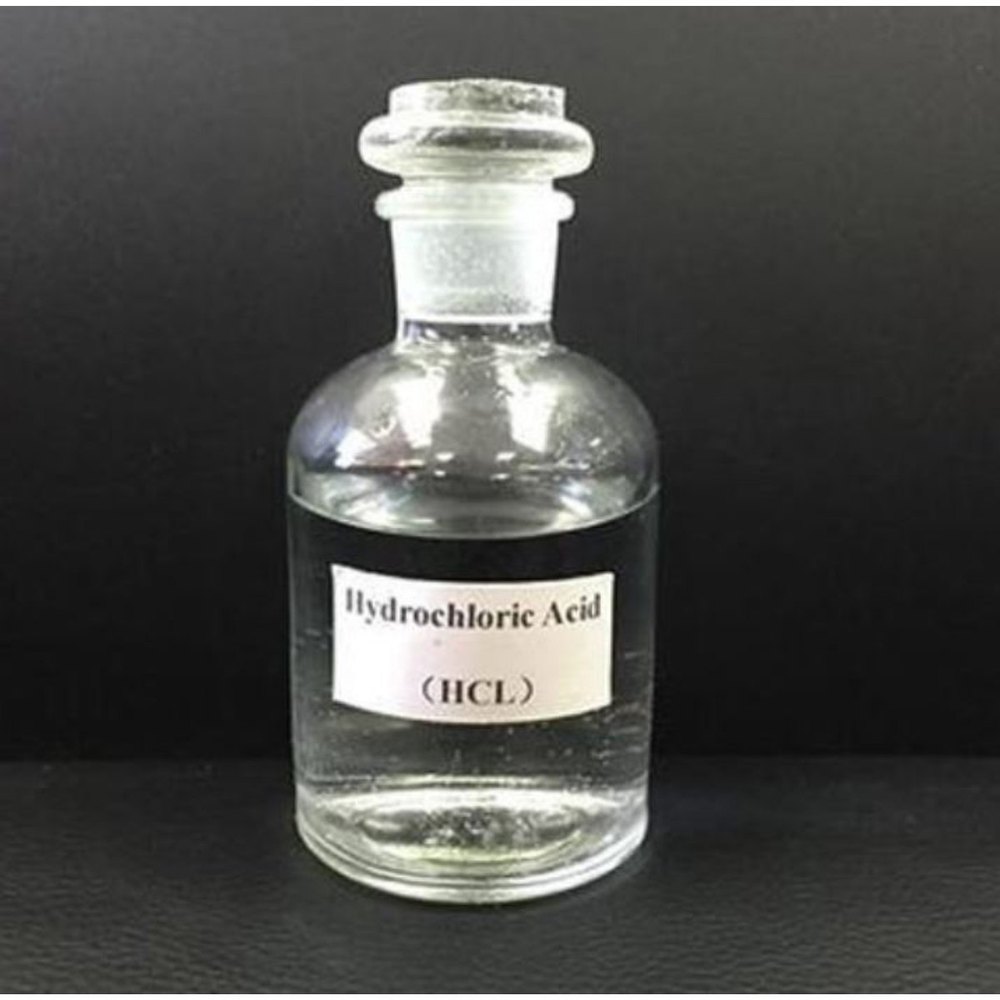
Buy Hydrochloric acid Cas 7647-01-0
Buy Hydrochloric acid Cas 7647-01-0
Buy Hydrochloric acid Cas 7647-01-0
Hydrochloric acid

- CAS No.
- 7647-01-0
- Chemical Name:
- Hydrochloric acid
- Synonyms
- HCL;Hydrogen chloride;concentrated hydrochloric acid;Hydrochloride Acid;hydrogen chloride solution;Acide chlorhydrique;chlorane;Itaconic;Hydrochloric Acid, 6N Volumetric Solution;Hydrogenchlorid
- CBNumber:
- CB7421538
- Molecular Formula:
- ClH
- Molecular Weight:
- 36.46
- MOL File:
- 7647-01-0.mol
- MSDS File:
- SDS
- Modify Date:
- 8/25/2026 8:17:46 PM
| Melting point | -35 °C |
|---|---|
| Boiling point | >100 °C (lit.) |
| Density | 1.2 g/mL at 25 °C (lit.) |
| vapor density | 1.3 (vs air) |
| vapor pressure | 613 psi ( 21.1 °C) |
| refractive index | 1.3535 |
| Flash point | 10℃ (tag closed test) |
| storage temp. | Store at +2°C to +25°C. |
| solubility | H2O: soluble |
| form | liquid |
| pka | -7(at 25℃) |
| color | Light Yellow |
| Specific Gravity | 1.19 |
| Odor | Sharp, irritating odor detectable at 0.25 to 10 ppm |
| PH | 3.01(1 mM solution);2.04(10 mM solution);1.08(100 mM solution); |
| explosive limit | 2-13.4% (v/v) 2-Propanol) |
| biological source | synthetic |
| Water Solubility | miscible |
| Specific Heat Capacity | Cp(gas): 0.8 J/(g·K), at 25℃ |
| Sensitive | Air & Light Sensitive |
| Merck | 14,4780 |
| Henry’s Law Constant | 1.5×101 mol/(m3Pa) at 25℃, Chen et al. (1979) |
| Exposure limits | ACGIH:TLV-CEILING 2 ppm OSHA:PEL-Ceiling 5 ppm (7 mg/m3) NIOSH:REL-Ceiling 5 ppm |
| Dielectric constant | 4.6(20℃) |
| Stability | Stable. Incompatible with alkalies, most metals. Avoid contact with water. |
| Cosmetics Ingredients Functions | BUFFERING |
| InChI | 1S/ClH/h1H |
| InChIKey | VEXZGXHMUGYJMC-UHFFFAOYSA-N |
| SMILES | Cl |
| CAS DataBase Reference | 7647-01-0(CAS DataBase Reference) |
| NIST Chemistry Reference | Hydrogen chloride(7647-01-0) |
| IARC | 3 (Vol. 54) 1992 |
| EPA Substance Registry System | Hydrochloric acid (7647-01-0) |
SAFETY
Risk and Safety Statements
| Symbol(GHS) |  GHS05 |
|||||||||
|---|---|---|---|---|---|---|---|---|---|---|
| Signal word | Warning | |||||||||
| Hazard statements | H290 | |||||||||
| Precautionary statements | P234-P390 | |||||||||
| Hazard Codes | T,C,F,Xi,F+,Xn | |||||||||
| Risk Statements | 36/37/38-37-34-35-23-20-11-67-66-22-19-12-10-40-20/22-39/23/24/25-23/24/25-41-37/38 | |||||||||
| Safety Statements | 26-45-36/37/39-9-33-29-16-46-36/37-39 | |||||||||
| RIDADR | UN 1789 8/PG II/III (HYDROCHLORIC ACID) | |||||||||
| OEL | Ceiling: 5 ppm (7 mg/m3) | |||||||||
| WGK Germany | 2 | |||||||||
| RTECS | MW4025000 | |||||||||
| F | 3 | |||||||||
| Autoignition Temperature | 425°C (2-Propanol) | |||||||||
| TSCA | TSCA listed | |||||||||
| HS Code | 2806 10 00 | |||||||||
| DOT Classification | 2.3, Hazard Zone C (Gas poisonous by inhalation) | |||||||||
| HazardClass | 3 | |||||||||
| PackingGroup | I | |||||||||
| Hazardous Substances Data | 7647-01-0(Hazardous Substances Data) | |||||||||
| Toxicity | LC50 (30 min) in mice, rats: 2142, 5666 ppm (Darmer) | |||||||||
| IDLA | 45 ppm (67 mg/m3) | |||||||||
| REACH Registrations | Active | |||||||||
| Limited Quantities | 1.0 L (0.3 gallon) (liquid) | |||||||||
| Excepted Quantities | Max Inner Pack (30g or 30ml) and Max Outer Pack (500g or 500ml) | |||||||||
| NFPA 704 |
|
Hydrochloric acid Chemical Properties,Uses,Production
Description
A water solution of hydrogen chloride of varied concentrations. It is a clear, colorless or slightly yellowish, corrosive liquid having a pungent odor. It is miscible with water and with alcohol. Concentrations of hydrochloric acid are expressed in percent by weight, or may be expressed in Baume degrees (Be0) from which percentages of hydrochloric acid and specific gravities may readily be derived. The usually available concentrations are 18°, 20°, 22°, and 23° Be. Concentrations above 13° Be (19.6%) fume in moist air, lose hydrogen chloride, and create a corrosive atmosphere. Because of these characteristics, suitable precautions must be observed during sampling and analysis to prevent losses. Note: Hydrochloric acid is produced by various methods that might impart trace amounts of organic compounds as impurities. The manufacturer, vendor, or user is responsible for identifying the specific organic compounds that are present and for meeting the requirements for organic compounds. Methods are provided for their determination. In applying the procedures any necessary standards should be used to quantitate the organic compounds present in each specific product.
Chemical Properties
Hydrochloric acid, or hydrogen chloride, is either a colorless liquid with a pungent odor, or a colorless to slightly yellow gas that can be shipped as a liquefi ed compressed gas. The acid is used in the production of fertilizers, dyes, dyestuffs, artifi cial silk, and paint pig- ments, and in refi ning edible oils and fats. Hydrochloric acid is also used in electroplating, leather tanning, ore refi ning, soap refi ning, petroleum extraction, and pickling of metals, and is used in the photographic, textile, and rubber industries. In addition, hydrochloric acid is used as an antiseptic in toilet bowls against animal pathogenic bacteria, and in food processing as a starch modifi er.
History
Hydrochloric acid is a strong, corrosive acid that results when the gas hydrogen chloride dissolves in water.Ancient alchemists prepared hydrochloric acid and Jabbar ibn Hayyan, known in Latin as Geber (721–815), is credited with its discovery around the year 800. The original method of preparation involved reacting salt with sulfuric acid, producing sodium hydrogen sulfate and hydrogen chloride gas. The hydrogen chloride gas is captured and dissolved in water to produce hydrochloric acid. Hydrochloric acid was formerly called muriatic acid. Terms such as muriatic and muriate were used in association with chloride substances before the discovery and nature of chlorine were fully understood. The Latin term muriaticus means pickled from muri, which is the Latin term for brine. Chlorides were naturally associated with seawater salt solutions, as chloride is the principal ion in seawater.
Uses
Hydrochloric Acid is an acid that is the aqueous solution of hydro- gen chloride of varying concentrations. it is miscible with water and with alcohol. it is used as an acidulant and neutralizing agent.
Production Methods
Hydrochloric acid is an aqueous solution of hydrogen chloride gas produced by a number of methods including: the reaction of sodium chloride and sulfuric acid; the constituent elements; as a by-product from the electrolysis of sodium hydroxide; and as a by-product during the chlorination of hydrocarbons.
Definition
A colorless fuming liquid made by adding hydrogen chloride to water:
HCl(g) + H2O1. → H3O+(aq) + Cl–(aq)
Dissociation into ions is extensive and hydrochloric acid shows the typical properties of a strong acid. It reacts with carbonates to give carbon dioxide and yields hydrogen when reacted with all but the most unreactive metals. Hydrochloric acid is used in the manufacture of dyes, drugs, and photographic materials. It is also used to pickle metals, i.e. clean the surface prior to electroplating. Hydrochloric acid donates protons with ease and is the strongest of the hydrohalic acids. The concentrated acid is oxidized to chlorine by such agents as potassium manganate(VII) and manganese( IV) oxide.
Air & Water Reactions
Fumes strongly in moist air. Soluble in water with evolution of heat.
Reactivity Profile
ANHYDROUS HYDROGEN CHLORIDE is an anhydrous (no water) strong acid. Reacts rapidly and exothermically with bases of all kinds (including amines and amides). Reacts exothermically with carbonates (including limestone and building materials containing limestone) and hydrogen carbonates to generate carbon dioxide. Reacts with sulfides, carbides, borides, and phosphides to generate toxic or flammable gases. Reacts with many metals (including aluminum, zinc, calcium, magnesium, iron, tin and all of the alkali metals) to generate flammable hydrogen gas. Reacts violently with acetic anhydride, 2-aminoethanol, ammonium hydroxide, calcium phosphide, chlorosulfonic acid, 1,1-difluoroethylene, ethylenediamine, ethyleneimine, oleum, perchloric acid, b-propiolactone, propylene oxide, silver perchlorate/carbon tetrachloride mixture, sodium hydroxide, uranium(IV) phosphide, vinyl acetate, calcium carbide, rubidium carbide, cesium acetylide, rubidium acetylide, magnesium boride, mercury(II) sulfate [Lewis]. Undergoes a very energetic reaction with calcium phosphide [Mellor 8:841(1946-1947)]. Corrosive to metals and tissues and irritating to the eyes and respiratory system. Corrodes galvanized or copper-alloy metals (brass, bronze); fittings of stainless steel or mild or cast steel must therefore be used. Reacts with calcium carbide with incandescence [Mellor 5:862(1946-1947]. Absorption on mercuric sulfate becomes violent at 125°C. [Mellor 2, Supp. 1:462(1956)].
Hazard
Toxic by inhalation, strong irritant to eyes and skin. Questionable carcinogen.
Health Hazard
Gas concentrations of 50 to 100 ppm are tolerable for 1 hour. Concentrations of 1,000 to 2,000 ppm are dangerous, even for brief exposures. More severe exposures will result in serious respiratory distress and prolonged exposures will result in death. Mists of hydrochloric acid are considered less harmful than anhydrous hydrochloric acid, because droplets have no dehydrating action. Individuals with respiratory problems and digestive diseases may be adversely affected by low level exposures to the gas or mist.
Fire Hazard
Fire may produce irritating or poisonous gases. Containers may explode in heat of fire. At high temperatures, Hydrochloric acid decomposes into hydrogen and chlorine. The following materials should be avoided: Mercuric sulfate — violent reaction with gaseous hydrochloric acid at 250F. Sodium — reacts vigorously with gaseous hydrochloric acid. Acetic anhydride, 2-aminoethanol, ammonium hydroxide, chlorosulfonic acid, ethylene diamine, ethyleneimine, oleum, propiolactone, sodium hydroxide, sulfuric acid, and vinyl acetate — increase in temperature and pressure when mixed with hydrochloric acid. Calcium phosphide — energetic reaction with hydrochloric acid. Silver perchlorate and carbon tetrachloride — when mixed in combination with hydrochloric acid forms a compound that detonates at 105F. Formaldehyde — when mixed with hydrochloric acid forms a human carcinogen. Material reacts violently with bases and is corrosive with the generation of heat. Reacts with base metals, forming combustible gas (hydrogen). Reacts violently with strong oxidants forming toxic gas (chlorine). Avoid heat; at high temperatures Hydrochloric acid will decompose into hydrogen and chlorine.
Flammability and Explosibility
Noncombustible, but contact with metals may produce highly flammable hydrogen gas.
Pharmaceutical Applications
Hydrochloric acid is widely used as an acidifying agent, in a variety of pharmaceutical and food preparations. It may also be used to prepare dilute hydrochloric acid, which in addition to its use as an excipient has some therapeutic use, intravenously in the management of metabolic alkalosis, and orally for the treatment of achlorhydria.
Industrial uses
Hydrochloric acid (HCl) is soluble in water andis a strong mineral acid made by the action ofsulfuric acid on common salt, or as a byproductof the chlorination of hydrocarbons such asbenzene.HCl is used to some extent in pickling of metal prior to porcelain enameling.
Materials Uses
Piping, valves, and other equipment used in direct contact with anhydrous hydrogen chloride should be of stainless steel or of cast or mild steel. Carbon steel may be used in some components, but only if their temperature is controlled to remain below about 265°F (l29°C). In the presence of moisture, however, hydrogen chloride will corrode most metals. Teflon, Kel F and Hastelloy will resist corrosion.
Smaller sized valves, such as those used on cylinders, constructed of aluminum-siliconbronze with Monel stems have had satisfactory service experience due to frequent maintenance. The satisfactory extension of these materials to other applications should be confirmed by testing prior to use.
Safety
When used diluted, at low concentration, hydrochloric acid is not usually associated with any adverse effects. However, the concentrated solution is corrosive and can cause severe damage on contact with the eyes and skin, or if ingested.
LD50 (mouse, IP): 1.4 g/kg
LD50 (rabbit, oral): 0.9 g/kg
storage
Splash goggles and rubber gloves should be worn when handling this acid, and containers of HCl should be stored in a wellventilated location separated from incompatible metals. Water should never be added to HCl because splattering may result; always add acid to water. Containers of hydrochloric acid should be stored in secondary plastic trays to avoid corrosion of metal storage shelves due to drips or spills.
Cylinders of hydrogen chloride should be stored in cool, dry locations separated from alkali metals and other incompatible substances.
Purification Methods
Pass it through conc H2SO4, then over activated charcoal and silica gel. It fumes in moist air. Hydrogen chloride in gas cylinders contains ethylene, 1,1-dichloroethane and ethyl chloride. The latter two may be removed by fractionating the HCl through a trap cooled to -112o. Ethylene is difficult to remove. HCl fumes in moist air. HARMFUL VAPOURS. Its solubility in H2O is 82% at 0o. A constant boiling aqueous solution (azeotrope) has b 108.6o/760mm with an HCl concentration of ~20%, and is called Hydrochloric acid (muriatic acid) (see above). [Schmeisser in Handbook of Preparative Inorganic Chemistry (Ed. Brauer) Academic Press Vol I pp 280-282 1963.]
Incompatibilities
Hydrochloric acid and hydrogen chloride react violently with many metals, with the generation of highly flammable hydrogen gas, which may explode. Reaction with oxidizers such as permanganates, chlorates, chlorites, and hypochlorites may produce chlorine or bromine.
Waste Disposal
In many localities, hydrochloric acid or the residue from a spill may be disposed of down the drain after appropriate dilution and neutralization. Otherwise, hydrochloric acid and waste material containing this substance should be placed in an appropriate container, clearly labeled, and handled according to your institution’s waste disposal guidelines. Excess hydrogen chloride in cylinders should be returned to the manufacturer. For more information on disposal procedures, see Chapter 7 of this volume.
Regulatory Status
GRAS listed. Accepted for use as a food additive in Europe. Included in the FDA Inactive Ingredients Database (dental solutions; epidural injections; IM, IV, and SC injections; inhalations; ophthalmic preparations; oral solutions; nasal, otic, rectal, and topical preparations). Included in parenteral and nonparenteral medicines licensed in the UK. Included in the Canadian List of Acceptable Non-medicinal Ingredients.
Hydrochloric acid Preparation Products And Raw materials
Raw materials
Preparation Products
7647-01-0(Hydrochloric acid)Related Search:
Hydrochloric acid 34 -37% Trace Grade CAS: 7647-01-0 | MF: HCL | MW: 36.46, Buy now for reliable and Reproducible results from ChemieR Acid at Chemical World.
Buy Hydrochloric acid Cas 7647-01-0
Buy Hydrochloric acid Cas 7647-01-0
Buy Hydrochloric acid Cas 7647-01-0
Buy Hydrochloric acid Cas 7647-01-0
Buy Hydrochloric acid Cas 7647-01-0
Buy Hydrochloric acid Cas 7647-01-0
Buy Hydrochloric acid Cas 7647-01-0
Buy Hydrochloric acid Cas 7647-01-0
Buy Hydrochloric acid Cas 7647-01-0
Buy Hydrochloric acid Cas 7647-01-0
Buy Hydrochloric acid Cas 7647-01-0
Buy Hydrochloric acid Cas 7647-01-0
Buy Hydrochloric acid Cas 7647-01-0
Buy Hydrochloric acid Cas 7647-01-0
Buy Hydrochloric acid Cas 7647-01-0
Buy Hydrochloric acid Cas 7647-01-0
Buy Hydrochloric acid Cas 7647-01-0
Buy Hydrochloric acid Cas 7647-01-0
Buy Hydrochloric acid Cas 7647-01-0
Buy Hydrochloric acid Cas 7647-01-0
Buy Hydrochloric acid Cas 7647-01-0
Buy Hydrochloric acid Cas 7647-01-0
Buy Hydrochloric acid Cas 7647-01-0
Buy Hydrochloric acid Cas 7647-01-0
Buy Hydrochloric acid Cas 7647-01-0
Buy Hydrochloric acid Cas 7647-01-0
Hydrochloric Acid 34-37% Trace Grade (CAS: 7647-01-0) is a high-quality aqueous solution of hydrogen chloride that is designed to meet the needs of highly sensitive analytical and research purposes. Having a molecular formula HCl, this inorganic acid is also known as Chlorhydric Acid, Muriatic Acid or Spirits of Salts. It is a clear and colorless liquid, supplied at 34-37% concentration and has a sharp odor and is specially refined to trace metal analysis standards. This trace-grade acid is designed to meet the requirements of laboratories that require an extremely low purity degree and highly reproducible results.
Applications
- Trace Metal Determination: This grade is commonly employed in ICP-MS and AAS instrumentation as it aids in the accurate trace metal analysis and the ultra-sensitive analysis of elements in research and industrial laboratories.
- Environmental monitoring and testing: Much more commonly used in environmental analysis to identify heavy metals, pollutants and contaminants in water, soil, and air samples.
- Chemical and Organic Titration: Is critical to regulated production procedures, purification methods and production of organic substances that need high-purity intermediates.
Key features
- Precision-Driven Performance: Designed to achieve high standards in analysis, which guarantees reliable and precise measurements of highly sensitive testing procedures.
- Consistent High Purity: Ensures the constant concentration and reduced trace contamination, which promotes stable laboratory and industrial work.
- Multi-Industry Compatibility: Applicable in research facilities, environmental laboratories, pharmaceutical companies, and chemical manufacturing plants.
General Description
Hydrochloric Acid 34-37% Trace Grade ( CAS: 7647-01-0) is a concentrated and highly purified mineral acid used in trace analytical applications. This 34-37 percent aqueous solution of HCl, also called Chlorhydric Acid, Muriatic Acid, and Spirits of Salts, was provided as a clear liquid with a pungent odor. Trace-grade hydrochloric acid is purer and has controlled levels of impurities compared to standard grades, making it suitable for sensitive quantitative measurements with traceability requirements.
Want to buy Hydrochloric Acid 34-37% Trace Grade ( CAS: 7647-01-0)? This hydrochloric acid (MF: HCl | MW: 36.46) is produced with stringent quality control systems to guarantee consistent performance in purification processes, research laboratories and industrial analysis laboratories. We offer competitive prices, a regular supply chain and quality consistency when it comes to bulk and laboratory scale supplies. See our product page and pricing, and buy. Our mission is to ensure that your laboratory and industrial chemical needs are met in a reliable and trustworthy manner through quality assurance, competitive prices and customer satisfaction. Order Hydrochloric Acid 34-37% Trace Grade today from Chemical World for reliable and reproducible laboratory results.
Hydrochloric Acid 32% (100% Muriatic Acid Cleaner Concentrate – Heavy-Duty Rust Scale & Cement Remover) – 55 Gallon Drum
-
Hydrochloric acid | 7647-01-0 – ChemicalBook
Aug 25, 2026 · Hydrochloric acid is a strong, corrosive acid that results when the gas hydrogen chloride dissolves in water.Ancient …
-
Boiling point: >100 °C (lit.)
-
Melting point: 35 °C
-
Density: 1.2 g/mL at 25 °C (lit.)
-
vapor density: 1.3 (vs air)
-
-
Hydrochloric acid ACS reagent, 37 7647-01-0 – MilliporeSigma
This application reflects the importance of hydrochloric acid in scientific studies that require precise chemical processing (Langenfeld …
-
Hydrochloric acid 1.0N, BioReagent, cell culture mammalian 7647-01-0
Hydrochloric acid solution; CAS No.:7647-01-0 (principal component). Buy from Sigma-Aldrich.
CAS RN 7647-01-0 | Fisher Scientific
CAS RN 7647-01-0 IUPAC Name: hydrogen chloride Synonyms: hydrogen chloride|hydrochloric acid|bowl cleaner|muriatic …
-
Hydrochloric Acid | CAS No- 7647-01-0 | Simson Pharma Limited
Buy Hydrochloric Acid CAS No- 7647-01-0, a high quality product from Simson Pharma Limited, a Leading Manufacturer and …
Hydrochloric Acid | EC435 | CAS: 7647-01-0 | EKS – Chemical Worlds
In case of where to buy Hydrochloric Acid (CAS: 7647-01-0), Chemical World offers this product to laboratories, industrial users, and …
-
Hydrochloric Acid 32% (Muriatic Acid) – CAS# 7647-01 …
Blendmagic Products supplies 32% Hydrochloric Acid (CAS# 7647-01-0), …
-
Reviews: 23
-
-
Hydrochloric acid 34 -37% Trace Grade | CAS 7647-01 …
Hydrochloric acid 34 -37% Trace Grade CAS: 7647-01-0 | MF: HCL | MW: 36.46, Buy now for reliable and …
-
Hydrochloric acid, 1M solution (CAS 7647-01-0) | Glentham Life …
Buy GX8401 – Hydrochloric acid, 1M solution (7647-01-0) online from Glentham Life Sciences, a manufacturer and supplier of fine …
-
Hydrochloric acid 1M (CAS 7647-01-0), HCl — Molekula
Hydrochloric acid 1M is a dilute aqueous solution of hydrogen chloride, commonly used in laboratories for pH adjustment, titration, …
-
People also ask
-
Deep dive into Buy Hydrochloric acid Cas 7647-01-0
-
7647 01 0 chemical name
-
7647 01 0 chemicalbook
-
cas number 7647 01 0
-
conc hydrochloric acid cas number
-
hydrochloric acid pubchem
-
concentrated hydrochloric acid cas no
-
cas # 7647 01 0
-
cas number for hydrochloric acid
-
Reviews
There are no reviews yet.