

Buy Levallorphan (Lorfan) Cas 152-02-3
Buy Levallorphan (Lorfan) Cas 152-02-3
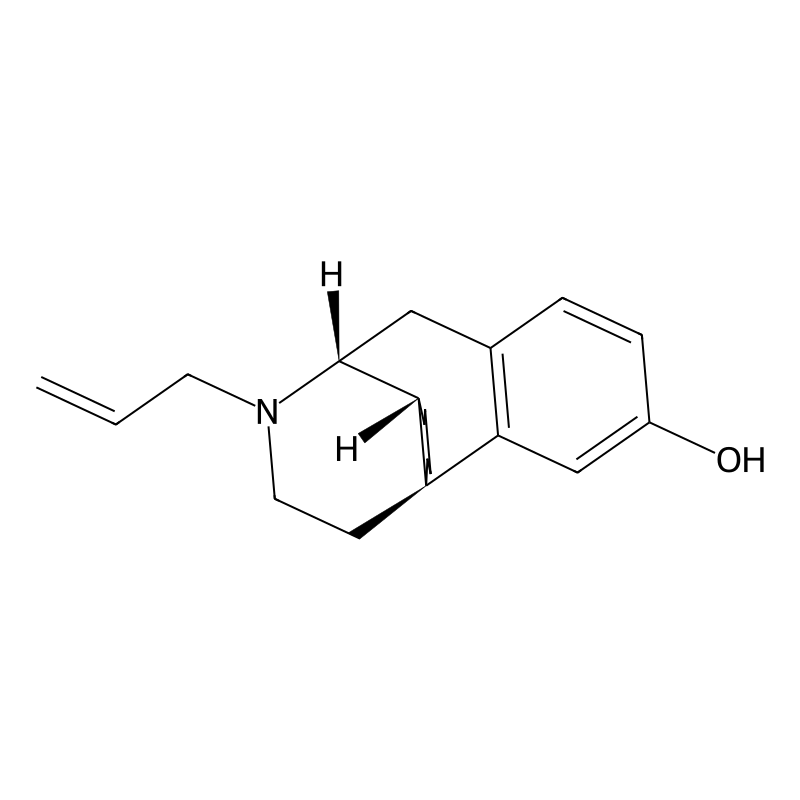
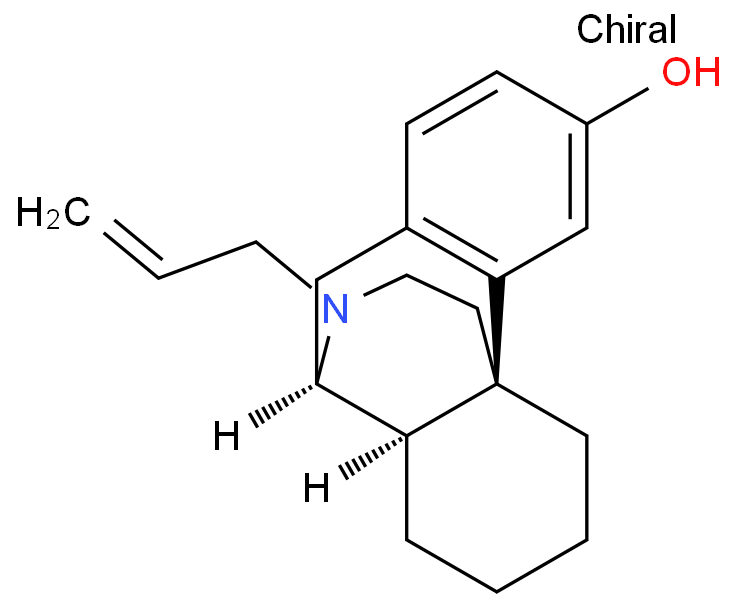
Levallorphan (INN, BAN; USAN levallorphan tartrate; brand names Lorfan, Naloxifan, and Naloxiphan) is an opioid modulator of the morphinan family used as an opioid analgesic and opioid antagonist/antidote.[1][2][3] It acts as an antagonist of the μ-opioid receptor (MOR) and as an agonist of the κ-opioid receptor (KOR),[4] and as a result, blocks the effects of stronger agents with greater intrinsic activity such as morphine whilst simultaneously producing analgesia.[5]
Levallorphan was formerly widely used in general anesthesia, mainly to reverse the respiratory depression produced by opioid analgesics and barbiturates used for induction of surgical anaesthesia whilst maintaining a degree of analgesia (via KOR agonism). It is now less commonly employed for this purpose as the newer drug naloxone tends to be used instead. Levallorphan was also used in combination with opioid analgesics to reduce their side effects, mainly in obstetrics, and a very small dose of levallorphan used alongside a full agonist of the MOR can produce greater analgesia than when the latter is used by itself.[6] The combination of levallorphan with pethidine (meperidine) was indeed used so frequently, a standardized formulation was made available, known as Pethilorfan.[7]
As an agonist of the KOR, levallorphan can produce severe mental reactions at sufficient doses including hallucinations, dissociation, and other psychotomimetic effects, dysphoria, anxiety, confusion, dizziness, disorientation, derealization, feelings of drunkenness, delusions, paranoia, and bizarre, unusual, or disturbing dreams.[8][9][10]
See also
Levallorphan
Content Navigation
For radioligand screening of novel synthetic opioids (NSOs), pure MOR antagonists like naloxone fail to define non-specific binding across opioid subtypes. Levallorphan solves this as the industry-standard cold ligand used at 8 μM, ensuring accurate baseline measurements. Key uses: • KOR agonism benchmark for mixed-action profiling • Superior precursor for peripherally restricted quaternary antagonists (outperforms naloxone-derived analogs) • Reverses atypical opioid-induced seizures in specialized toxicology studies.
CAS Number
Product Name
IUPAC Name
Molecular Formula
Molecular Weight
InChI
InChI Key
SMILES
solubility
SOL IN WATER; SPARINGLY SOL IN ETHANOL; INSOL IN CHLOROFORM & DIETHYL ETHER
2.52e-02 g/L
Synonyms
Canonical SMILES
Isomeric SMILES
Purity
Package Size
Levallorphan is a morphinan-class opioid modulator characterized by its dual functionality as a competitive μ-opioid receptor (MOR) antagonist and a κ-opioid receptor (KOR) partial agonist [1]. In commercial and laboratory procurement contexts, it is primarily sourced as a critical reference standard for defining non-specific binding in high-throughput radioligand assays, a structural benchmark for mixed-action opioid pharmacology, and a high-value precursor for the synthesis of peripherally restricted quaternary ammonium antagonists [2]. Unlike pure antagonists, its complex intrinsic activity profile makes it an indispensable reagent for specialized toxicological modeling and advanced receptor profiling workflows[3].
Research Fit
Substituting Levallorphan with more common, pure opioid antagonists like Naloxone or Naltrexone fundamentally compromises assay integrity and synthetic outcomes[1]. While Naloxone is the gold standard for absolute MOR blockade, it possesses zero intrinsic agonist activity, rendering it useless for modeling KOR-mediated effects or mixed-action pharmacology [2]. Furthermore, in standardized radioligand binding workflows, substituting Levallorphan with highly selective antagonists fails to adequately mask non-specific binding across multiple opioid receptor subtypes simultaneously, leading to skewed baseline measurements in novel synthetic opioid (NSO) screening[3]. Finally, as a synthetic precursor, Levallorphan yields quaternary derivatives with superior peripheral selectivity compared to Naloxone-derived analogs, making substitution at the raw material stage unviable for gastrointestinal drug development [4].
Substitution Risk
References
- [1] Levallorphan – Knowledge and References. Psychiatric Aspects of Opiate Dependence. Taylor & Francis.
- [2] Levallorphan. Wikipedia.
- [3] Pharmacological characterization of novel synthetic opioids (NSO) found in the recreational drug marketplace. UNC / NIH.
- [4] Levallorphan methyl iodide (SR 58002), a potent narcotic antagonist with peripheral selectivity. ResearchGate.
Non-Specific Binding Definition for Opioid Screening
In high-throughput screening of novel synthetic opioids (NSOs), establishing an accurate baseline for non-specific binding is critical. Levallorphan is universally validated as the standard cold ligand for this purpose, typically deployed at a concentration of 8 μM [1]. Unlike highly selective antagonists that only block specific receptor subtypes, Levallorphan’s broad-spectrum affinity allows it to simultaneously displace radioligands (such as [125I]IBNtxA) across μ, κ, and δ opioid receptors [2]. This eliminates the need for multiplexed cold ligand cocktails, streamlining laboratory workflows and ensuring reproducible baseline calibration in [35S]GTPγS functional assays [3].
| Evidence Dimension | Standard concentration for defining non-specific binding in multiplexed opioid assays |
| Target Compound Data | Levallorphan (8 μM standard concentration for universal displacement) |
| Comparator Or Baseline | Selective antagonists (e.g., Naloxone, requiring subtype-specific pairing) |
| Quantified Difference | Levallorphan achieves complete baseline displacement across MOR, KOR, and DOR sites with a single agent, whereas selective comparators leave unblocked sites. |
| Conditions | Stably transfected CHO cells or brain membranes expressing opioid receptors. |
Procurement of Levallorphan is essential for assay developers and toxicologists requiring a reliable, single-agent solution to define non-specific binding in high-throughput opioid receptor screening.
Precursor for Peripherally Selective Antagonists
When synthesizing peripherally restricted opioid antagonists to treat opioid-induced bowel dysfunction, the choice of starting material dictates the efficacy of the final quaternary compound. Head-to-head in vivo studies demonstrate that the quaternary derivative of Levallorphan (Levallorphan methyl iodide, SR 58002) is significantly more potent and selective than the Naloxone-derived equivalent (N-methyl naloxone) [1]. In models of morphine-induced constipation, the Levallorphan derivative achieved an ID50 of 3.6 mg/kg (s.c.), completely preventing gastrointestinal transit inhibition without crossing the blood-brain barrier to antagonize central antinociception [2].
| Evidence Dimension | Potency (ID50) in preventing peripherally mediated opioid constipation |
| Target Compound Data | Levallorphan methyl iodide (ID50 = 3.6 mg/kg s.c.) |
| Comparator Or Baseline | N-methyl naloxone (Lower peripheral selectivity, partial central crossover) |
| Quantified Difference | The Levallorphan-derived quaternary antagonist demonstrates superior peripheral selectivity and higher potency in restoring gastrointestinal transit compared to the Naloxone-derived baseline. |
| Conditions | In vivo murine model of morphine-induced constipation (charcoal meal transit). |
Chemical manufacturers and drug developers should prioritize Levallorphan over Naloxone as a synthetic precursor when engineering peripherally restricted antagonists for gastrointestinal applications.
Atypical Opioid Toxicity Modeling
In specialized toxicological modeling, pure MOR antagonists often fail to reverse complex, non-standard opioid overdose symptoms. Research evaluating antidotes for propoxyphene-induced convulsions demonstrated that intravenous administration of Levallorphan provided significant protection (P < 0.05) when injected at the onset of established convulsions [1]. In contrast, the gold-standard pure antagonist Naloxone failed to offer a significant degree of protection under the exact same conditions [2]. This discrepancy highlights Levallorphan’s utility in modeling complex toxicity pathways where pure mu-opioid antagonism is insufficient.
| Evidence Dimension | Antagonism of established propoxyphene-induced convulsions |
| Target Compound Data | Levallorphan (Significant protection, P < 0.05) |
| Comparator Or Baseline | Naloxone (Failed to provide significant protection at convulsion onset) |
| Quantified Difference | Levallorphan successfully reverses established convulsive activity in atypical opioid toxicity, whereas Naloxone lacks the necessary pharmacological profile to halt the seizures. |
| Conditions | In vivo murine toxicity model (intravenous administration post-propoxyphene). |
Safety pharmacologists and toxicologists evaluating atypical opioid overdoses must procure Levallorphan to accurately model rescue mechanisms that pure antagonists cannot replicate.
Intrinsic KOR Agonism
Levallorphan provides a distinct pharmacological profile characterized by potent μ-opioid receptor (MOR) antagonism coupled with measurable κ-opioid receptor (KOR) partial agonism [1]. This contrasts sharply with Naloxone, which is a pure antagonist devoid of intrinsic agonist activity [2]. Because of this mixed action, Levallorphan can produce KOR-mediated analgesia and psychotomimetic effects at sufficient doses, making it an essential reference standard for distinguishing pure antagonism from mixed agonist-antagonist behavior in novel drug characterization[3].
| Evidence Dimension | Intrinsic receptor activity profile |
| Target Compound Data | Levallorphan (Dual MOR-antagonist / KOR-agonist activity) |
| Comparator Or Baseline | Naloxone (Pure antagonist, 0% intrinsic agonist activity) |
| Quantified Difference | Levallorphan provides measurable KOR-mediated intrinsic activity, whereas Naloxone provides absolute zero intrinsic activation across all opioid receptor subtypes. |
| Conditions | In vivo antinociception and in vitro receptor functional assays. |
Researchers investigating kappa-opioid receptor pathways or developing mixed-action analgesics must use Levallorphan to accurately benchmark partial agonism.
High-Throughput Opioid Screening Reagent
Directly downstream of its broad-spectrum receptor affinity, Levallorphan is the industry-standard cold ligand used at 8 μM to define non-specific binding in radioligand assays[1]. It is indispensable for laboratories screening novel synthetic opioids (NSOs) or evaluating new analgesic candidates.
Peripherally Restricted Antagonist Precursor
Based on the superior peripheral selectivity of its quaternary derivatives, Levallorphan is an optimal synthetic starting material for developing treatments targeting opioid-induced bowel dysfunction without compromising central analgesia [2].
Mixed-Action Opioid Reference Standard
Because of its intrinsic KOR agonism, Levallorphan is procured as a critical benchmark in functional assays to distinguish mixed agonist-antagonist profiles from pure antagonists like Naloxone[3].
Complex Toxicity and Convulsion Modeling
Leveraging its unique efficacy in reversing atypical opioid-induced seizures, Levallorphan is utilized in specialized toxicological studies where propoxyphene or other complex agents induce convulsions that pure MOR antagonists cannot resolve[4].
Application Fit Matrix
References
- [1] Pharmacological characterization of novel synthetic opioids (NSO) found in the recreational drug marketplace. UNC / NIH.
- [2] Levallorphan methyl iodide (SR 58002), a potent narcotic antagonist with peripheral selectivity. ResearchGate.
- [3] Levallorphan – Knowledge and References. Psychiatric Aspects of Opiate Dependence. Taylor & Francis.
- [4] A STUDY OF THE ANTIDOTAL EFFECT OF NALORPHINE AND RELATED ANTAGONISTS IN PROPOXYPHENE POISONING. The University of Arizona.
Physical Description
Color/Form
XLogP3
Hydrogen Bond Acceptor Count
Hydrogen Bond Donor Count
Exact Mass
Monoisotopic Mass
Heavy Atom Count
LogP
3.48 (LogP)
3.9
Appearance
Melting Point
CRYSTALS FROM ETHANOL; SPECIFIC OPTICAL ROTATION: -39 DEG @ 16 °C/D; MP: 176-177 °C /TARTRATE/
181 °C
Storage
UNII
Drug Indication
Therapeutic Uses
…INDICATED FOR USE IN TREATMENT OF SIGNIFICANT NARCOTIC-INDUCED RESP DEPRESSION. IT IS USED IN OBSTETRICS FOR PREVENTION & TREATMENT OF RESP DEPRESSION IN MOTHER, FETUS, & NEWBORN INFANT CAUSED BY ADMIN OF NARCOTICS. /TARTRATE/
SEE NARCOTIC ANTAGONISTS. …ANTAGONIST MAY BE GIVEN EITHER TO MOTHER SHORTLY BEFORE DELIVERY (PREFERABLE) OR TO INFANT BY WAY OF UMBILICAL VEIN FOLLOWING DELIVERY. /NARCOTIC ANTAGONISTS/
SEE NARCOTIC ANTAGONISTS. USE…TO PPT ABSTINENCE SYMPTOMS FOR DIAGNOSIS OF NARCOTIC DEPENDENCE IS CONTROVERSIAL BECAUSE OF ITS POTENTIALLY SEVERE EFFECTS. /NARCOTIC ANTAGONISTS/
For more Therapeutic Uses (Complete) data for LEVALLORPHAN (11 total), please visit the HSDB record page.
Pharmacology
MeSH Pharmacological Classification
Mechanism of Action
SEE NARCOTIC ANTAGONISTS. …ANTAGONISTS COMPETE WITH MORPHINE-LIKE DRUGS FOR STEREOSPECIFIC OPIOID RECEPTOR SITES & APPARENTLY OCCUPY THESE SITES WITHOUT INITIATING ANY RESPONSE. /NARCOTIC ANTAGONISTS/
SEE NARCOTIC ANTAGONISTS. …IN ADDITION TO MAJOR OPIOID RECEPTOR, THERE IS SIMILAR BUT DISTINCT RECEPTOR…AT WHICH ANTAGONISTS…PRODUCE THEIR AGONISTIC EFFECTS. … WHEN PROLONGED ACTION @ OPIOID RECEPTORS CAUSES PHYSICAL DEPENDENCE, PHYSIOLOGICAL SYSTEMS…DEVELOP…LATENT HYPEREXCITABILITY. /NARCOTIC ANTAGONISTS/
Other CAS
Absorption Distribution and Excretion
…MUCH MORE EFFECTIVE AFTER PARENTERAL THAN ORAL ADMIN, PROBABLY BECAUSE OF RAPID BIOTRANSFORMATION IN LIVER… FOLLOWING PARENTERAL ADMIN…CONCN IN BRAIN ARE 3-4 TIMES HIGHER THAN AFTER COMPARABLE DOSES OF MORPHINE. BRAIN CONCN FALL RAPIDLY & ONLY TRACE AMT ARE FOUND AFTER 4 HR. /NALORPHINE/
IN PT WITH SEVERE RESP DEPRESSION ANTAGONISM OF OPIOID EFFECTS IS SEEN WITHIN 1 OR 2 MINUTES AFTER IV INJECTION OF 5-10 MG OF NALORPHINE & LASTS 1-4 HR. PT MAY NOT SHOW COMPLETE REVERSAL OF SEDATIVE EFFECTS. /NALORPHINE/
Metabolism Metabolites
LEVALLORPHAN, MORPHINE ANTAGONIST…IN RAT…WAS FOUND TO BE METABOLIZED TO 6BETA-HYDROXY DERIV.
Wikipedia
Drug Warnings
SEE NARCOTIC ANTAGONISTS. USE…TO TREAT ACUTE POISONING IN ADDICT SHOULD BE UNDERTAKEN WITH CARE, SINCE ANTAGONIST MAY PPT SEVERE WITHDRAWAL SYNDROME THAT CANNOT BE READILY SUPPRESSED… IN SOME SITUATIONS, THIS WITHDRAWAL SYNDROME CAN BE MORE LIFE THREATENING THAN RESP DEPRESSION ITSELF. /NARCOTIC ANTAGONISTS/
SEE NARCOTIC ANTAGONISTS. …MAY DECR ANALGESIC & SEDATIVE EFFECTS OF NARCOTICS, /POSTOPERATIVE/ DOSAGE MUST BE CAREFULLY TITRATED TO PROVIDE DESIRED EFFECT. /NARCOTIC ANTAGONISTS/
SEE NARCOTIC ANTAGONISTS. TOLERANCE DEVELOPS TO AGONISTIC BUT NOT TO ANTAGONISTIC EFFECTS OF OPIOID ANTAGONISTS & PARTIAL AGONISTS. TOLERANCE TO SUBJECTIVE EFFECTS…HAS BEEN DEMONSTRATED IN MAN; CROSS TOLERANCE BETWEEN THESE AGENTS HAS ALSO BEEN SHOWN. /NARCOTIC ANTAGONISTS/
For more Drug Warnings (Complete) data for LEVALLORPHAN (7 total), please visit the HSDB record page.
Biological Half Life
Use Classification
Methods of Manufacturing
Analytic Laboratory Methods
Clinical Laboratory Methods
Interactions
Stability Shelf Life
CAS 152-02-3 levallorphan | Products & Prices & Suppliers
- Solid
- Product Name: levallorphan
- Molecular Weight: 283.415
- Molecular Formula: C19H25NO
- Synonyms: (-)-3-Hydroxy-N-allylmorphinan; 17-(2-Propen-1-yl)morphinan-3-ol; 17-(2-propenyl)morphinan-3-ol; 17-Allylmorphinan-3-ol; 2H-10,4a-Iminoethanophenanthren-6-ol, 11-allyl-1,3,4,9,10,10a-hexahydro-; 2H-10,4a-Iminoethanophenanthren-6-ol, 11-allyl-1,3,4,9,10,10a-hexahydro- (6CI);
Buy Levallorphan (Lorfan) Cas 152-02-3,
Buy Levallorphan (Lorfan) Cas 152-02-3,
Buy Levallorphan (Lorfan) Cas 152-02-3
-
Buy Levallorphan (Lorfan) Cas 152-02-3
-
Buy Levallorphan (Lorfan) Cas 152-02-3
-
Buy Levallorphan (Lorfan) Cas 152-02-3
-
Buy Levallorphan (Lorfan) Cas 152-02-3
-
Buy Levallorphan (Lorfan) Cas 152-02-3
-
Buy Levallorphan (Lorfan) Cas 152-02-3
-
Buy Levallorphan (Lorfan) Cas 152-02-3
-
Buy Levallorphan (Lorfan) Cas 152-02-3
-
Buy Levallorphan (Lorfan) Cas 152-02-3
-
Buy Levallorphan (Lorfan) Cas 152-02-3
PropertiesSafety and HandlingMSDS InfomationNMR NMR SpectrumComputational chemical data
Identification
- Cas NO.:152-02-3
- CID:5359371
- Product Name:
- levallorphan (Related Reference)
- EINECS:
- 205-799-1
Safety Data
- [Safety Statements]
Properties
- Molecular Weight:
- 283.415
- Density:
- 1.14
- Boiling Point:
- 433.5°Cat760mmHg
- Melting Point:
- 180-182 °C
- Flash Point:
- 214.2°C
- Refractive index:
- 1.614
- :
- SOL IN WATER; SPARINGLY SOL IN ETHANOL; INSOL IN CHLOROFORM & DIETHYL ETHER
- :
- SENSITIVE TO LIGHT /TARTRATE;/
- More Properties>
-
Country:
-
Purity:
-
Unit:
-
 levallorphan
- Min.Order:1 KG
- Supply Ability:2000 Metric Ton/Month
- Appearance:powder
- Purity:99%
- Packaging:25kg/drum
- Brand:Kael
- Description:Kael Pharmachem Co., Limited is is a comprehensive chemical enterprise integrating R&D, production and sales. It is a leading manufacturer and supplier of chemical products in China. We provide chemicals and service to customers around the world, USA, Canada, …
- Update:Sep 09 2026
-
levallorphan
- Update:Jul 07 2026
-
levallorphan
- Update:Aug 04 2026
-
levallorphan
- Update:Jul 07 2026
-
levallorphan
- Update:Jul 18 2026
-
 1YR
1YR


-
levallorphan | 152-02-3 – ChemicalBook
levallorphan (CAS 152-02-3) information, including chemical properties, structure, melting …
-
Buy Levallorphan | 152-02-3 | >98% – smolecule.com
Levallorphan, an opioid antagonist similar to naloxone, is used to treat drug overdoses. Levallorphan differs from naloxone in that it …
-
Buy Levallorphan Cas 152-02-3 – Levallorphan suppliers – Lorfan buy
Levallorphan was formerly widely used in general anesthesia, mainly to reverse the respiratory depression produced by opioid …
-
Buy Now Levallorphan – 152-02-3 | EBC-26439
Buy Levallorphan Now directly from EBC.Enamine ⚡️ Order CAS 152-02-3 online for research use ️ Fast ordering, detailed data …
-
CAS No.152-02-3,levallorphan Suppliers – LookChem
Find quality suppliers and manufacturers of 152-02-3 (levallorphan) for price inquiry. where to buy 152-02-3 (levallorphan).Also offer …
-
152-02-3 – levallorphan – Sale from Quality Suppliers – Guidechem
Explore the best levallorphan price and the most comprehensive levallorphan supplier on Guidechem. Find the chemical you need …
-
Levallorphan | opioid modulator | CAS# 152-02-3 | InvivoChem
Alias: Lorfan; Naloxiphan; Levallorphan Cat No.:V23988Purity: ≥98% COA Product Data Instructions for use SDS Levallorphan is a …
Levallorphan for Sale, Find Levallorphan Sale 152-02-3 List – ECHEMI
ECHEMI provides 17 top grade Levallorphan products for sale. Find Levallorphan 152-02-3 you need according to certification and …
-
Levallorphan | 152-02-3 – BuyersGuideChem
Please contact all the below listed distributors/manufacturers for Levallorphan and ask for prices, package standards and transport …
-
levallorphan CAS#: 152-02-3 – ChemicalBook
ChemicalBook provide Chemical industry users with levallorphan Boiling point Melting point,levallorphan Density MSDS Formula …
Reviews
There are no reviews yet.