
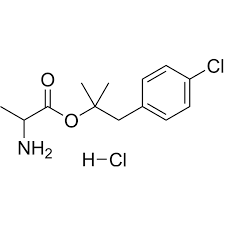
Buy Alaproclate (GEA-654) Cas 60719-82-6
Buy Alaproclate (GEA-654) Cas 60719-82-6
Buy Alaproclate (GEA-654) Cas 60719-82-6
Alaproclate (developmental code name GEA-654) is a drug that was being developed as an antidepressant by the Swedish pharmaceutical company Astra AB (now AstraZeneca) in the 1970s.[1]
It acts as a selective serotonin reuptake inhibitor (SSRI), and along with zimelidine and indalpine, was one of the first of its kind. Development was discontinued due to the observation of liver complications in rodent studies. In addition to its SSRI properties, alaproclate has been found to act as a non-competitive NMDA receptor antagonist, but does not have discriminative stimulus properties similar to phencyclidine (PCP).[2][3]
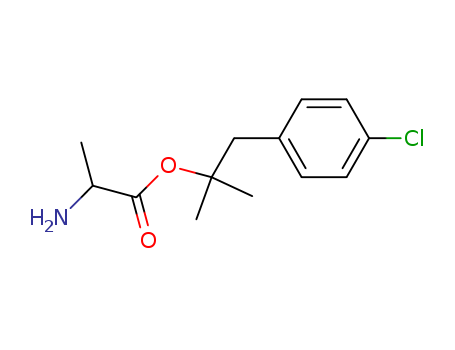
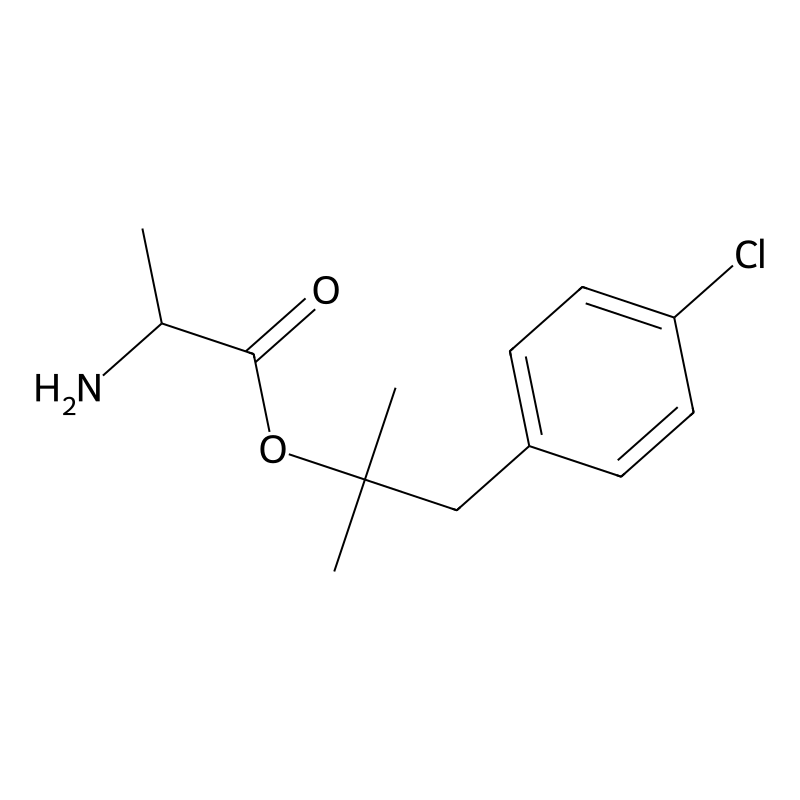
The drug is similar in chemical structure to chlorphentermine, cloforex, and cericlamine, but is not itself a phenethylamine or amphetamine as it has an oxygen atom in place of the amine nitrogen.[1]
Alaproclate was first described in the scientific literature by 1978.
Buy Alaproclate (GEA-654) Cas 60719-82-6
Synthesis

Alaproclate
Technical Parameters
Basic Identity
| Product Name | Alaproclate |
|---|---|
| CAS | 60719-82-6 |
| Synonyms |
2-aminopropionic acid-1-(4-chlorophenyl)-2-methyl-2-propyl ester.HCl, A 23189, A-23189, alaproclate, alaproclate hydrochloride, alaproclate hydrochloride, (D)-isomer, alaproclate hydrochloride, (L)-isomer, alaproclate hydrochloride, (R)-, alaproclate hydrochloride, (S)-, D-alanine, 2-(4-chlorophenyl)-1,1-dimethylethyl ester, hydrochloride, L-alanine, 2-(4-chlorophenyl)-1,1-dimethylethyl ester, hydrochloride
|
| Molecular Formula | C13H18ClNO2 |
| Molecular Weight | 255.74 g/mol |
Structural Identifiers
| SMILES | CC(C(=O)OC(C)(C)CC1=CC=C(C=C1)Cl)N |
|---|---|
| InChI | InChI=1S/C13H18ClNO2/c1-9(15)12(16)17-13(2,3)8-10-4-6-11(14)7-5-10/h4-7,9H,8,15H2,1-3H3 |
| InChIKey | FZSPJBYOKQPKCD-UHFFFAOYSA-N |
Commercial & Availability
| Standard Pack Sizes | 10 mg / 50 mg / 100 mg / Bulk Custom |
|---|---|
| Availability | Usually In Stock |
| Custom Synthesis | Available on request |
Structure & Identifiers
Alaproclate (CAS 60719-82-6): SSRI Prototype with Dual NMDA Antagonism and Regional Brain Selectivity
Alaproclate (developmental code GEA-654) is a synthetic phenylpropanoid derivative and a prototypical selective serotonin reuptake inhibitor (SSRI) first developed by Astra AB in the 1970s [1]. Chemically, it is 1-(4-chlorophenyl)-2-methylpropan-2-yl 2-aminopropanoate [1]. Beyond its established function as an SSRI, alaproclate possesses a distinct secondary pharmacology as a non-competitive N-methyl-D-aspartate (NMDA) receptor antagonist, a feature not shared by most modern SSRIs [2]. Its pharmacological profile is further distinguished by a pronounced regional selectivity in blocking 5-HT reuptake within the brain, showing highest potency in the hippocampus and hypothalamus [3].
Why Alaproclate Cannot Be Interchanged with Zimelidine or Modern SSRIs for Mechanistic Studies
Within the SSRI class, functional interchangeability is not a valid assumption. Alaproclate exhibits a unique dual-mechanism profile, combining 5-HT reuptake inhibition with potent, non-competitive NMDA receptor antagonism (IC50 = 0.3 µM), a property that is stereoselective and distinct [1]. Furthermore, its in vivo 5-HT uptake inhibition displays a marked regional brain selectivity (hippocampus/hypothalamus > striatum > spinal cord) that differs from other first-generation SSRIs like zimelidine, which shows uniform potency across these regions [2]. This divergent pharmacology leads to test-specific behavioral outcomes, such as differential modulation of pain sensitivity and morphine analgesia, as well as distinct effects on two-way active avoidance acquisition, underscoring that substituting alaproclate with another SSRI will not replicate its experimental phenotype [3].
Quantitative Differential Evidence for Alaproclate (CAS 60719-82-6) Against Comparators
Regional Brain 5-HT Uptake Selectivity: Alaproclate vs. Zimelidine in Vivo
Alaproclate demonstrates a unique regional selectivity in blocking 5-HT uptake in vivo, a property not shared by its structural analog and fellow first-generation SSRI, zimelidine. Using the H 75/12-method, alaproclate was found to be most potent in the hippocampus and hypothalamus, followed by the striatum and cerebral cortex, with low potency in the spinal cord [1]. In contrast, zimelidine inhibited 5-HT uptake with equal potency in both the hypothalamus and the spinal cord [2].
Zimelidine: uniform potency across regions
NMDA Receptor Antagonism: A Unique Secondary Pharmacology vs. Fluoxetine
Alaproclate possesses a dual mechanism of action: in addition to being an SSRI, it acts as a potent, reversible, and non-competitive antagonist of the NMDA receptor-coupled ion flow. This activity is quantified with an IC50 of 0.3 µM [1]. This property is not shared by the widely used SSRI comparator fluoxetine, which is a selective inhibitor of serotonin reuptake but has no reported direct NMDA receptor antagonism [2].
Differential In Vivo Platelet 5-HT Uptake Inhibition: Alaproclate vs. Zimelidine
In a head-to-head clinical study with 24 patients, the effects of alaproclate and zimelidine on ex vivo 5-HT uptake inhibition in platelets were compared. Acute oral administration of alaproclate (100 mg) significantly inhibited the accumulation of 14C-5-HT by 42% at 90 minutes, but this effect was not significant at 4 hours [1]. At a higher dose (200 mg), the inhibition was 55% at 90 minutes and 31% at 4 hours [1]. In comparison, a single dose of zimelidine (200 mg) produced a more profound and sustained inhibition of 72% at 90 minutes and 73% at 4 hours [1].
vs. zimelidine: 72% at 90 min
Differential Modulation of Morphine Analgesia: Alaproclate vs. Zimelidine
Alaproclate and zimelidine exhibit test-specific and divergent effects on morphine-induced analgesia. Alaproclate significantly enhanced morphine analgesia in the hot-plate test but did not affect morphine analgesia in the tail-flick test [1]. Conversely, zimelidine tended to enhance and significantly prolonged morphine analgesia in the tail-flick test but had no effect in the hot-plate test [1].
-
Casno:
60719-82-6
Min.Order: 100 Gram
FOB Price: USD $ 1.9-2.9
Appearance:liquid Storage:Store the container tightly closed in a dry, cool and well-ventilated place. Store apart from foodstuff containers or incompatible materials. Package:Grams, Kilograms Application:For R&D and commerical use Transportati
We are a team of industry experts, dedicated to delivering the best chemical solutions from quality suppliers across China. Putting our customers first, we take a holistic approach
-
Buy Alaproclate (GEA-654) Cas 60719-82-6
Buy Alaproclate (GEA-654) Cas 60719-82-6
-
Buy Alaproclate (GEA-654) Cas 60719-82-6
-
Buy Alaproclate (GEA-654) Cas 60719-82-6
-
Buy Alaproclate (GEA-654) Cas 60719-82-6
-
Buy Alaproclate (GEA-654) Cas 60719-82-6
-
Buy Alaproclate (GEA-654) Cas 60719-82-6
-
Buy Alaproclate (GEA-654) Cas 60719-82-6
-
Buy Alaproclate (GEA-654) Cas 60719-82-6
-
Buy Alaproclate (GEA-654) Cas 60719-82-6
-
Buy Alaproclate (GEA-654) Cas 60719-82-6
-
Buy Alaproclate (GEA-654) Cas 60719-82-6
-
Buy Alaproclate (GEA-654) Cas 60719-82-6
-
Buy Alaproclate (GEA-654) Cas 60719-82-6
-
Buy Alaproclate (GEA-654) Cas 60719-82-6
-
Buy Alaproclate (GEA-654) Cas 60719-82-6
-
Buy Alaproclate (GEA-654) Cas 60719-82-6
-
-
Casno:
60719-82-6
Min.Order: 0
FOB Price: USD $ 0.0-0.0
Alaproclate Application:Alaproclate
Established in 2010, located in Hangzhou Qinglan science park, lingruichem is a technical company mainly focus on the Custom synthesis, manufacturing, sales of chemicals to various
 Hangzhou Lingrui Chemical Co.,Ltd.
 China (Mainland) | Contact Details
Business Type:Other

Tel:86 571-88092529-
Address:No. 176, Zixia Road, Xihu District Hangzhou City,CHINA

 Inquiry Now
-
-
Casno:
60719-82-6
Min.Order: 0
FOB Price: USD $ 0.0-0.0
factory direct sale Application:Fine chemical intermediates, used as the main raw material for the synthesis of various pesticides, medicines, surfactants, polymer monomers, and antifungal agents
Hangyu Biotech is a leading manufacturer and supplier of chemicals in China. We develop produce and distribute high quality pharmaceuticals, intermediates, special chemicals and O
 Zibo Hangyu Biotechnology Development Co., Ltd
China (Mainland) | Contact Details
Business Type:Lab/Research institutions
Tel:86-15965530500
Address:Room1701, Tianxing Building,Licheng district, jinan, Shandong, China
-
-
Casno:
60719-82-6
Min.Order: 0
FOB Price: USD $ 0.0-0.0
Alaproclate
2A PharmaChem is located at Lisle, Illinois, USA. We are mainly engaged in the marketing development, sales, technical support and service. 2A Phar
Alaproclate
Content Navigation
Researchers investigating serotonin-glutamate interplay face confounding off-target effects with conventional SSRIs. Alaproclate solves this with a clean dual mechanism: potent SERT inhibition plus non-competitive NMDA receptor antagonism (IC50 = 0.3 µM), while showing negligible muscarinic affinity (Ki > 28 µM). This eliminates cholinergic interference in cognition and learning models.
- Simultaneously modulates serotonergic and glutamatergic pathways with a single agent
- Does not impair acquisition in active avoidance tasks, unlike fluoxetine or citalopram
- Suitable for synaptic plasticity, excitotoxicity, and Alzheimer’s disease research
Supplied with analytical certification; global shipping with no cold chain required.
CAS Number
Product Name
IUPAC Name
Molecular Formula
Molecular Weight
InChI
InChI Key
Synonyms
Canonical SMILES
Purity
Package Size
Alaproclate (CAS 60719-82-6) is a selective serotonin reuptake inhibitor (SSRI) belonging to the phenyl-2-aminopropyl ether class of compounds. It functions as a specific inhibitor of the serotonin transporter (SERT), increasing the extracellular concentration of serotonin without significantly affecting other monoamine transporters. Developed in the 1970s, it was one of the first SSRIs, valued in research for its defined mechanism of action. Beyond its primary activity at SERT, Alaproclate also exhibits non-competitive antagonist activity at the N-methyl-D-aspartate (NMDA) receptor, a characteristic that distinguishes it from many other SSRIs and provides an additional, specific mechanism for investigation.
Alaproclate was developed as one of the first selective serotonin reuptake inhibitor (SSRI) antidepressants by Astra AB (now AstraZeneca) in the 1970s. Development was discontinued due to concerns over hepatotoxicity observed in animal studies. Alaproclate has also been found to act as a non-competitive NMDA receptor antagonist although without discriminative stimulus properties similar to phencyclidine.
ALAPROCLATE is a small molecule drug with a maximum clinical trial phase of II and has 1 investigational indication.
specific 5-hydroxytryptamine uptake inhibitors; RN given refers to (DL)-isome
Methods and Technical Details
The synthesis of alaproclate involves several key steps:
- Grignard Reaction: Methylmagnesium iodide, a Grignard reagent, reacts with methyl 4-chlorophenylacetate to produce a tertiary alcohol, specifically 1-(4-chlorophenyl)-2-methyl-2-propanol.
- Acylation: The tertiary alcohol is then acylated using 2-bromopropionyl bromide to form an ester.
- Amination: Finally, the ester undergoes treatment with ammonia to yield alaproclate.
These synthetic routes highlight the importance of controlling reaction conditions such as temperature and purity of reagents to achieve high yields and product consistency.
Structure and Data
Alaproclate’s molecular structure features a 4-chlorophenyl group attached to an amino acid ester component. The compound’s structural formula can be represented as follows:
- Chemical Formula: C13H18ClNO2
- Molar Mass: Approximately 255.74 g/mol
- IUPAC Name: (S)-1-[4-(Chlorophenyl)]-2-methyl-2-propanamine
The structural representation emphasizes the presence of functional groups that contribute to its pharmacological effects, particularly its ability to inhibit serotonin reuptake .
Reactions and Technical Details
Alaproclate can participate in various chemical reactions:
- Oxidation: Alaproclate may undergo oxidation under specific conditions, although detailed pathways are not extensively documented. Common oxidizing agents include potassium permanganate or chromium trioxide.
- Reduction: Reduction reactions can modify its functional groups, potentially altering pharmacological properties. Reducing agents such as lithium aluminum hydride or sodium borohydride are typically employed.
- Substitution: The compound can also undergo substitution reactions involving its aromatic ring and ester group, utilizing halogenating agents or nucleophiles depending on the desired outcome .
These reactions are significant for understanding alaproclate’s chemical behavior and potential modifications for therapeutic applications.
Alaproclate primarily exerts its effects by inhibiting the reuptake of serotonin in the synaptic cleft. This mechanism increases serotonin availability, which is critical for mood regulation. Additionally, alaproclate has been identified as a non-competitive antagonist at NMDA receptors, which may contribute to its neuropharmacological effects .
Research indicates that while it shares similarities with other SSRIs in terms of serotonin uptake inhibition, it possesses unique properties that differentiate it from more widely used SSRIs like fluoxetine .
Physical and Chemical Properties
- Appearance: Alaproclate is typically presented as a white crystalline powder.
- Solubility: It is soluble in organic solvents but has limited solubility in water.
- Stability: The compound is stable under normal storage conditions but may degrade under extreme pH or temperature conditions.
These properties are essential for understanding how alaproclate behaves in biological systems and during formulation for therapeutic use .
Scientific Uses
Although alaproclate’s development as an antidepressant was discontinued due to safety concerns, it has been studied for various scientific applications:
- Pharmacology: Alaproclate serves as a model compound for studying SSRI mechanisms and structure-activity relationships.
- Neuropharmacology: Its unique profile as an NMDA receptor antagonist opens avenues for research into cognitive disorders and mood regulation.
- Comparative Studies: Research comparing alaproclate with other SSRIs provides insights into drug efficacy and safety profiles, contributing to the development of new antidepressants .
Historical Context and Discovery of Alaproclate
Alaproclate (developmental code name GEA-654) was synthesized in the 1970s by Swedish pharmaceutical company Astra AB (now AstraZeneca) as part of a program to develop novel antidepressants targeting monoamine systems. Its discovery emerged from systematic structural modifications of phenethyl alcohol esters, specifically designed to enhance selectivity for serotonin (5-hydroxytryptamine, 5-HT) reuptake inhibition. Lindberg et al. first described the compound in 1978, detailing a synthesis pathway involving:
- Grignard reaction: Methylmagnesium iodide with methyl 4-chlorophenylacetate yielded the tertiary alcohol 1-(4-chlorophenyl)-2-methyl-2-propanol [1]
- Esterification: Subsequent acylation with 2-bromopropionyl bromide formed a brominated ester intermediate
- Ammoniation: Treatment with ammonia produced racemic alaproclate [1] [10]
Table 1: Key Chemical Properties of Alaproclate
| Property | Value |
|---|---|
| IUPAC Name | 1-(4-Chlorophenyl)-2-methylpropan-2-yl 2-aminopropanoate |
| Molecular Formula | C₁₃H₁₈ClNO₂ |
| Molecular Weight | 255.74 g/mol |
| CAS Registry | 60719-82-6 |
| Stereochemistry | Racemic mixture |
Alaproclate represented a structural departure from tricyclic antidepressants (TCAs), featuring an α-amino ester moiety linked to a chlorinated phenethyl backbone. This design aimed to minimize affinity for histaminergic, cholinergic, and adrenergic receptors—common sources of TCA side effects [8] [10].
Pharmacological Classification and Early Therapeutic Intent
Alaproclate was pharmacologically characterized as a selective serotonin reuptake inhibitor (SSRI) with minimal activity on other neurotransmitter systems:
Receptor Selectivity Profile
- High selectivity: Potent inhibition of serotonin transporter (SERT; IC₅₀ ~0.3 µM) [3] [8]
- Negligible affinity: No significant binding to histamine H₁, α₁/α₂-adrenergic, dopamine D₂, or 5-HT receptors in vitro [8] [10]
- Muscarinic receptor sparing: Unlike TCAs, showed no anticholinergic effects in functional assays [10]
Table 2: Receptor Binding Profile of Alaproclate vs. Reference Compounds
| Receptor Target | Alaproclate Affinity | Imipramine Affinity | Clomipramine Affinity |
|---|---|---|---|
| Serotonin Transporter | High (Kᵢ < 1 µM) | High | High |
| Norepinephrine Transporter | Very Low | High | High |
| Muscarinic Cholinergic | Undetectable | High | Moderate |
| α₁-Adrenergic | Undetectable | Moderate | Low |
Regional Selectivity in the CNS
Alaproclate exhibited region-specific uptake inhibition in rodent brain tissues when assessed using the H 75/12 method:
- Hippocampus (most sensitive)
- Hypothalamus
- Striatum
- Cerebral cortex
- Spinal cord (least sensitive) [10]
This gradient suggested potential therapeutic advantages for disorders involving limbic system dysregulation. Early clinical development targeted major depressive disorder and senile dementia, with Phase 2 trials conducted in Belgium, Sweden, and the UK during the early 1980s [5]. Its dual potential was attributed to:
- Serotonergic modulation of mood circuits
- Cognitive effects observed in animal models of memory impairment [10]
Role in the Evolution of Serotonergic Antidepressants
Alaproclate was among the first-generation SSRIs developed alongside zimelidine and indalpine, predating clinically successful agents like fluoxetine (Prozac) by nearly a decade [1] [6]. Its development marked pivotal shifts in antidepressant research:
Conceptual Innovations
- Specificity over multiplicity: Rejected the “shotgun” pharmacology of TCAs in favor of targeted SERT inhibition [6] [10]
- Chemical novelty: Demonstrated antidepressant efficacy without tricyclic scaffolds, expanding medicinal chemistry options [1]
- Neuroanatomical precision: Regional selectivity hinted at pathway-specific modulation, contrasting global monoamine depletion theories [10]
Limitations and Legacy
Despite promising pharmacology, development was discontinued in the 1980s due to:
- Hepatotoxicity signals: Rodent studies revealed liver complications not observed in earlier assessments [1] [9]
- Competitive landscape: Emergence of zimelidine (withdrawn for Guillain-Barré syndrome) and fluoxetine [6]
Nevertheless, alaproclate’s unique properties informed subsequent developments:
- NMDA receptor modulation: Later discovered to act as a non-competitive NMDA receptor antagonist without phencyclidine-like discriminative stimulus properties [1] [2]
- Structural templates: Its α-aminopropanoate ester motif influenced later neuroprotective agent design
- Dual-mechanism candidates: Pioneered exploration of compounds targeting both monoamine uptake and glutamate receptors [2]
Alaproclate’s trajectory exemplifies the “proof-of-concept” phase of SSRI development, validating SERT inhibition as a therapeutically viable strategy while underscoring the translational challenges between preclinical models and clinical safety [6] [10]. Its biochemical insights remain embedded in contemporary antidepressant design, particularly agents targeting treatment-resistant depression through glutamatergic-serotonergic interactions.
Properties
CAS Number 60719-82-6
Product Name Alaproclate
IUPAC Name [1-(4-chlorophenyl)-2-methylpropan-2-yl] 2-aminopropanoate
Molecular Formula C13H18ClNO2
Molecular Weight 255.74 g/mol
InChI InChI=1S/C13H18ClNO2/c1-9(15)12(16)17-13(2,3)8-10-4-6-11(14)7-5-10/h4-7,9H,8,15H2,1-3H3
InChI Key
SMILES
Synonyms
A 23189
A-23189
alaproclate
alaproclate hydrochloride
alaproclate hydrochloride, (D)-isomer
alaproclate hydrochloride, (L)-isomer
alaproclate hydrochloride, (R)-
alaproclate hydrochloride, (S)-
D-alanine, 2-(4-chlorophenyl)-1,1-dimethylethyl ester, hydrochloride
L-alanine, 2-(4-chlorophenyl)-1,1-dimethylethyl ester, hydrochloride
Canonical SMILES
References
- [1] Lindberg, U. H., et al. ‘Inhibitors of neuronal monoamine uptake. 2. Selective inhibition of 5-hydroxytryptamine uptake by alpha-amino acid esters of p-chloro-alpha,alpha-dimethylphenethyl alcohol.’ Journal of Medicinal Chemistry, 21(5), 448-456 (1978).
- [2] Ogren, S. O., et al. ‘The selective 5-HT uptake inhibitor alaproclate as a research tool in neuropsychopharmacology.’ Pharmacology & Toxicology, 71(s1), 51-62 (1992).
- [3] Wilkinson, A., et al. ‘Alaproclate acts as a potent, reversible and noncompetitive antagonist of the NMDA receptor coupled ion flow.’ The Journal of Pharmacology and Experimental Therapeutics, 271(3), 1314-1319 (1994).
- [4] Alaproclate. Wikipedia.
- [5] Bergqvist, P. B., et al. ‘Alaproclate: a pharmacokinetic and biochemical study in patients with dementia of Alzheimer type.’ Psychopharmacology, 80(3), 279-283 (1983).
- [6] Inxight Drugs: ALAPROCLATE HYDROCHLORIDE.
- [7] Wilkinson A, Courtney M, Westlind-Danielsson A, Hallnemo G, Akerman KE. Alaproclate acts as a potent, reversible and noncompetitive antagonist of the NMDA receptor coupled ion flow. J Pharmacol Exp Ther. 1994 Dec;271(3):1314-9.
While numerous SSRIs are available, they are not biochemically interchangeable for targeted research applications. A researcher might choose fluoxetine or citalopram as a generic SSRI, but this substitution introduces confounding variables. Alaproclate offers a distinct pharmacological profile; specifically, its dual action as an SSRI and a non-competitive NMDA receptor antagonist provides a unique tool for dissecting serotonergic and glutamatergic pathway interactions. Furthermore, unlike older antidepressants and even some SSRIs like paroxetine, Alaproclate has negligible affinity for muscarinic (anticholinergic), histaminergic, or adrenergic receptors, ensuring that observed effects are not confounded by these common off-target activities. This clean profile is critical for studies in cognition, learning, and memory where anticholinergic activity would be a significant experimental confound.
References
- [1] Ogren, S. O., et al. ‘The selective 5-HT uptake inhibitor alaproclate as a research tool in neuropsychopharmacology.’ Pharmacology & Toxicology, 71(s1), 51-62 (1992).
- [2] Inxight Drugs: ALAPROCLATE HYDROCHLORIDE.
- [3] Archer, T., et al. ‘The effect of acute zimeldine and alaproclate administration on the acquisition of two-way active avoidance: comparison with other antidepressant agents, test of selectivity and sub-chronic studies.’ Psychopharmacology, 84(2), 188-195 (1984).
- [4] Wilkinson, A., et al. ‘Alaproclate acts as a potent, reversible and noncompetitive antagonist of the NMDA receptor coupled ion flow.’ The Journal of Pharmacology and Experimental Therapeutics, 271(3), 1314-1319 (1994).
- [5] Alaproclate. Wikipedia.
- [6] Ögren SO, Fuxe K, Agnati LF, et al. In vivo and in vitro studies on the potentiation of muscarinic receptor stimulation by alaproclate, a selective 5-HT uptake blocker. J Neural Transm. 1985;61(1-2):1-21.
- [7] Wilkinson A, Courtney M, Westlind-Danielsson A, Hallnemo G, Akerman KE. Alaproclate acts as a potent, reversible and noncompetitive antagonist of the NMDA receptor coupled ion flow. J Pharmacol Exp Ther. 1994 Dec;271(3):1314-9.
Dual-Action: NMDA Receptor Antagonism vs. Standard SSRIs
Alaproclate blocks NMDA-induced ion flow in cerebellar granule cells with an IC50 value of 0.3 µM, demonstrating potent, non-competitive antagonism. This activity is stereoselective, with the S-(-)-enantiomer being more potent. This mechanism is distinct from common SSRI comparators like fluoxetine or citalopram, whose primary actions are confined to SERT inhibition. The inhibition by alaproclate is rapidly reversible upon washout, unlike the irreversible inhibition seen with antagonists like dizocilpine (MK-801), making it a more flexible tool for acute in vitro and in vivo studies.
| Evidence Dimension | NMDA Receptor Antagonism (IC50) |
| Target Compound Data | 0.3 µM (Alaproclate) |
| Comparator Or Baseline | Standard SSRIs (e.g., Fluoxetine, Citalopram) lack this direct, potent NMDA antagonist activity. Dizocilpine (MK-801) is an irreversible non-competitive antagonist. |
| Quantified Difference | Qualitatively distinct mechanism; provides potent (sub-micromolar) reversible antagonism absent in comparator SSRIs. |
| Conditions | In vitro assay using fura-2 fluorescence in rat cerebellar granule cells stimulated by NMDA. |
For researchers investigating the interplay between serotonergic and glutamatergic systems in synaptic plasticity or excitotoxicity, Alaproclate provides a single-molecule tool to modulate both pathways, a capability not offered by standard SSRIs.
Minimal Muscarinic Binding vs. Other Antidepressants
In ligand binding studies, Alaproclate demonstrates very weak competitive inhibition of muscarinic antagonist binding, with a Ki value of approximately 28-40 µM in rat and human brain tissues. This indicates a lack of significant anticholinergic activity. In contrast, tricyclic antidepressants (e.g., Amitriptyline, Imipramine) and even some SSRIs like Paroxetine have much higher affinity for muscarinic receptors, leading to confounding anticholinergic side effects in research models. The absence of high-affinity binding to histamine-H1, alpha-1, alpha-2 adrenergic, and dopamine D2 receptors further confirms its clean off-target profile.
| Evidence Dimension | Muscarinic Receptor Binding Affinity (Ki) |
| Target Compound Data | ~28-40 µM |
| Comparator Or Baseline | Tricyclic antidepressants (e.g., Amitriptyline Ki ~1-20 nM); Paroxetine (Ki ~110 nM). |
| Quantified Difference | Alaproclate is several orders of magnitude less potent at muscarinic receptors than many standard antidepressants, indicating minimal anticholinergic potential. |
| Conditions | In vitro competitive ligand binding assays on rat and human cerebral cortex and striatum membranes. |
This ensures that experimental outcomes in cognitive, behavioral, or autonomic studies are attributable to serotonergic or NMDA-related mechanisms, not unintended anticholinergic effects that can impair memory and learning.
Behavioral Impact: Distinction from Other SSRIs
In a two-way active avoidance learning paradigm in rats, acute administration of Alaproclate did not disrupt acquisition of the task. In the same study, other SSRIs, including zimeldine, citalopram, and fluoxetine, caused significant dose-dependent deficits in avoidance acquisition. This suggests that while all are SERT inhibitors, their downstream effects on complex behaviors involving learning and motor responses can differ substantially. The lack of impairment by Alaproclate indicates it may be a more suitable tool for studies where baseline learning and performance must remain intact while modulating the serotonin system.
| Evidence Dimension | Effect on Acquisition of Two-Way Active Avoidance |
| Target Compound Data | No disruption of acquisition. |
| Comparator Or Baseline | Zimeldine (5-20 mg/kg), Citalopram, and Fluoxetine all caused significant acquisition deficits. |
| Quantified Difference | Qualitative difference in behavioral outcome (no impairment vs. significant impairment). |
| Conditions | In vivo, single-session two-way active avoidance test in rats. |
For behavioral neuroscientists, this provides a critical reason to select Alaproclate over other common SSRIs when the research goal is to study the role of serotonin without introducing a learning or performance deficit as a confounding variable.
Serotonin-Glutamate Interaction Studies
Due to its potent, reversible, non-competitive antagonism of the NMDA receptor (IC50 = 0.3 µM), Alaproclate is uniquely suited for studies aiming to simultaneously modulate SERT and NMDA receptor pathways with a single compound. This is valuable in models of synaptic plasticity, excitotoxicity, or conditions like Alzheimer’s disease where both systems are implicated.
Cognitive Studies: Minimal Anticholinergic Activity
When studying the role of serotonin in learning, memory, or anxiety, avoiding confounding off-target effects is paramount. Alaproclate’s negligible affinity for muscarinic receptors (Ki > 28 µM) makes it a superior choice over tricyclic antidepressants or SSRIs like paroxetine, which have significant anticholinergic activity that can directly impair cognition.
Serotonergic Probing Without Learning Impairment
In behavioral paradigms where a learning component is essential, such as active avoidance tasks, Alaproclate can be used to increase serotonergic tone without causing the acquisition deficits observed with other SSRIs like fluoxetine or citalopram. This allows for a clearer interpretation of serotonin’s role in the specific behavior being studied, independent of learning impairment.
References
- [1] Wilkinson, A., Courtney, M., Westlind-Danielsson, A., Hallnemo, G., & Akerman, K. E. (1994). Alaproclate acts as a potent, reversible and noncompetitive antagonist of the NMDA receptor coupled ion flow. The Journal of Pharmacology and Experimental Therapeutics, 271(3), 1314–1319.
- [2] Ögren, S. O., Fuxe, K., Agnati, L. F., Gustafsson, J. A., Jonsson, G., & Holm, A. C. (1985). In vivo and in vitro studies on the potentiation of muscarinic receptor stimulation by alaproclate, a selective 5-HT uptake blocker. Journal of neural transmission, 61(1-2), 1-21.
- [3] Archer, T., Ögren, S. O., & Johansson, C. (1984). The effect of acute zimeldine and alaproclate administration on the acquisition of two-way active avoidance: comparison with other antidepressant agents, test of selectivity and sub-chronic studies. Psychopharmacology, 84(2), 188-195.
XLogP3
Hydrogen Bond Acceptor Count
Hydrogen Bond Donor Count
Exact Mass
Monoisotopic Mass
Heavy Atom Count
UNII
Related CAS
Other CAS
Wikipedia
Reference
Beer elicits vasculoprotective effects through Akt/eNOS activation
Gemma Vilahur, Laura Casani, Guiomar Mendieta, Rosa M Lamuela-Raventos, Ramon Estruch, Lina Badimon
PMID: 25323945 DOI: 10.1111/eci.12352
Abstract
There is controversy regarding the effect of alcohol beverage intake in vascular vasodilatory function in peripheral arteries. The effects of beer intake in coronary vasodilation remain unknown. We investigated whether regular beer intake (alcohol and alcohol-free) protects against hypercholesterolaemia-induced coronary endothelial dysfunction and the mechanisms behind this effect.
Pigs were fed 10 days: (i) a Western-type hypercholesterolaemic diet (WD); (ii) WD+low-dose beer (12·5 g alcohol/day); (iii) WD+moderate-dose beer (25 g alcohol/day); or (iv) WD+moderate-dose alcohol-free-beer (0·0 g alcohol/day). Coronary responses to endothelium-dependent vasoactive drugs (acetylcholine: receptor mediated; calcium ionophore-A23189: nonreceptor mediated), endothelium-independent vasoactive drug (SNP) and L-NMMA (NOS-antagonist) were evaluated in the LAD coronary artery by flow Doppler. Coronary Akt/eNOS activation, MCP-1 expression, oxidative DNA damage and superoxide production were assessed. Lipid profile, lipoproteins resistance to oxidation and urinary isoxanthohumol concentration were evaluated.
Alcoholic and nonalcoholic beer intake prevented WD-induced impairment of receptor- and non-receptor-operated endothelial-dependent coronary vasodilation. All animals displayed a similar vasodilatory response to SNP and L-NMMA blunted all endothelial-dependent vasorelaxation responses. Haemodynamic parameters remained unchanged. Coronary arteries showed lower DNA damage and increased Akt/eNOS axis activation in beer-fed animals. Animals taking beer showed HDL with higher antioxidant capacity, higher LDL resistance to oxidation and increased isoxanthohumol levels. Weight, lipids levels, liver enzymes and MCP-1 expression were not affected by beer intake.
Non-alcoholic-related beer components protect against hyperlipemia-induced coronary endothelial dysfunction by counteracting vascular oxidative damage and preserving the Akt/eNOS pathway. Light-to-moderate beer consumption prevents and/or reduces the endothelial dysfunction associated with cardiovascular risk factors.
Effects of serotonergic agents on survival and hemolymph composition of the larval mosquito Aedes aegypti (Diptera: Culicidae, L.) in vivo: does serotonin regulate hemolymph acid-base homeostasis?
-
Alaproclate | 60719-82-6 | Benchchem
Alaproclate is a selective serotonin reuptake inhibitor (SSRI) for neuroscience research. This product is for Research Use Only …
-
Buy Alaproclate (EVT-1540385) | 60719-82-6 – evitachem.com
Alaproclate (developmental code name GEA-654) was synthesized in the 1970s by Swedish pharmaceutical company Astra AB (now …
-
ALAPROCLATE HCL | 60719-82-6 – ChemicalBook
ALAPROCLATE HCL (CAS 60719-82-6) information, including chemical properties, structure, melting point, boiling point, density, …
-
Alaproclate | CAS 60719-82-6 | AChemBlock
AChemBlock offers novel building blocks for your research. Find product’s price/availability, shipping time in our secure Ecommerce …
-
Alaproclate for Sale, Find Alaproclate Sale 60719-82-6 List – ECHEMI
ECHEMI provides 8 top grade Alaproclate products for sale. Find Alaproclate 60719-82-6 you need according to certification and …
-
Alaproclate | 60719-82-6 – MilliporeSigma
Find documentation for the products that you have recently purchased in the Document Library.
-
Buy Alaproclate | 60719-82-6
Description Alaproclate is a synthetic compound classified as a selective serotonin reuptake inhibitor (SSRI) and is known for its …
-
Alaproclate | SirT1-enhancer-A03 | GLXC-20348 | CAS:60719-82-6
ProductName:Alaproclate|SirT1-enhancer-A03|GLXC-20348Synonyms: [1- (4-chloropheny…
-
60719-82-6|Alaproclate|BLD Pharm
View(60719-82-6)/(Alaproclate)information and documentation regarding (Alaproclate), including NMR, HPLC, LC-MS, UPLC & more.
-
Alaproclate | Serotonin Reuptake Inhibitor
Alaproclate is an inhibitor for serotonin (5-HT) reuptake. Alaproclate affects mechanisms that related to …
Reviews
There are no reviews yet.