
Buy Gabaculine (neurotoxin) Cas 59556-29-5
Buy Gabaculine (neurotoxin) Cas 59556-29-5
Buy Gabaculine (neurotoxin) Cas 59556-29-5
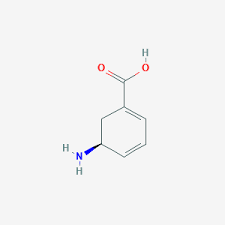
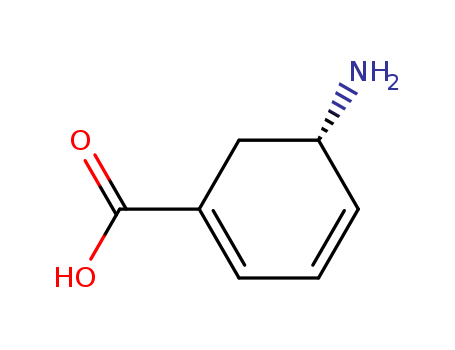
Gabaculine is a naturally occurring neurotoxin first isolated from the bacteria Streptomyces toyacaensis,[1] which acts as a potent and irreversible GABA transaminase inhibitor,[2][3] and also a GABA reuptake inhibitor.[4][5] Gabaculine is also known as 3-amino-2,3-dihydrobenzoic acid hydrochloride [6] and 5-amino cyclohexa-1,3 dienyl carboxylic acid.[7] Gabaculine increased GABA levels in the brain and had an effect on convulsivity in mice.[7]
Mechanism of action
Gabaculine includes a comparable structure to GABA and a dihydrobenzene ring. This comparable GABA structure is used in order to be able to take the place of GABA during the first steps of transamination, including transaldimination and 1,3-prototrophic shift to the pyridoxamine imine.[8] Following this, a proton from the dihydrobenzene ring is abstracted by an enzymatic base, thus causing the ring to become aromatic.[8] The aromatic stabilization energy of the aromatic ring is what causes this reaction to be irreversible, thus causing the complex not to react further.[8]
Preclinical studies
Animal studies to determine the effect of gabaculine on GABA levels in the brain were heavily conducted around the 1970s.[9] These in vivo studies involved mostly the use of mice that underwent intravenous administration of this drug. Each of these studies concluded that gabaculine has a great potential to increase the GABA levels in the brain of these mice in a time dependent manner.[7] Along with determining the effect of GABA levels, in vivo studies were conducted to investigate the ability of gabaculine to inhibit convulsions in mice. Results indicated that gabaculine provided a clear anticonvulsant effect against seizures induced by high doses of chemoconvulsants or electroshock.[10] The toxicity of this compound was also investigated using animal mouse models. This study showed that at anticonvulsant doses, gabaculine is extremely potent and toxic when compared to other GABA transaminase inhibitors, with an ED50 of 35 mg/kg and LD50 of 86 mg/kg.[10] Because of this potential lethal effect, gabaculine was proved to be too toxic for use as a drug however,[8] it can still be used as a compound to alter GABA levels in studies of experimental epilepsy.
| [Name]
1,3-Cyclohexadiene-1-carboxylicacid,5-amino-,(5S)-(9CI) |
|
| [CAS]
59556-29-5 |
|
| [Synonyms]
708-B |
|
| [Molecular Formula]
C7H9NO2 |
|
| [MOL File] | |
| [Molecular Weight]
139.15 |
| Safety Data | Back Directory |
| [Toxicity]
LD50 oral in mouse: 43mg/kg |
|
| Hazard Information | Back Directory |
| [Definition]
ChEBI: (S)-gabaculine is the (S)-enantiomer of gabaculine. It has a role as a bacterial metabolite and an EC 2.6.1.19 (4-aminobutyrate–2-oxoglutarate transaminase) inhibitor. It is an enantiomer of a (R)-gabaculine. |
|
Gabaculine
- Chemical Name:Gabaculine
- CAS No.:59556-29-5
- Molecular Formula:C7H9 N O2
- Molecular Weight:139.154
- Hs Code.:
- UNII:3F3ENU341O
- DSSTox Substance ID:DTXSID70208233
- Nikkaji Number:J12.403F
- Wikipedia:Gabaculine
- ChEMBL ID:CHEMBL1474486
- Mol file:59556-29-5.mol
Synonyms:3-amino-2,3-dihydrobenzoic acid;gabaculin;gabaculine;gabaculine hydrochloride;gabaculine hydrochloride, (+-)-isomer;gabaculine, (+-)-isomer;gabaculine, (-)-isomer
- Business phase:
- The product has achieved commercial mass production*data from LookChem market partment
- Manufacturers and distributors:
-
- Manufacture/Brand
- Chemicals and raw materials
- Packaging
- price
- Vapor Pressure:0.000198mmHg at 25°C
- Boiling Point:304.6°C at 760 mmHg
- Flash Point:138°C
- PSA:63.32000
- Density:1.255g/cm3
- LogP:0.98490
- XLogP3:-2.2
- Hydrogen Bond Donor Count:2
- Hydrogen Bond Acceptor Count:3
- Rotatable Bond Count:1
- Exact Mass:139.063328530
- Heavy Atom Count:10
- Complexity:206
- Purity/Quality:
- 99% *data from raw suppliers
- Pictogram(s):
- Hazard Codes:
- MSDS Files:
- Canonical SMILES:C1C(C=CC=C1C(=O)O)N
- Isomeric SMILES:C1[C@@H](C=CC=C1C(=O)O)N
There total 1 articles about Gabaculine which guide to synthetic route it. The literature collected by LookChem mainly comes from the sharing of users and the free literature resources found by Internet computing technology. We keep the original model of the professional version of literature to make it easier and faster for users to retrieve and use. At the same time, we analyze and calculate the most feasible synthesis route with the highest yield for your reference as below:
Gabaculine
Content Navigation
Researchers requiring precise GABA-T or OAT knockout face high-dose off-target effects from common inhibitors. Gabaculine (CAS 59556-29-5) solves this as an irreversible, mechanism-based PLP-enzyme inhibitor with micromolar Ki.
- Ki 2.86 µM for GABA-T, complete inactivation at low µM levels, no osmolarity disruption.
- Exclusive selection agent for hemL transgenic plant systems; stringent, visible selection.
- Benchmark OAT inhibitor (Ki=2.1 µM, kinact=0.05 min⁻¹) for HCC research.
- High purity, in stock, ready for global shipping.
CAS Number
Product Name
IUPAC Name
Molecular Formula
Molecular Weight
InChI
InChI Key
Synonyms
Canonical SMILES
Isomeric SMILES
Gabaculine has been reported in Euglena gracilis with data available.
potent inhibitor of aminobutyrate aminotransferase from Streptomyces toyocaensis.; also inhibits a variety of PLP-dependent aminotransferases; structure; RN given refers to cpd without isomeric designation
Purity
Package Size
Gabaculine (CAS 59556-29-5) is a naturally occurring, conformationally constrained analog of γ-aminobutyric acid (GABA) procured primarily as a highly potent, irreversible mechanism-based (suicide) inhibitor of pyridoxal 5′-phosphate (PLP)-dependent aminotransferases [1]. Upon binding to target enzymes such as GABA transaminase (GABA-T), ornithine aminotransferase (OAT), and plant glutamate-1-semialdehyde aminotransferase (GSA-AT), gabaculine undergoes transamination followed by spontaneous aromatization, forming a stable m-anthranilic acid derivative that permanently inactivates the cofactor [1]. This rapid, micromolar-affinity irreversible binding makes it an essential biochemical tool for precise in vitro and in vivo transaminase knockout studies, and a critical selection agent in plant genetic transformation workflows utilizing the mutant hemL marker gene [2].
Research Fit
References
- [1] Rando, R.R. ‘Mechanism of the irreversible inhibition of gamma-aminobutyric acid-alpha-ketoglutaric acid transaminase by the neurotoxin gabaculine.’ Biochemistry, 1977.
- [2] Stoykova, P., et al. ‘Gabaculine selection using bacterial and plant marker genes (GSA-AT) in durum wheat transformation.’ Plant Cell Reports, 2011.
Substituting gabaculine with more common transaminase inhibitors compromises both experimental precision and workflow viability. While vigabatrin is also an irreversible GABA-T inhibitor, it exhibits a significantly lower initial binding affinity (Ki in the millimolar range versus gabaculine’s micromolar range), requiring much higher working concentrations that can alter cellular osmolarity and off-target profiles in sensitive assays [1]. Conversely, aminooxyacetic acid (AOAA) is a non-specific carbonyl-trapping agent; it lacks gabaculine’s targeted suicide-inhibition mechanism, leading to broader, often reversible interference with all PLP-dependent enzymes and distinct neurotoxic profiles . Furthermore, in agricultural biotechnology, generic substitution is impossible for hemL-based plant transformation workflows, as the mutant glutamate-1-semialdehyde aminotransferase is specifically calibrated to resist gabaculine, making alternative herbicides or selection agents incompatible with the vector design [2].
Substitution Risk
GABA-T Affinity Advantage Over Vigabatrin
Gabaculine demonstrates a highly efficient initial binding profile for GABA transaminase (GABA-T) compared to clinical-grade irreversible inhibitors. Kinetic evaluations show that gabaculine binds GABA-T with a Ki of 2.86 μM [1], whereas vigabatrin exhibits a much weaker initial binding affinity, with Ki values reported up to 0.85 mM (850 μM)[2]. This >290-fold difference in binding affinity allows gabaculine to rapidly saturate the enzyme active site at significantly lower concentrations before the irreversible aromatization step occurs.
| Evidence Dimension | Initial Binding Affinity (Ki) for GABA-T |
| Target Compound Data | Gabaculine Ki = 2.86 μM |
| Comparator Or Baseline | Vigabatrin Ki = ~850 μM (0.85 mM) |
| Quantified Difference | >290-fold stronger initial binding affinity for gabaculine |
| Conditions | In vitro enzymatic kinetic evaluation of PLP-dependent GABA-T |
Enables researchers to achieve rapid, irreversible GABA-T inactivation at low micromolar concentrations, preserving physiological conditions in delicate in vitro and ex vivo slice models.
Selective GABA-T Inhibition vs. AOAA
When compared to general PLP-dependent enzyme inhibitors like aminooxyacetic acid (AOAA), gabaculine provides stronger targeted affinity. Gabaculine inhibits GABA-T with a Ki of approximately 2.9 μM [1], while AOAA demonstrates a Ki of 9.16 μM . Beyond the ~3-fold difference in raw affinity, gabaculine’s mechanism relies on specific transamination and irreversible aromatization within the active site, whereas AOAA acts as a general carbonyl-trapping agent that can broadly and reversibly inhibit a wider array of off-target PLP enzymes.
| Evidence Dimension | GABA-T Inhibition Constant (Ki) |
| Target Compound Data | Gabaculine Ki = ~2.9 μM |
| Comparator Or Baseline | Aminooxyacetic Acid (AOAA) Ki = 9.16 μM |
| Quantified Difference | ~3-fold higher binding affinity for gabaculine |
| Conditions | In vitro GABA-T inhibition assays |
Ensures more complete target knockout at lower concentrations, minimizing the broad-spectrum metabolic disruption typically caused by AOAA.
OAT Inactivation Potency Baseline
Gabaculine serves as the high-potency benchmark for irreversible inhibition of ornithine aminotransferase (OAT), a target of interest in hepatocellular carcinoma (HCC) research. In comparative kinetic assays evaluating novel OAT inhibitors, gabaculine exhibited an inactivation constant (Ki) of 2.1 μM and a rapid inactivation rate (kinact) of 0.05 min⁻¹ [1]. By comparison, the rationally designed fluorinated analog (1S,3S)-3-amino-4-(hexafluoropropan-2-ylidene)cyclopentane-1-carboxylic acid (Compound 2) showed one-third the binding potency (Ki = ~6.3 μM) and one-third the inactivation rate (kinact = ~0.017 min⁻¹)[1], establishing gabaculine as the most potent baseline standard for absolute OAT knockout.
| Evidence Dimension | OAT Inactivation Kinetics (Ki and kinact) |
| Target Compound Data | Gabaculine Ki = 2.1 μM, kinact = 0.05 min⁻¹ |
| Comparator Or Baseline | Fluorinated analog (Compound 2) Ki = ~6.3 μM, kinact = ~0.017 min⁻¹ |
| Quantified Difference | 3-fold higher binding potency and 3-fold faster inactivation rate for gabaculine |
| Conditions | In vitro time- and concentration-dependent OAT irreversible inactivation assay |
Provides a highly potent, rapid-acting positive control for OAT inhibition assays, essential for validating new selective inhibitors in cancer metabolism research.
hemL Plant Transformation Selection Efficacy
Gabaculine is uniquely required for plant genetic transformation workflows utilizing the hemL mutant gene from Synechococcus. Gabaculine is highly toxic to wild-type plants due to its potent inhibition of glutamate-1-semialdehyde aminotransferase (GSA-AT), which halts chlorophyll biosynthesis[1]. Transgenic plants expressing the hemL gene produce a gabaculine-insensitive GSA-AT. In biolistic transformation of durum wheat, gabaculine selection using the hemL marker achieved transformation efficiencies that were competitive with or superior to standard bar gene/herbicide systems (e.g., 4.6% vs 2.8% in specific protocols) [1]. No other chemical can substitute for gabaculine in this specific selection mechanism.
| Evidence Dimension | Plant Transformation Selection Agent Efficacy |
| Target Compound Data | Gabaculine (used with hemL marker) |
| Comparator Or Baseline | Standard herbicide selection (e.g., bar gene/phosphinothricin) |
| Quantified Difference | Provides a highly stringent, non-antibiotic selection mechanism with comparable or superior transformation efficiency |
| Conditions | Biolistic and Agrobacterium-mediated crop transformation workflows |
Gabaculine is an indispensable procurement item for agricultural biotech labs utilizing the hemL marker system to avoid standard antibiotic or herbicide resistance genes.
Gabaculine has been reported in Euglena gracilis with data available.
potent inhibitor of aminobutyrate aminotransferase from Streptomyces toyocaensis.; also inhibits a variety of PLP-dependent aminotransferases; structure; RN given refers to cpd without isomeric designation
Gabaculin, chemically known as 3-amino-2,3-dihydrobenzoic acid, is a potent inhibitor derived from the bacterium Streptomyces toyoycaensis. It is primarily recognized for its ability to inhibit enzymes involved in the biosynthesis of chlorophyll and the metabolism of γ-aminobutyric acid, a critical neurotransmitter in the central nervous system. Gabaculin has garnered attention for its applications in both plant biology and neuropharmacology.
Gabaculin is produced by Streptomyces toyoycaensis, a species of actinobacteria known for its ability to synthesize various bioactive compounds. The compound was first isolated in the 1970s and has since been studied for its biochemical properties and potential applications in agriculture and medicine .
Gabaculin can be classified as:
- Chemical Class: Amino acid derivative
- Biological Role: Enzyme inhibitor
- Mechanism of Action: Irreversible inhibition of specific transaminases related to chlorophyll biosynthesis and neurotransmitter metabolism .
Gabaculin can be synthesized through various methods, primarily involving fermentation processes or chemical synthesis.
Methods
- Fermentation: Utilizing Streptomyces toyoycaensis cultures under controlled conditions allows for the natural production of gabaculin. This biological method often results in high yields of the compound.
- Chemical Synthesis: Laboratory synthesis typically involves multi-step organic reactions, starting from simpler precursors. The synthesis may include steps such as amination and cyclization to form the final product.
Technical Details
The fermentation process requires specific growth conditions, including nutrient media rich in carbohydrates and nitrogen sources. Chemical synthesis often employs reagents such as acetic anhydride or phosphoric acid to facilitate reactions at various stages .
Gabaculin has a distinct molecular structure characterized by its seven-carbon backbone and amino group.
Structure
- Molecular Formula: C9H11NO2
- Molecular Weight: 167.19 g/mol
- Structure Description: Gabaculin features a dihydrobenzoic acid moiety with an amino group at position 3, which is crucial for its biological activity.
Data
The compound’s structural data can be analyzed using techniques such as nuclear magnetic resonance spectroscopy and mass spectrometry, providing insights into its conformation and stability .
Gabaculin participates in several key reactions, particularly those involving enzyme inhibition.
Reactions
- Inhibition of Chlorophyll Biosynthesis: Gabaculin inhibits the enzyme delta-aminolevulinic acid dehydratase, leading to reduced chlorophyll production in plants like Hordeum vulgare (barley) when exposed to concentrations as low as 30 micromolar .
- Transaminase Inhibition: It irreversibly inhibits γ-aminobutyric acid transaminase, affecting neurotransmitter levels in the brain .
Technical Details
The kinetics of these reactions can be characterized using Michaelis-Menten kinetics to determine inhibition constants and reaction rates under varying substrate concentrations.
Gabaculin’s mechanism involves the irreversible binding to specific enzymes, leading to their inactivation.
Process
- Enzyme Binding: Gabaculin binds to the active site of γ-aminobutyric acid transaminase, preventing substrate access.
- Inhibition Outcome: This results in decreased levels of γ-aminobutyric acid, which can influence neuronal excitability and neurotransmission .
Data
Studies have shown that gabaculin’s inhibitory effects are dose-dependent, with significant reductions in enzyme activity observed at micromolar concentrations.
Gabaculin exhibits several notable physical and chemical properties relevant to its functionality.
Physical Properties
- Appearance: White crystalline solid
- Solubility: Soluble in water and organic solvents like ethanol
- Melting Point: Approximately 150 °C
Chemical Properties
- Stability: Gabaculin is stable under normal laboratory conditions but may degrade under extreme pH or temperature.
- Reactivity: It reacts with nucleophiles due to its electrophilic nature at specific sites on its molecular structure.
Relevant analyses include spectroscopic methods that provide insights into its purity and structural integrity .
Gabaculin has several scientific applications:
- Agricultural Use: As an inhibitor of chlorophyll biosynthesis, it is utilized in research to study plant metabolism and development.
- Neuroscience Research: Its role as a γ-aminobutyric acid transaminase inhibitor makes it valuable for studying neurotransmitter dynamics and potential therapeutic targets for neurological disorders.
- Biochemical Studies: Gabaculin serves as a tool compound for investigating enzyme mechanisms and metabolic pathways involving amino acids .
Molecular Structure and Isomeric Properties
Gabaculine (IUPAC name: 5-aminocyclohexa-1,3-diene-1-carboxylic acid) is a natural neurotoxin first isolated from Streptomyces toyacaensis [3] [7]. Its molecular formula is C₇H₉NO₂, with a monoisotopic mass of 139.063329 Da [7] [8]. Structurally, it features a meta-substituted cyclohexadiene ring with an amino group (-NH₂) at position 5 and a carboxylic acid (-COOH) at position 1, forming a conformationally constrained analog of γ-aminobutyric acid (GABA) [3] [6]. This meta-aminobenzoic acid configuration forces the molecule into a planar arrangement due to aromatic stabilization after enzymatic processing [6]. No stereoisomers are reported, as the active form lacks chiral centers [8].
Key Structural Features:
- Aromatic Potential: The diene system undergoes aromatization to a meta-aminobenzoic acid derivative during GABA transaminase inhibition, a process critical to its irreversible mechanism [6] [10].
- Zwitterionic Behavior: Under physiological pH, it may form zwitterions, though its stability profile differs significantly from GABA due to ring strain [7].
Table 1: Atomic Composition of Gabaculine
| Element | Count | Bond Type |
|---|---|---|
| Carbon | 7 | Aromatic/Aliphatic |
| Hydrogen | 9 | Covalent |
| Nitrogen | 1 | Primary amine |
| Oxygen | 2 | Carboxylate |
Synthesis Pathways and Derivatives
Natural Biosynthesis
Gabaculine is produced by Streptomyces spp. via a hypothetical pathway originating from isochorismic acid (a shikimate pathway intermediate). Proposed steps include reduction, nitrogen incorporation via SN2′ displacement of enolpyruvate, and dehydration, though experimental validation remains limited [6].
Laboratory Synthesis
While detailed synthetic routes are sparse in the literature, derivatives have been engineered to enhance specificity or reduce toxicity:
- Fluorinated Analogs: Introduction of trifluoromethyl groups (e.g., (1R,4S)-4-amino-3-trifluoromethylcyclopent-2-enecarboxylic acid) improves GABA-T inhibition potency [6].
- Conformationally Restricted Variants: Compounds like cis-3-aminocyclohex-4-ene-1-carboxylic acid mimic gabaculine’s ring structure but exhibit distinct inhibition kinetics [6].
Physicochemical Properties and Stability
Gabaculine hydrochloride (CAS 59556-17-1) is a solid with ≥95% purity, soluble in water but unstable under extreme pH or UV exposure [7]. Key properties include:
Table 2: Physicochemical Profile
| Property | Value | Conditions |
|---|---|---|
| Molecular Weight | 175.61 g/mol (HCl salt) | – |
| pKa | ~4.8 (carboxyl), ~9.2 (amine) | Predicted |
| Solubility | >50 mg/mL in water | 25°C |
| Degradation Rate | pH-dependent | Min. degradation at pH 6.0 |
Stability Insights:
- pH Sensitivity: Degrades rapidly outside pH 4.5–7.0, with maximal stability near pH 6.0 due to zwitterion dominance [2] [7].
- Thermal Liability: Arrhenius modeling predicts shelf-life >2 years at 25°C when pH-controlled, but crystallization occurs at 5°C [9].
Biological Activity and Mechanism of Action
Properties
CAS Number
Product Name
IUPAC Name
Molecular Formula
Molecular Weight
InChI
InChI Key
SMILES
Synonyms
gabaculin
gabaculine
gabaculine hydrochloride
gabaculine hydrochloride, (+-)-isomer
gabaculine, (+-)-isomer
gabaculine, (-)-isome
Canonical SMILES
Isomeric SMILES
Buy Gabaculine (neurotoxin) Cas 59556-29-5
Buy Gabaculine (neurotoxin) Cas 59556-29-5
Buy Gabaculine (neurotoxin) Cas 59556-29-5
Buy Gabaculine (neurotoxin) Cas 59556-29-5
Buy Gabaculine (neurotoxin) Cas 59556-29-5
Buy Gabaculine (neurotoxin) Cas 59556-29-5
Buy Gabaculine (neurotoxin) Cas 59556-29-5
Buy Gabaculine (neurotoxin) Cas 59556-29-5
Buy Gabaculine (neurotoxin) Cas 59556-29-5
Buy Gabaculine (neurotoxin) Cas 59556-29-5
Buy Gabaculine (neurotoxin) Cas 59556-29-5
Buy Gabaculine (neurotoxin) Cas 59556-29-5
Buy Gabaculine (neurotoxin) Cas 59556-29-5
Buy Gabaculine (neurotoxin) Cas 59556-29-5
Buy Gabaculine (neurotoxin) Cas 59556-29-5
Buy Gabaculine (neurotoxin) Cas 59556-29-5
Buy Gabaculine (neurotoxin) Cas 59556-29-5
Buy Gabaculine (neurotoxin) Cas 59556-29-5
Buy Gabaculine (neurotoxin) Cas 59556-29-5
Buy Gabaculine (neurotoxin) Cas 59556-29-5
Buy Gabaculine (neurotoxin) Cas 59556-29-5
Buy Gabaculine (neurotoxin) Cas 59556-29-5
Buy Gabaculine (neurotoxin) Cas 59556-29-5
Buy Gabaculine (neurotoxin) Cas 59556-29-5
Buy Gabaculine (neurotoxin) Cas 59556-29-5
Buy Gabaculine (neurotoxin) Cas 59556-29-5
Buy Gabaculine (neurotoxin) Cas 59556-29-5
Buy Gabaculine (neurotoxin) Cas 59556-29-5
Buy Gabaculine (neurotoxin) Cas 59556-29-5
Buy Gabaculine (neurotoxin) Cas 59556-29-5
Buy Gabaculine (neurotoxin) Cas 59556-29-5
Buy Gabaculine (neurotoxin) Cas 59556-29-5
Buy Gabaculine (neurotoxin) Cas 59556-29-5
-
Buy Gabaculine (EVT-1542710) | 59556-29-5 – evitachem.com
EvitaChem offers qualified products for Gabaculine (evt-1542710), please inquire us for more detail.
-
Gabaculine for Sale, Find Gabaculine Sale 59556-29-5 List – ECHEMI
ECHEMI provides 11 top grade Gabaculine products for sale. Find Gabaculine 59556-29-5 you need according to certification and …
-
Buy Gabaculin | 59556-29-5
Gabaculine acts as an irreversible, “suicide” inhibitor of GABA transaminase. Its structure mimics that of the natural substrate, …
-
DL-Gabaculine hydrochloride | GABA Inhibitor
DL-Gabaculine hydrochloride is a neurotoxin that irreversibly inhibits bacterial …
-
Gabaculine|59556-29-5|lookchem
Find quality suppliers and manufacturers of Gabaculine for price inquiry.where to buy Gabaculine (59556-29-5).lookchem Also offer …
-
Gabaculine | 59556-29-5, Gabaculine Formula – ECHEMI
Get to learn about properities of Gabaculine 59556-29-5. The overall knowledge and encyclopedia of Gabaculine covering …
-
Gabaculine HCl, AMS.T24080-5-MG | Amsbio
Gabaculine is an irreversible inhibitor of GABA transaminase (GABA-T, Ki: 2.9 μM). Gabaculine alters plastid development and …
-
1,3-Cyclohexadiene-1-carboxylicacid,5-amino-,(5S)-(9CI) | 59556-29-5
1,3-Cyclohexadiene-1-carboxylicacid,5-amino-, (5S)- (9CI) | 59556-29-5 – chemical and physical properties, structure, melting point, …
-
Gabaculine (MBSC-3059) – Creative Biogene
Gabaculine Catalog: MBSC-3059 Product Overview: A diverse range of compounds with high quality to support various research and …
-
59556-29-5 | CAS DataBase – ChemicalBook
ChemicalBook provide information on the 59556-29-5: structure, uses, msds, molecular formula, cas, and suppliers.
Reviews
There are no reviews yet.